In 2015, a Minnesota couple entered the Boundary Waters to oppose a proposed mine; 366 days and 2,000 miles later, they emerged without crossing a road or entering a building
In a remarkable display of environmental activism, Dave and Amy Freeman spent an entire year in Minnesota's Boundary Waters without crossing a road or entering a building, raising awareness against proposed mining activities that threaten the watershed.
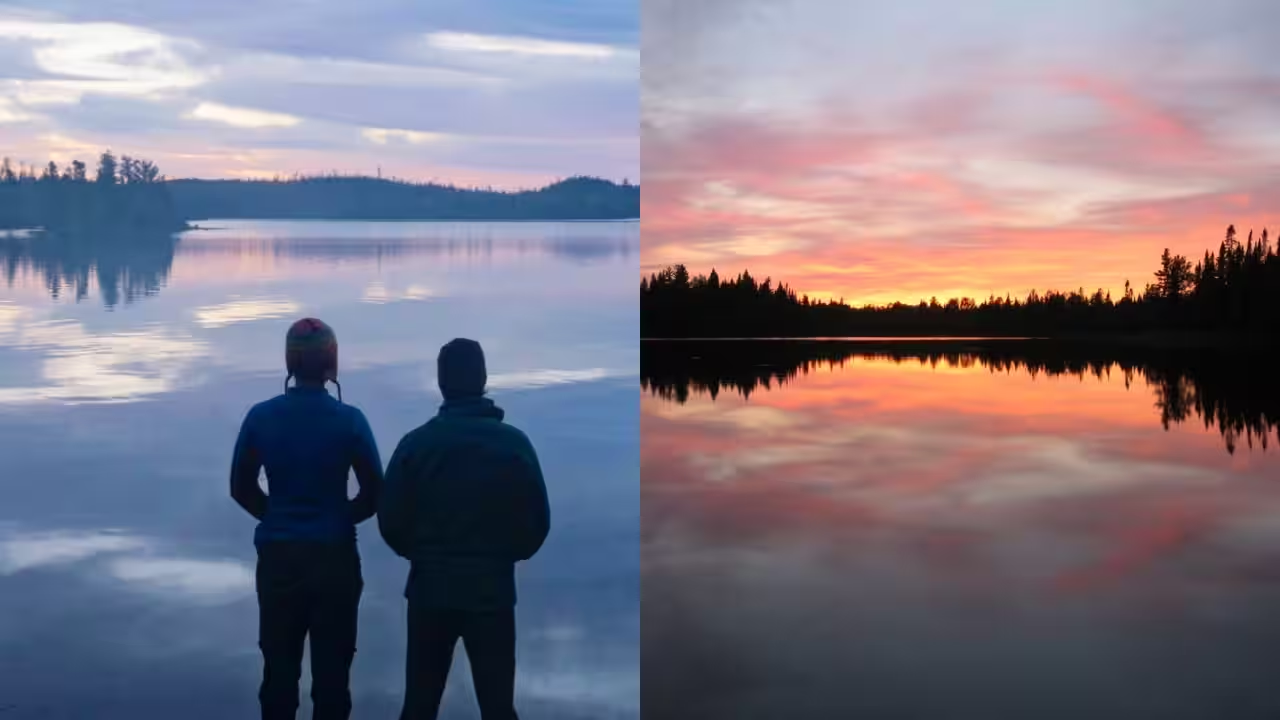
On rare occasions, activists decide to use their presence as a point of contention, remaining in the area they wish to be protected for so long that it is impossible to ignore. This was the motivation behind one of the more unusual protest trips of the past ten years, which was conducted solely by foot, kayak, and ski into Minnesota's far north.Ely, Minnesota, wilderness guides Dave and Amy Freeman entered the Boundary Waters Canoe Area Wilderness on September 23, 2015, and didn’t leave until September 23, 2016, living for 366 continuous days in the wild, without crossing a road or going into a building. Their expedition carried them over 2,000 miles by canoe, foot, ski, snowshoe and dog team over some 500 lakes, rivers and streams, camping at some 120 different places through all four seasons. The pair travelled there in support of the Save the Boundary Waters group, which has fought for years against proposed sulphide ore copper mining near the border of the wilderness, due to fears that mine runoff might damage the watershed's interconnected lakes for generations.A wilderness with robust federal safeguardsThe Boundary Waters Canoe Area Wilderness is a million-plus acres of wilderness in the northern portion of Superior National Forest and extends almost 150 miles along the international boundary with Canada. The US Forest Service manages the land and classified the area as protected wilderness under the Wilderness Act of 1964. Development and motorized activity are therefore restricted within its borders, though traditional non-motorized aids like sailboats, sleds and dog teams remain permitted. That legal protection applies to the wilderness itself, but the watershed that feeds its lakes stretches beyond the boundary line into places where mineral leases have been proposed, which is precisely the gap the Freemans wanted to point out.It wasn’t just camping to live in the outdoors for a full year. The duo fell through ice, were stalked at a distance by wolves, drank directly from the lakes and used a small sailboat and sled to transport supplies between seasons. Even so, they used satellite technology to stay in touch with schools and supporters throughout the year, turning what could have been a private ordeal into a public campaign followed by hundreds of thousands of people online. On the last day, when they eventually paddled out, dozens of canoes and a crowd of well-wishers gathered at Ely to welcome them home.An extension of years spent teaching via travelThe wilderness year was not a one-off adventure but part of a longer pattern in the Freemans’ lives. The couple had already kayaked, canoed, dog-sledded and hiked across North America on a three-year, more than 11,000-mile trek and separately paddled 2,000 miles over 100 days from Minnesota to Washington to celebrate the 50th anniversary of the Wilderness Act. Each of these expeditions was linked to their nonprofit, Wilderness Classroom, which uses the trips to teach literacy, critical thinking and environmental awareness to tens of thousands of school children who follow along remotely, instead of in person.The mix of endurance travel and education brought the pair accolades beyond the campaign itself, including inclusion on National Geographic’s Adventurers of the Year list and a written account of their wilderness year that won a regional book prize. The campaign they supported continued to gain political momentum in the years that followed, with government reviews and leasing decisions around the planned mining sites changing back and forth depending on the administration in office at any given time.They did not write letters or deliver speeches from afar but lived in the landscape they wanted to protect through blizzards, thaws and every season in between, believing that a prolonged presence would be more effective than words. That effort continues to shape the discussion around one of America's most visited wilderness areas, a watershed where the mining fight is still unresolved: federal protections were rolled back by Congress in 2026, even as Minnesota's state government has moved to block new mining leases nearby.You use AI every day. Now get your AI Quotient. Take the AIQ test.
Topics in this story
Gathered from external sources. Rights to this text belong to whoever originally published it.