Irish public sector: More than 100,000 workers take industrial action
Two days of fuller strike action have been planned for 14 and 21 October, when it is expected schools will be closed and picket lines formed across the country.
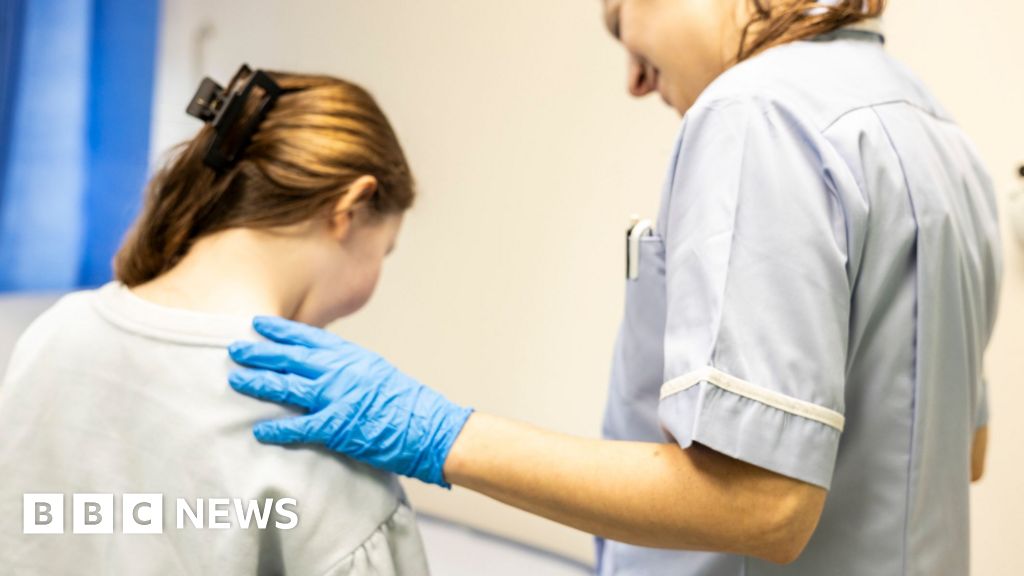
Some health, education and council workers in the Republic of Ireland have commenced industrial action over an ongoing public sector pay dispute.
More than 100,000 workers, including nurses, school staff and civil servants, moved to work-to-rule measures on Wednesday morning.
The Irish Nurses and Midwives Organisation (INMO) said its public health service staff will perform only duties necessary for safe patient care and "will not work any additional unpaid hours".
Two days of fuller strike action have been planned for 14 and 21 October, when it is expected schools could be closed and picket lines formed across the country.
INMO said nurses and midwives who have taken work-to-rule action "will not attend non-clinical meetings, except where attendance is strictly necessary for direct patient care".
They have been joined by Fórsa, the Republic's largest public sector union, after 96.6% of their members who voted in an industrial ballot did so in favour of action.
Members of SIPTU, who represent public sector workers in health and administration, have also signed up to work-to-rule measures.
On their website Fórsa said "there are currently no talks taking place" with the Irish government in relation to a new public sector pay deal, after the previous arrangement expired on 30 June.
They said dialogue with state employers has been held up by the "government's unwillingness to address cost-of-living measures at the start of any negotiations".
They added: "With no public service agreement in place, we are now in dispute with government, as the employer of public service workers."
SIPTU Divisional Organiser Brendan O'Brien said the "goodwill" of workers was a large part of what kept public services going, but said the Irish government's failure to establish a basis for formal talks "left our members with no alternative but to act collectively".
He added: "We are calling on public service employers and the government to engage constructively and urgently to avoid an escalation of this dispute."
Ireland's Department of Public Expenditure told Irish broadcaster RTÉ that unions and representative associations have taken industrial action rather than engaged in talks.
"It is deeply unfair on the general public for there to be significant disruption to their daily lives because unions are unwilling to sit down and engage constructively on a new agreement," a spokesperson said.
"Officials remain ready and willing to engage and that should happen without any further delay."
"Meaningful progress can only be achieved where both parties are open to constructive and sustained engagement, without preconditions on either side," the Department added.
The teaching unions Association of Secondary Teachers Ireland (ASTI) and Irish National Teachers' Organisation (INTO) have confirmed they will begin work-to-rule action on 5 October, before moving to a full one-day strike on 14 October.
ASTI said up to 20,000 secondary school teachers will take part.
INTO, which represents a a majority of primary school teachers, said it intended on a second one-day strike on 21 October.
Rank-and-file members of the Garda Representative Association have also announced several days of action calling for better conditions.
Resident doctors take strike action over pay
Topics in this story
Gathered from external sources. Rights to this text belong to whoever originally published it.