In 2016, Florida’s New Smyrna Beach used living shorelines during Hurricane Matthew; the structures stayed intact despite 90 mph winds
US News: When Hurricane Matthew struck Florida in October 2016, New Smyrna Beach faced winds of more than 90 miles per hour and water levels around four feet a.
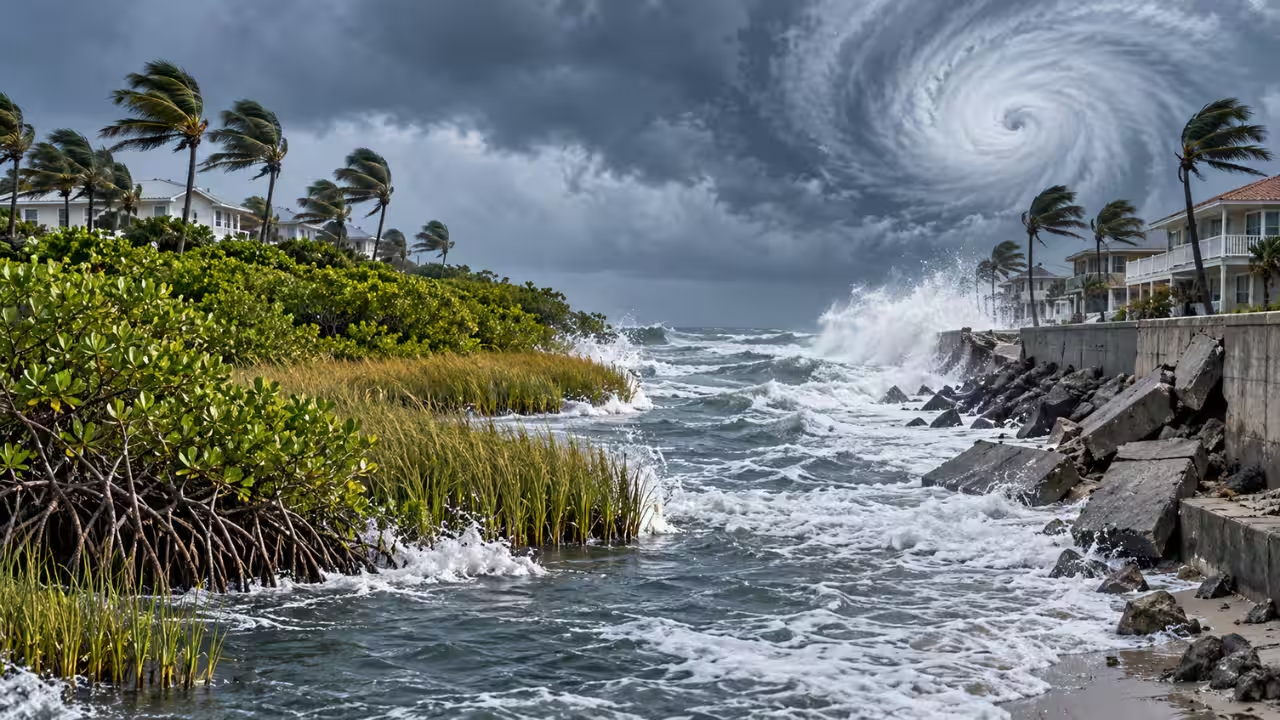
When Hurricane Matthew struck Florida in October 2016, New Smyrna Beach faced winds of more than 90 miles per hour and water levels around four feet above normal. Along the coast, those conditions put shoreline protection to a serious test. But one demonstration site emerged with an unexpected result. A living shoreline project supported by NOAA and the St Johns River Water Management District remained largely intact after the storm, with minimal erosion. Instead of depending on conventional seawalls or bulkheads, the project used vegetation, sand and limited amounts of rock to stabilise the shoreline while also providing habitat for wildlife. The demonstration area was directly in the path of Matthew's most destructive winds, making its survival particularly notable. Nearby, a building even lost its roof during the storm. Yet the living shoreline structures held firm. The experience offered a striking example of how natural shoreline protection could withstand powerful hurricane conditions.How do living shorelines protect coasts during stormsLiving shorelines take a different approach from traditional coastal defences. Rather than relying entirely on concrete, bulkheads or seawalls, they incorporate natural materials such as vegetation, sand and limited amounts of rock. According to the National Oceanic and Atmospheric Administration, these materials help shorelines withstand the energy carried by storm surges and waves while also creating habitat for fish and wildlife. The approach is intended to reduce erosion while strengthening the resilience of coastal areas.That distinction became important when Hurricane Matthew arrived. Conventional hardened structures can sometimes increase coastal erosion and provide little habitat. Living shorelines, by contrast, combine coastal protection with ecological benefits. The New Smyrna Beach project therefore served not only as a demonstration of different shoreline techniques, but also as an opportunity to see how those approaches performed when confronted with an actual hurricane.How did Hurricane Matthew test the living shorelineThe conditions around New Smyrna Beach were severe enough to expose weaknesses in coastal structures. Winds exceeded 90 miles per hour, a nearby building lost its roof, and water levels rose roughly four feet above normal. The demonstration shoreline also faced north, directly towards the direction from which the most destructive winds arrived. Yet when the storm had passed, NOAA found that the structures were still standing and had suffered minimal erosion.The result was striking because the project was not tested under mild conditions. It faced a major hurricane with strong winds, elevated water and wave energy, making the outcome a useful demonstration of how natural shoreline techniques could perform during a storm. NOAA's assessment was direct: "after the hurricane, all structures in the area were intact, with minimal erosion."Living shorelines showed less damage after Hurricane MatthewEvidence from elsewhere along the coast provided another point of comparison. In the aftermath of Hurricane Matthew, the North Carolina Coastal Federation surveyed shorelines and found no visible damage at the living shorelines it examined. By comparison, at least half of the hardened shorelines in its survey had been damaged, including areas where sediment had been scoured from the front of structures or water had flowed over them, weakening them.The New Smyrna Beach experience therefore became part of a wider picture of how coastal communities might respond to storms. Living shorelines are not simply planted areas beside the water. They are a form of shoreline stabilisation designed to reduce erosion while also supporting habitat and coastal resilience. Hurricane Matthew provided an unusually demanding test, and the New Smyrna Beach demonstration structures emerged from it still standing, with little erosion.Catch the latest World News and Live updates. Download the TOI app.
Topics in this story
Gathered from external sources. Rights to this text belong to whoever originally published it.