China silences flood victims to spotlight Xi Jinping's rescue efforts
China News: More than a week after a deadly flash flood tore through valleys along the China-Nepal border, the scale of the disaster is becoming clearer, but on .
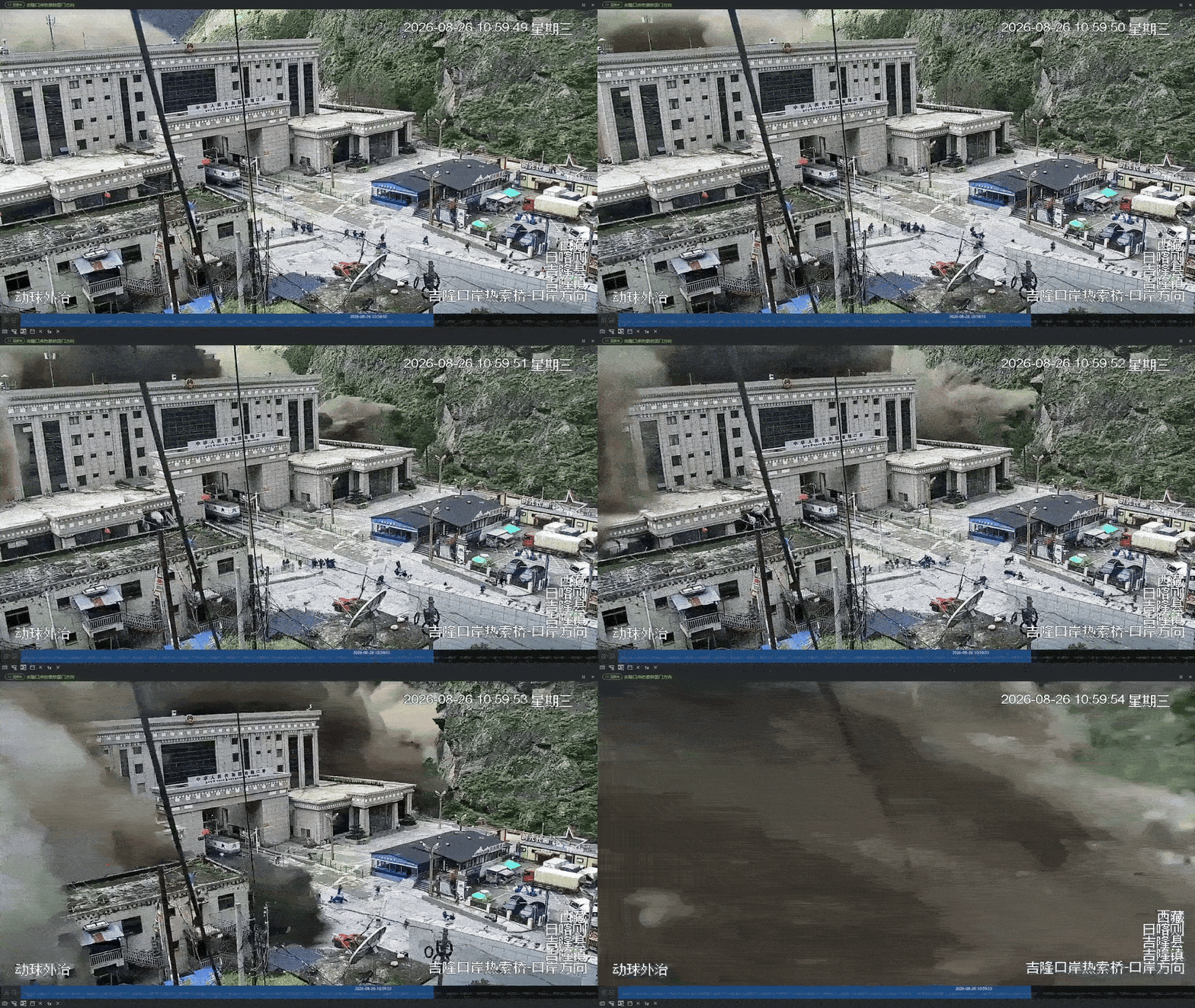
More than a week after a deadly flash flood tore through valleys along the China-Nepal border, the scale of the disaster is becoming clearer, but on the Chinese side, the victims themselves remain largely unseen. Reports indicate that China is exerting extreme pressure to monitor reporting surrounding the disaster.The disaster has killed more than 1,300 people and left more than 5,600 missing across the two countries, according to the latest figures cited in reports. Yet China has released information about the disaster slowly and tightly controlled access to affected areas, offering little public detail about those who died or remain missing.Chinese authorities' death toll update on Friday, raised the number killed in Tibet to 31 and said 531 people remained unaccounted for. An earlier update had put the toll at 21 dead and 541 missing, including 261 foreigners from 23 countries.The information vacuum has drawn attention to China's longstanding restrictions on reporting natural disasters, restrictions that are particularly severe in Tibet, where communications are closely monitored and foreign journalists require special permission to travel.Chinese state media outlets Xinhua and CCTV have been allowed into the affected areas, but their coverage has largely focused on the government's rescue and relief response. Reports have highlighted President Xi Jinping's instructions, rescuers working in difficult conditions and the logistics of delivering aid, rather than identifying victims or giving families a public platform.Human Rights Watch said some Chinese journalists had been instructed not to interview relatives of people killed or missing and to rely only on material provided by Xinhua.The Associated Press said it requested permission to visit the affected areas soon after the disaster but had not been granted access.The restrictions have also extended to social media. Chinese state media circulated details of 10 cases in which people across the country were detained or fined for allegedly spreading rumours about the disaster. Punishments included police detention of between five and 10 days, with some people also fined.One social media post questioned the official death toll, claiming that far more people had been swept away than authorities had reported.Stark contrast to Nepalese coverageThe response stands in stark contrast to neighbouring Nepal, where authorities have provided regular updates on those killed, missing and rescued. The Nepalese army has released footage of helicopter rescues and survivors being pulled from mud-filled hydropower tunnels, while journalists have been able to visit affected sites, rescue camps and burial grounds.The difference was underscored by the rescue of a Chinese national from a hydropower tunnel in Nepal on Saturday, 10 days after the disaster. The man, identified by the army only as Luhaitao, was found alive inside a 225-metre tunnel at the Upper Trishuli-1 Hydropower Project.Video released by the Nepali army showed rescuers giving him medical attention inside a helicopter before taking him to an army hospital. He appeared exhausted and disoriented, with mud and dust covering his clothes and skin.On the Nepalese side, families have also been able to make their own searches public, with some holding symbolic burial rites for relatives whose bodies have not been recovered.On the Chinese side, however, relatives of missing people have had far fewer avenues to seek information publicly. An independent Chinese media outlet operating in exile interviewed families of missing Chinese nationals, including Peng Guangming, a young man working on a Chinese-supported highway project in Nepal. Peng was last in contact with a colleague about 10 minutes before the flood.Another missing Chinese national, He Hongrong, was last seen on the Nepal side carrying a green backpack and waiting to cross into China. Her family has circulated her photograph online in the hope that someone can provide information about her whereabouts.The tight control is especially significant in Tibet, a Chinese autonomous region that has experienced decades of political unrest and government repression. Foreign travel there requires special permission, while restrictions on communications make it difficult for Tibetans to freely share information with people outside China.China has also previously faced criticism for slow-moving disaster reporting. After severe flooding in Guangxi in July, authorities increased the official death toll more than a month later from 39 to 159.The difference in reporting exposes how China lets victims become invisible in order to protect the state machinery.Catch the latest World News and Live updates. Download the TOI app.
Topics in this story
Gathered from external sources. Rights to this text belong to whoever originally published it.