A Vermont woman’s neighbour repeatedly parked his truck so close to her car that she had to crawl through the passenger door to reach the driver's seat; the Supreme Court ruled in her favour, upholding a $15,000 nuisance award against him
A Vermont woman who repeatedly found herself unable to get in or out of her car because of her neighbour's parking, has won a legal battle after the
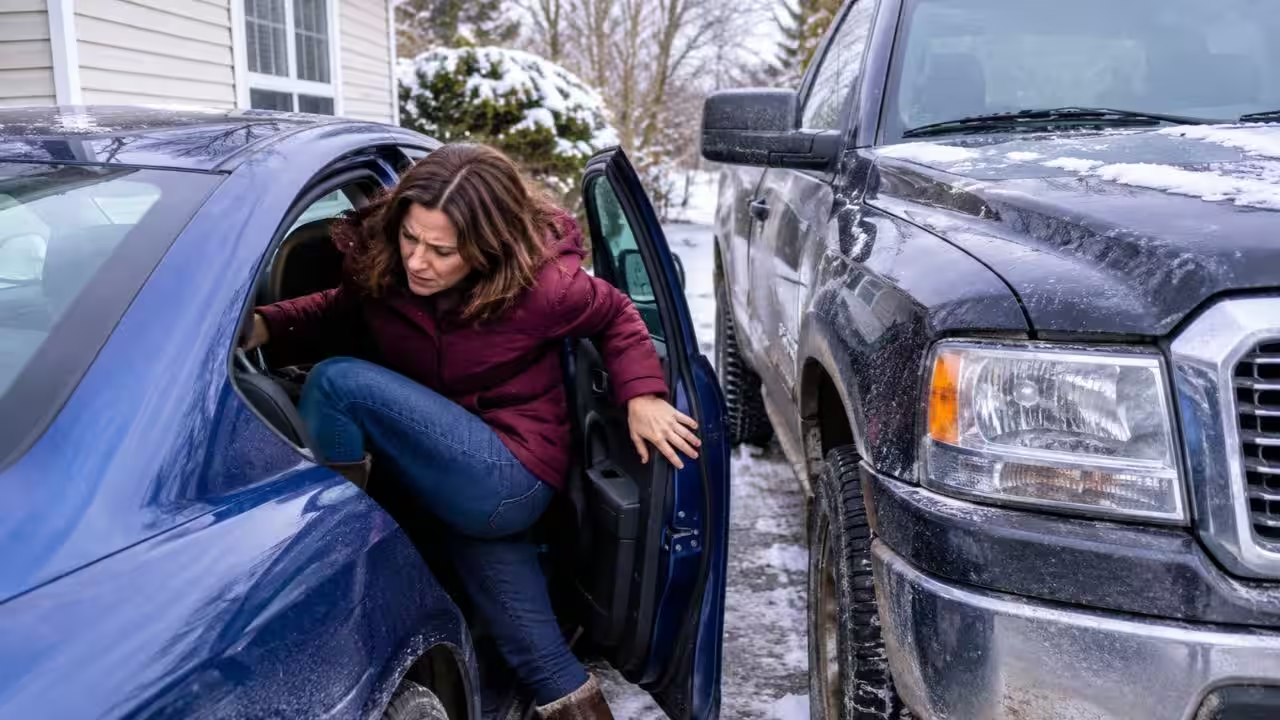
A Vermont woman who repeatedly found herself unable to get in or out of her car because of her neighbour's parking, has won a legal battle after the state's Supreme Court upheld a $15,000 nuisance award against him. The dispute involved a shared gravel driveway, where the neighbour allegedly positioned his truck so close to her vehicle that she sometimes had to climb through the passenger door to reach the driver's seat. The case also involved allegations of snow being dumped onto her property and other deliberate acts of interference.Vermont Supreme Court upholds $15,000 award over the driveway disputeThe case concerned Misty McCartney, who owns a property next to a rental property belonging to David Burns and Melissa Haberman. Their neighbouring properties share a gravel driveway, which became the centre of a prolonged disagreement over parking arrangements and access rights.In its January 9, 2026 decision, the Vermont Supreme Court rejected the neighbours' appeal and upheld the lower court's findings in McCartney's favour. The decision followed a civil case in which the Vermont Superior Court had awarded her $15,000 for the inconvenience, discomfort and distress caused by what it found to be a continuing private nuisance.How the shared driveway became a source of conflictThe disagreement dates back to 2019, when McCartney purchased her property from a previous owner. Burns and Haberman owned the neighbouring rental property but lived elsewhere. The two properties were connected by a gravel driveway that had been used by both sides for years.The arrangement was complicated by the property's history. According to the Vermont Superior Court's June 2025 findings in McCartney v Burns, the driveway was substantially located on McCartney's land, although approximately 3 feet of its width extended onto the neighbouring property.The court traced the right-of-way back to 1905, when an earlier owner reserved access across part of the land. A 1974 deed later referred to a 20-foot-wide right-of-way, but its description contained mistakes about the property boundaries and the location of the neighbouring houses.These differences became important when Burns wanted tenants at the rental property to park in the shared driveway. McCartney maintained that the right-of-way was intended for access rather than parking and referred to a property survey to support her position.What did the neighbour allegedly do to make parking difficultThe Superior Court found that Burns began deliberately positioning his vehicle to interfere with McCartney's ability to use the driveway after she challenged his interpretation of the parking arrangements.The behaviour reportedly continued over months and years. On some occasions, Burns waited until McCartney had parked her car and gone inside before moving his truck close to it. The positioning made it extremely difficult for her to leave the property or even get into the driver's seat.The court recorded incidents in which she had to crawl through the passenger door to reach the steering wheel. At other times, Burns allegedly positioned his truck before she returned home, leaving her with little room to manoeuvre through the driveway.The dispute also extended beyond parking. During snowfall, Burns deliberately moved snow from the rental property into piles along the shared driveway and onto McCartney's land, according to the court's findings. She eventually arranged for part of her front yard to be ploughed so she could park somewhere her neighbour could not block her vehicle.The Superior Court also documented other incidents, including Burns leaving a pile of animal waste near her back steps and refusing an offer to move a metal cabinet from her barn. The cabinet was instead left near the property boundary and later fell over, damaging a vehicle.The dispute also affected her personal life and workMcCartney became increasingly fearful of going outside because she expected further confrontations. The court described her as hypervigilant and noted that she had difficulty sleeping. Her mother also observed changes in her mood, while the dispute affected her relationship with her then-boyfriend.Her work was affected as well. On some days, she could not leave home because her vehicle had been blocked in by Burns's truck. The judge acknowledged that the conduct did not meet the legal threshold for intentional infliction of emotional distress. However, that did not mean the behaviour was too minor to justify a nuisance claim.The court decided that the conduct amounted to a sustained campaign to cause annoyance and inconvenience.How did the courts settle the driveway rightsIn its June 2025 order, the Superior Court clarified how the shared driveway could be used. It determined that the right-of-way should be 15 feet wide, with the actual gravel driveway limited to 8 feet. The right-of-way was to pass equally across the two properties for the first 58.86 feet.The court also established parking restrictions. Neither party could park within the eight-foot gravel driveway or obstruct snow removal and other maintenance work. Additional rules required the neighbours to avoid parking within the right-of-way when the local weather forecast predicted at least two inches of snow over the following 12 hours.On the financial side, McCartney received $950 for physical damage to her vehicles and another $50 in nominal damages for individual trespasses. The separate nuisance award amounted to $15,000, bringing the damages awarded across the claims to $16,000.The judge also issued a permanent injunction covering both Burns and Haberman, aimed at preventing further violations of McCartney's property rights.Why did the Vermont Supreme Court uphold the decisionBurns and Haberman challenged the lower court's interpretation of the shared driveway and the way it had corrected the wording of the 1974 deed.They argued that the right-of-way should have been located entirely on McCartney's property rather than divided between the two neighbouring properties. They also disputed the lower court's interpretation of the earlier deeds and the history of the access arrangement.However, in its January 9, 2026 ruling, the Vermont Supreme Court found no reason to overturn the decision. The appeal was dismissed and the lower court's decision was affirmed.You use AI every day. Now get your AI Quotient. Take the AIQ test.
Topics in this story
Gathered from external sources. Rights to this text belong to whoever originally published it.