San Diego high school students created 39 wildlife gardens in just 4 years; now nearly 25,000 sq ft of habitat supports native plants and pollinators
US News: Nearly 350 San Diego high-school students have spent the past four years turning school grounds and community spaces into native wildlife gardens, hel.
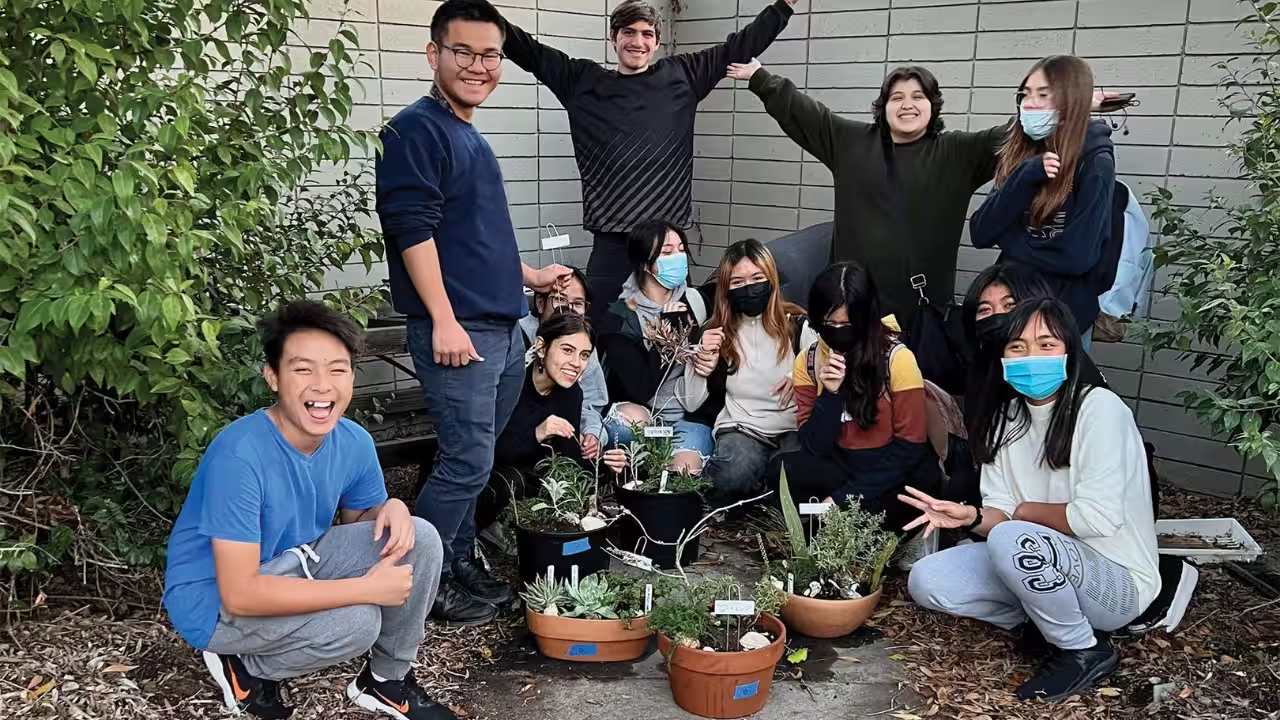
Nearly 350 San Diego high-school students have spent the past four years turning school grounds and community spaces into native wildlife gardens, helping create or restore almost 25,000 square feet of habitat through 39 gardens. The work is part of the Native Biodiversity Corps, a San Diego Zoo Wildlife Alliance programme launched in 2022 to give students hands-on experience in conservation. Participants learn about native plants, wildlife and habitat restoration before designing, planting and maintaining gardens with guidance from conservation professionals. The gardens are intended to provide resources for pollinators and other local wildlife in urban areas while giving students practical conservation skills. The programme has also expanded beyond schools, with students helping transform an unused golf-course space into a native garden.How San Diego students created 39 wildlife gardensThe Native Biodiversity Corps began in spring 2022 with funding from San Diego's Level Up programme. More than 300 urban high-school students registered within 72 hours, while about 100 students were selected for the inaugural programme. Participants spent the summer visiting conservation sites including the San Diego Zoo, San Diego Zoo Safari Park, San Diego Natural History Museum, Living Coast Discovery Center and San Elijo Lagoon Ecological Reserve. They then used what they had learned to design and build native wildlife gardens at Crawford, Hoover and Lincoln high schools.Students are involved in more than simply planting vegetation. They survey potential garden locations, develop designs, select suitable native plants, help implement the projects and participate in maintaining the gardens. The programme gives them an opportunity to learn about local ecosystems while working alongside conservation professionals and applying ecological concepts in real-world settings.Nearly 25,000 sq ft of habitat restoredAccording to San Diego Zoo Wildlife Alliance's September 2026 update, nearly 350 students have participated in the Native Biodiversity Corps since its launch. Together, they have helped create or restore almost 25,000 square feet of habitat through 39 gardens on school grounds and elsewhere across San Diego County.The figure represents the combined area of multiple gardens rather than one continuous wildlife reserve. The projects vary in size and location, but they share an emphasis on using native vegetation to create habitat and ecological resources within developed areas.Native plants support pollinatorsA central aim of the gardens is to provide food and habitat for pollinators and other wildlife. At Hoover High School, students transformed a tree planter into a pollinator garden containing California poppy, narrowleaf milkweed, showy penstemon and California buckwheat.The use of native plants is important because they are adapted to the region's environmental conditions and can provide resources for species that have evolved alongside them. The Zoo Wildlife Alliance says the gardens can also contribute to habitat corridors, creating a network of smaller green spaces that can provide resources for wildlife moving through urban areas.Students transformed unused spacesSome of the projects have involved spaces that previously provided little habitat. At Crawford High School, students transformed an undeveloped hillside into a green space. At another location, students created a native garden on a previously bare hillside, with the goal of providing habitat resources for local pollinators.The projects give students direct responsibility for changing their surroundings. Instead of learning about biodiversity solely through textbooks, they can observe how plants develop and how wildlife responds as the gardens mature.The project expanded beyond school campusesThe students' conservation work has increasingly moved into wider community spaces. In one project, Native Biodiversity Corps participants worked with Pro Kids, First Tee to transform an unused chipping range at Colina Park Golf Course into a waterwise native garden containing 27 different native plant species.During the 2026 summer programme, students also worked with the San Diego Zoo Safari Park's horticulture team to design and install a native wildlife garden at the Beckman Center for Conservation Research. These projects have allowed students to take the skills learned at school and apply them to larger community and conservation settings.San Diego schools increased native plant optionsThe programme has also contributed to changes in school landscaping. When the initiative began, San Diego Unified School District had four native plant species approved for use on its campuses, according to the Zoo Wildlife Alliance. Through collaboration involving students, teachers, administrators and conservation specialists, that number has grown to nearly 30 native plant species.The development means the programme's influence has extended beyond individual gardens. Students have been involved in a broader effort to increase the use of native vegetation across school environments.The programme has grown since 2022The latest figures show how quickly the initiative has expanded. The Zoo Wildlife Alliance's 2024 annual report recorded 60 Native Biodiversity Corps students from three partner high schools, who designed and planted native gardens and helped create or restore more than 8,600 square feet of native wildlife habitat through 18 gardens.Its 2025 annual report subsequently recorded 180 students creating 10 native gardens during that reporting period. Students also participated in other conservation activities, including distributing native seedlings, supporting butterfly conservation and planting 10 trees with San Diego's Urban Forestry team.The latest September 2026 update puts the cumulative programme totals at nearly 350 students, 39 gardens and almost 25,000 square feet of created or restored habitat.Students are learning about conservation careersThe programme is designed to provide students with more than gardening experience. Participants work with conservation scientists, horticulturists and other specialists, giving them exposure to careers involving wildlife, plants, habitat restoration and environmental education.One participant, Gabi, joined the programme during its inaugural year and continued through 2026 before going to college to study landscape architecture. The Zoo Wildlife Alliance says other students have also developed an interest in conservation and environmental careers as a result of their experience.The programme also provides financial recognition for students' work. According to the Zoo Wildlife Alliance, students who successfully complete a session and maintain active participation can be eligible for stipends of up to $2,000.This allows students to gain practical conservation experience while receiving support for the time they commit to the programme.San Diego County is recognised for its exceptional biodiversity, but urban development has fragmented many natural habitats. Native gardens cannot replace large protected ecosystems, but they can provide smaller patches of vegetation and resources within developed landscapes. The Native Biodiversity Corps uses school campuses and community spaces to create these pockets of native habitat. The Zoo Wildlife Alliance says the network of gardens can help provide resources for pollinators and other wildlife and potentially contribute to habitat connectivity across urban areas.A four-year effort that continues to growWhat began in 2022 as a conservation programme for high-school students has developed into a county-wide initiative involving nearly 350 young people. In four years, participants have helped create or restore almost 25,000 square feet of habitat through 39 gardens, while gaining practical experience in native planting, habitat restoration and biodiversity conservation.The programme's impact therefore extends beyond the gardens themselves. Students leave behind native plantings that can be maintained by future cohorts while carrying conservation knowledge into their further education and careers. The result is a growing network of small habitat patches created by students who began the programme by learning about biodiversity and ended up helping put those lessons into practice.Catch the latest World News and Live updates. Download the TOI app.
Topics in this story
Gathered from external sources. Rights to this text belong to whoever originally published it.