King Charles's Sandringham estate helped release captive-bred turtle doves as conservationists work to restore a bird with fewer than 1,000 wild breeding pairs in the UK
King Charles’s Sandringham estate has become part of an effort to bring turtle doves back to the British countryside, with conservationists releasing
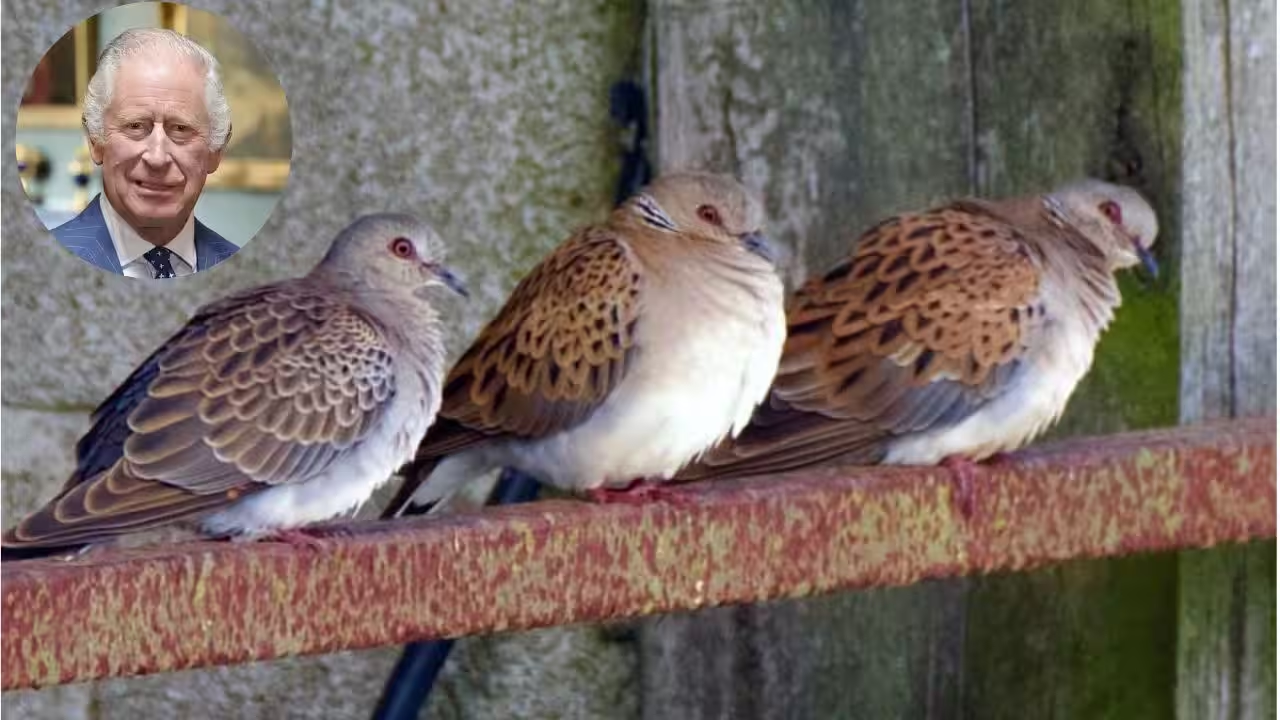
King Charles’s Sandringham estate has become part of an effort to bring turtle doves back to the British countryside, with conservationists releasing captive-bred birds into suitable habitats. The initiative comes as the species faces a severe population decline, with official monitoring showing that its UK numbers have fallen by 98% since 1994. Through its support for breeding and release programmes, the royal estate is contributing to a wider attempt to prevent one of Britain’s fastest-declining bird species from disappearing from its traditional breeding grounds.King Charles’s Sandringham estate helping restore turtle dovesThe conservation work at Sandringham involves supporting the release of captive-bred turtle doves into the surrounding countryside. According to the Sandringham Estate’s account, estate wardens assisted with the release of 100 birds that had been bred through a dedicated conservation project.The birds were delivered to Sandringham on 27 October 2023 by the Turtle Dove Captive Breeding to Release Project, working alongside the Turtle Dove Trust. Their release took place during late spring and early summer 2024, giving them an opportunity to establish themselves in an environment considered suitable for the species.The estate's involvement continued in September 2024, when another 135 young turtle doves were delivered to Sandringham as part of a wider distribution programme. These birds formed part of a group of 606 youngsters sent to 8 holding and release enclosures across the UK, mainly in East Anglia and Lincolnshire.The Sandringham Estate also contributed financially to the initiative. It donated £6,000 towards the project's costs and supplied much of the feed required for the birds. The support reflects the role that private landowners and large estates can play in conservation efforts by providing both suitable landscapes and practical resources.The turtle dove population has fallen so sharplyThe turtle dove is the smallest native dove species in the UK and has become increasingly difficult to spot in the wild. Its distinctive appearance includes chestnut and black markings on its upper body, a black tail with white edges and black-and-white stripes around its neck.According to the Game and Wildlife Conservation Trust (GWCT), the bird has been on the UK's Red List since 1996. The organisation identifies several factors behind its decline, including the loss of suitable breeding and feeding habitats, reduced access to clean water, hunting along migration routes and disease.The loss of food sources has been particularly damaging. Turtle doves depend on seeds from wild plants, including chickweed and fumitory, as well as grains found in farmland. Changes in agricultural practices have reduced the availability of these seeds, leaving birds with fewer opportunities to feed during the breeding season.The GWCT explains that adult turtle doves are producing around half as many chicks as they did in the 1970s. With fewer nesting attempts and lower breeding success, the population has struggled to replace the birds being lost.The species also faces dangers during its long migration between Britain and Africa. According to the GWCT, turtle doves travel more than 5,000 kilometres between their breeding and wintering grounds, exposing them to additional risks along the way.What do official figures reveal about their declining numbersThe scale of the decline is reflected in official population monitoring. The Joint Nature Conservation Committee (JNCC), reported that the UK's turtle dove population index had fallen by 98% between 1994 and 2024.The decline was the largest recorded among the 119 bird species monitored through the Breeding Bird Survey during that period. The figures also showed a 72% reduction over the previous decade, between 2014 and 2024.The JNCC's statistics draw on the Breeding Bird Survey, a monitoring programme jointly funded by the British Trust for Ornithology, the JNCC and the Royal Society for the Protection of Birds. Thousands of volunteers record bird numbers across the country, helping researchers understand changes in wildlife populations.The committee also referred to an earlier national survey that estimated the UK turtle dove population at 2,092 territories in 2021, with a range of 1,559 to 2,782. These figures measure breeding territories rather than individual birds or breeding pairs. Sandringham Estate describes the remaining wild population as barely around 1,000 pairs.Captive breeding is being used to support recoveryThe breeding initiative behind the Sandringham releases began in 2018, when Trevor and Deborah Lay established the Turtle Dove Captive Breeding to Release Project.The Turtle Dove Trust was founded in 2019 by three Norfolk conservationists: Bill Makins of Pensthorpe Natural Park, Ed Pope of Watatunga Wildlife Reserve and Chris Knight, who had previously worked on restoring stone curlew populations in East Anglia.According to Sandringham Estate, the breeding project produced more than 500 birds in 2022 and 2023 combined, followed by just over 800 in the subsequent breeding season. The aim is to establish a substantial flock of captive-bred birds that can survive in the wild and eventually contribute to a stronger British population.EcoWatch reported the programme's wider expansion, including plans to release hundreds of captive-bred birds during that summer. It also reported that conservationist Ben Goldsmith was working with the Turtle Dove Trust to release 200 birds in Somerset, where the species had become extremely rare.The report noted that tracking devices had been fitted to 20 birds to help monitor their movements during migration. Such monitoring could provide useful information about whether captive-bred birds retain their natural migratory behaviour and successfully travel between Britain and their African wintering grounds.Why conservationists disagree over captive-bred releasesAlthough the release programme has attracted support, captive breeding has also prompted debate within the conservation community.In September 2025, Operation Turtle Dove and its partners expressed concerns about using captive-bred releases as a conservation measure. Their objections included possible disease transmission, genetic contamination and the risk that released birds might establish a non-migratory population.They also argued that the main priority should be improving the availability of food and nesting habitats during the breeding season. Without suitable conditions in the wild, increasing the number of released birds might not address the underlying reasons for the decline.The Turtle Dove Trust responded to this criticism in its published statement, arguing that carefully managed releases could complement habitat restoration. It said participating breeding sites had undertaken veterinary-led disease risk assessments and followed quarantine and hygiene procedures to reduce potential health risks.The Trust also presented tracking records that it believes demonstrate that captive-bred birds retain their natural migratory instincts. It reported that one satellite-tagged bird released in 2025 travelled through France before reaching northern Spain in September.However, the organisation acknowledged that more tracking work would be needed to build a stronger evidence base and understand the long-term results of these releases.Sandringham's landscape offers suitable conditions for the birdsThe Sandringham Estate believes its surrounding landscape can provide the conditions turtle doves need to feed, nest and breed. Its coppices, meadows, ponds and waterways offer a combination of habitats that support wildlife.The estate's farmland is particularly relevant because turtle doves depend heavily on seeds found in arable and mixed farming landscapes. Areas with suitable vegetation and access to food can help the birds establish themselves during the breeding season.The GWCT also highlights the importance of maintaining scrubby hedgerows, shallow water sources and open areas with naturally growing weeds.You use AI every day. Now get your AI Quotient. Take the AIQ test.
Topics in this story
Gathered from external sources. Rights to this text belong to whoever originally published it.