France moves to impose curfews as it reels from worst violence in years
Only shattered glass and the skeletal frame of the Haussmannian roof remain of Limoges’ 19th-century town hall.
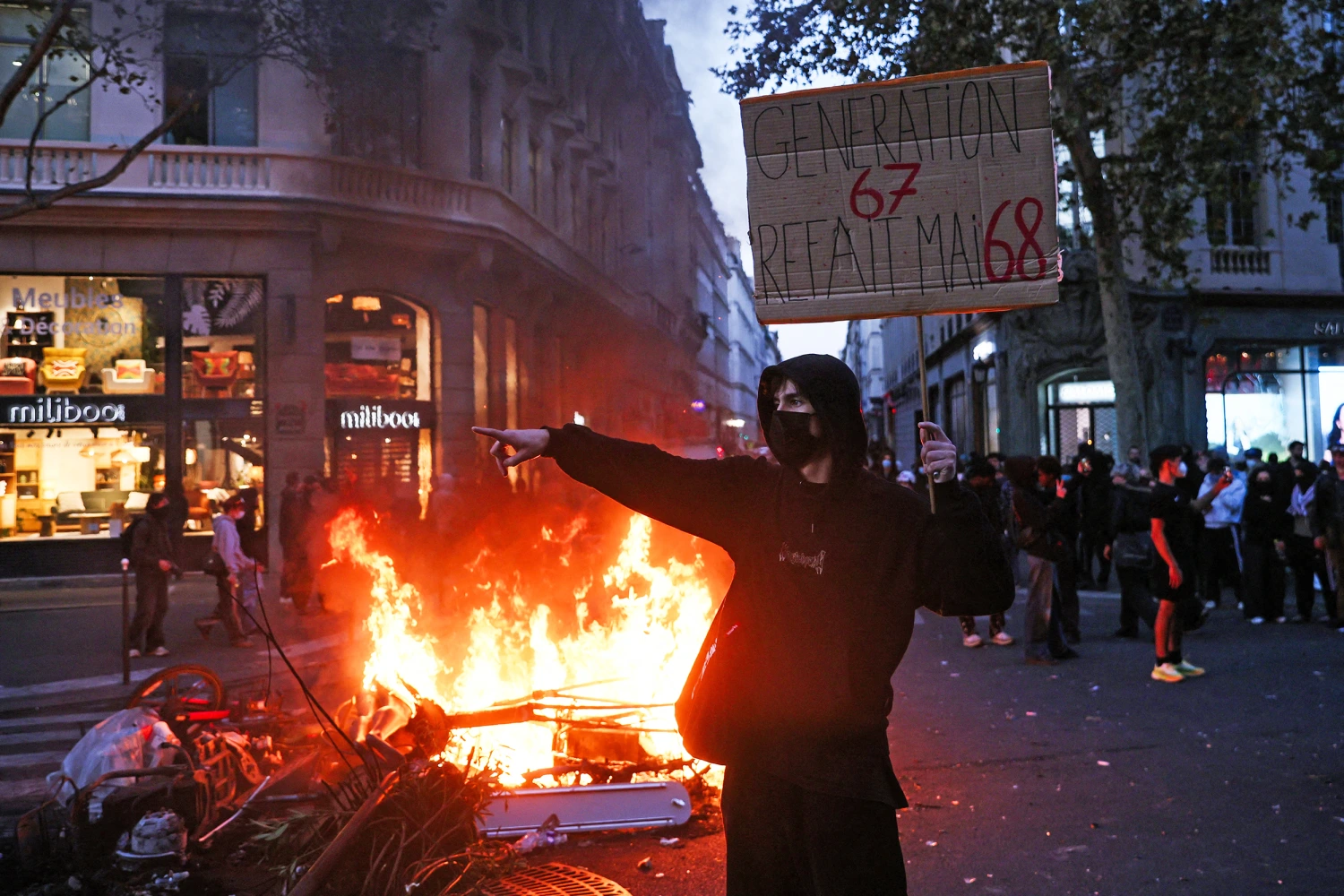
Only shattered glass and the skeletal frame of the Haussmannian roof remain of Limoges’ 19th-century town hall. The town was among the places hit hardest by the rioting and looting that erupted across France over the weekend, leaving the country reeling from its worst violence in years. The towering spire at the heart of Limoges ultimately collapsed in flames, drawing cheers from the crowd below that were captured on video. In Paris, the Louvre Museum said it was closed after protesters announced their blockade of the iconic tourist site. Authorities conceded they had “lost control” in major cities, and said Monday they had asked some cities to impose a partial curfew in a bid to restore order. “Despite scenes of severe violence and extensive property damage, no one was killed and that is a miracle,” Prime Minister Sébastien Lecornu said after an emergency meeting with top officials. About 3,000 businesses had been looted or vandalized, he added. The unrest came on the heels of an anti-government movement that had seen days of largely peaceful protests over rising living costs and poor school conditions. On the weekend, this unrest descended into violence on the streets of cities across France: Rioters, often hooded and masked, looted stores and torched cars and government buildings as they faced off with the police. More than half a million people took part in the protests across the country, according to the French Interior Ministry, and nearly 2,400 people were arrested. Almost 1,000 police officers and firefighters were injured, it added. Macron blamed “troublemakers from far-left fringe groups” for the violence. “Watching these images, we all wondered how French people could do this to France,” he said in a televised address Sunday. “Nothing justifies it, nothing explains it, nothing excuses it.” Macron added that “those who sought to bring down the Republic will be held accountable.” Macron’s centrist administration, in its final months of power, has been consumed by a mounting sense of crisis that could pave the way for the far right to take power next year. Macron will leave the presidency of the Eurozone’s second-biggest nation with ballooned debt, stagnated growth and deep-seated social discontent. The president “looks like a spectator,” Sylvain Brouard, research director of Fondation Nationale des Sciences Politiques at Sciences Po in Paris, told NBC News. “It doesn’t look like he was in control of anything,” he said, and people are expecting “solutions.” Macron appeared at a Celine Dion concert Friday and embarked Monday for a Gulf tour to secure oil supplies, fueling criticism that he appeared out of touch with public concerns. “That’s probably a source of anger for many of the people that were claiming their frustrations and their deprivations and the need for more money for the higher cost of living,” Brouard said. As the damage became clearer Sunday, political leaders across the spectrum pointed fingers at each other for the violence. Macron’s centrist government blamed the far left, while the leading far-left candidate Jean-Luc Mélenchon blamed the incumbents. Leading far-right presidential hopeful Marine Le Pen on Sunday called Macron’s administration “exhausted, disoriented and seemingly incapable of doing anything other than commenting on its own powerlessness.” She leads the polls ahead of April’s vote. Macron stopped short of declaring an emergency, as some right-wing politicians demanded. But some cities, including the southern port city of Marseille, imposed a ban on public gatherings for most of Monday. Speaking after the crisis meeting Monday, Lecornu said he had asked some local authorities to introduce curfews but dismissed the idea of putting all of Paris under such a measure. Unrest had continued in Paris on Sunday as police faced off with demonstrators at Place de la République. Damage was acute all around France, though, not just in the capital. While protest movements are part of the fabric of French society, they seldom take a turn as violent as they did over the weekend. For many, watching flames engulf the town hall in Limoges, a central town known for its porcelain, was an assault on the state itself. “To attack her is to attack the republic,” Mayor Guillaume Guérin said in a post on X on Sunday. In the southeastern city of Lyon, a tourist office building was burned. Some storefronts along the shopping streets near Bordeaux’s city hall were destroyed, and the goods inside appear to have been stolen, social media videos geolocated by NBC News showed. City halls in Marseille, Lille, and Angers were broken into, Interior Minister Laurent Nuñez said Sunday, adding the arrests made had little to do with the student protests. Authorities had “lost control” in major cities, the interior minister conceded. He offered his resignation to Macron, who rejected it. President Donald Trump blamed immigration for the violence in the country, saying Sunday on Truth Social, “France is burning!” He blamed immigrants again on Monday, saying, “They must CLOSE THE BORDERS, FAST!” Vice President JD Vance said on X the protests served as a warning for Americans. “This is the future congressional Democrats seek for your country,” Vance said. French officials have not blamed immigrants for the unrest. Macron acknowledged legitimate concerns of the protesters, while blaming the far left for the violence. High school students initially demanding better classroom conditions first took to the streets last month, highlighting crumbling infrastructure and insufficient teaching capacity. “We’re weeks into the movement, and the proposals of the government were pretty late and they were pretty deaf to the claims of the students,” Brouard said. Their protests were met with a forceful response from the police as riot officers launched tear gas. In the weeks that followed, the students were joined by several labor unions and farmers who demanded respite from a whole host of issues, including primarily the soaring cost of living and the price of gas, which has shot up in part due to the war in Iran. The demands of French students resemble those of their peers in Spain, Portugal and Albania, who in recent days have also taken to the streets over education conditions. In Italy, weekend protests over rising costs and public services resulted in hundreds of arrests after scenes of looting and vandalism, authorities said Monday.
Topics in this story
Gathered from external sources. Rights to this text belong to whoever originally published it.