Carmarthen fossil hunter Dorothea Bate recognised with blue plaque
Dorothea Bate discovered the dwarf elephant and the myotragus, an extinct goat-like antelope.
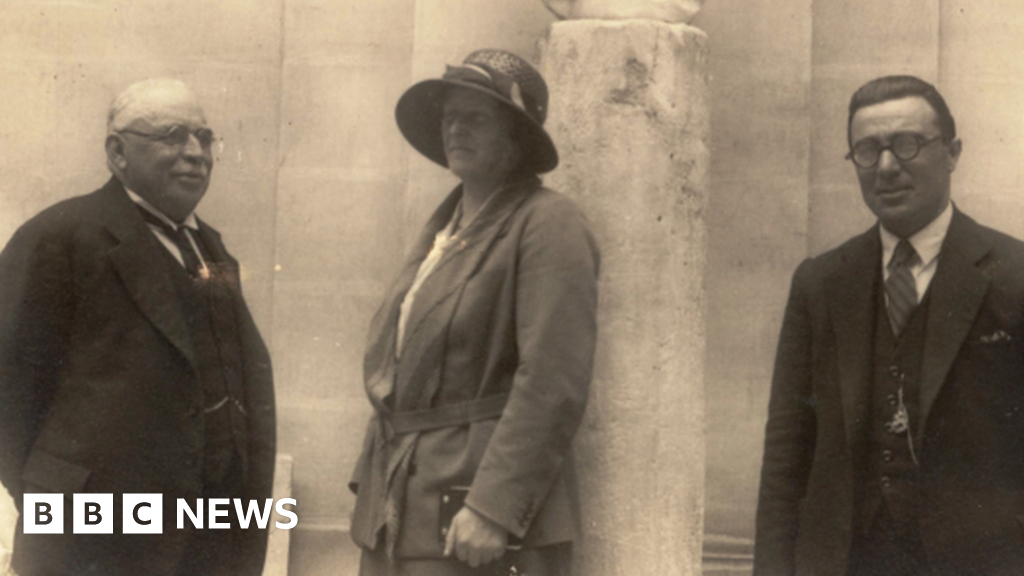
A pioneering fossil hunter who was one of the first women to be employed by the Natural History Museum has been recognised with a national blue plaque.
Dorothea Bate, who died in 1951 aged 72, "transformed our understanding of prehistoric animals and ancient environments" through her research, Historic England said.
She has been recognised with a plaque at the Natural History Museum , in Tring, Hertfordshire, which notes in its inscription that the palaeontologist was the "Officer-in-Charge of this museum from 1948".
Bate was born in Carmarthen, Wales, in 1878 and developed a fascination with the natural world from an early age.
She moved with her family to rural Gloucestershire as a young woman and spent hours exploring the surrounding countryside and caves, collecting fossils.
She had little formal education, instead largely teaching herself, and in 1900 asked for work behind the scenes at the Natural History Museum in London.
Her determination impressed museum staff, earning her a position as an assistant and beginning an association with the institution that would last more than 50 years.
She published her first scientific paper, A Short Account Of A Bone Cave In The Carboniferous Limestone Of The Wye Valley, in 1901.
Bate went on to undertake expeditions across the Mediterranean, often travelling alone to remote caves in search of evidence of ancient life.
In Cyprus, she discovered a previously unknown species of dwarf elephant and in 1909, while in the Balearics, she discovered the myotragus - an extinct goat-like antelope.
She achieved more than 80 published scientific papers, despite spending most of her career without a permanent paid position.
In a joint statement, co-CEOs of Historic England Claudia Kenyatta and Emma Squire said that Bate's "life was defined by her intense curiosity and desire to understand the natural world".
"She used this drive to make sense of ancient life through fragments of bone, bringing it to life once again," they said.
"Her research transformed our understanding of prehistoric animals and ancient environments.
"Not only does her work continue to be invaluable in the field that she helped to establish, but as one of the first women to be employed by the Natural History Museum she was instrumental in paving the way for future women in science.
"This plaque ensures that her pioneering contributions to science receives the wider recognition it deserves."
Heritage minister Baroness Twycross said Bate's achievements "helped break through the glass ceiling and paved the way for women in palaeontology".
Dr Sandra Knapp, director of research at the Natural History Museum, said: "The role of women scientists in natural history is often hidden - but Dorothea Bate's work with fossil mammals was both innovative and set a path for others, despite obstacles.
"The installation of this plaque not only honours her but also serves as a reminder that women have been, and continue to be, key contributors to our understanding of the natural world."
Richard Hammond to 'find a way' to share mansion with bats after renovation plans paused
I brushed off my sore throat as a hangover, but it turned into sepsis
The Grand Tour's new presenters: 'I hope we prove the critics wrong'
Topics in this story
Gathered from external sources. Rights to this text belong to whoever originally published it.