In 2011, Philadelphia began a $2 billion plan to turn hard blocks into rain gardens and porous streets; by 2021 it kept an estimated 3.08 billion gallons of stormwater out of waterways each year
Discover how Philadelphia's innovative Green City, Clean Waters program cut sewer overflows by 3.08 billion gallons annually, reshaping urban water management through eco-friendly solutions like rain gardens and porous streets.
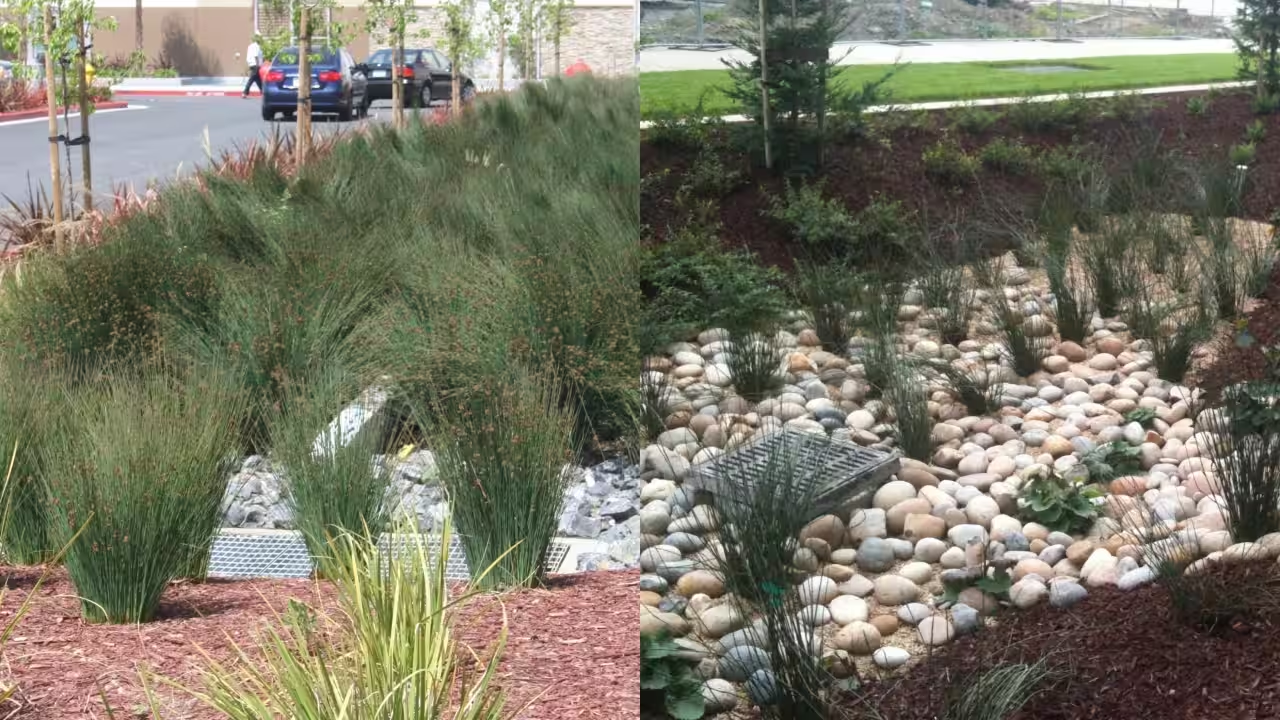
Philadelphia is one of the oldest cities in America, and for decades its water-absorbing streets, rooftops, and sidewalks were progressively covered with hard surfaces, until the pipe networks beneath them could no longer handle the runoff. The city struggled with this for many years before taking an environmentally focused approach to resolving a grave infrastructural issue.A city built above underground streamsSome 60 percent of Philadelphia uses what engineers call a combined sewer system, in which rainwater and domestic sewage flow together through the same pipes to treatment plants. That system works in dry weather, but heavy rain can overwhelm the pipes, sending a mix of stormwater and untreated sewage into rivers and streams. For a community between the Delaware and Schuylkill rivers, this meant billions of gallons of filthy water finding its way into local waterways every single year.By the early 2000s, the problem was too big to ignore, and Philadelphia officials began searching for an alternative to the standard solution of creating huge underground storage caverns and tunnels, an approach estimated to cost the city as much as nine billion dollars. Eventually, the Environmental Protection Agency approved a totally different strategy, one centred on softening the city rather than merely burying more concrete beneath it.A twenty-five-year bet on green infrastructureIn 2011, Philadelphia began Green City, Clean Waters, a twenty-five-year programme with an investment of approximately $2.4 billion. It was structured on rain gardens, tree trenches, porous pavement and vegetated planters that were designed to soak up stormwater before it ever reaches a sewer line. Rain was no longer seen as waste to be drained away as quickly as possible but as a resource to be captured, slowed down and allowed to seep organically into the ground. Streets that had poured every drop of rain directly into the sewer system were repaved with materials that allowed water to seep through, and empty lots and schoolyards were recontoured into little basins that could catch storm runoff.Since the initiative began, the Philadelphia Water Department has supervised the roll-out of more than a thousand of these green stormwater projects city-wide, spread throughout parks, sidewalks, transit corridors and private properties. A decade into the plan, by 2021, the Philadelphia Water Department reported that this network of small-scale interventions was keeping an estimated 3.08 billion gallons of polluted stormwater out of the Delaware and Schuylkill rivers every year, a volume that would otherwise have poured straight into the city's waterways during heavy rain.The individual components of this system are intentionally tiny and unglamorous, and that is part of why the total achievement is easy to miss. One rain garden may only collect a small amount of water from one block, one porous parking lot may soak up runoff from one storm and one row of street trees may slow rain on its way down. But multiplied across thousands of such sites across the city, the cumulative impact is that a significant portion of Philadelphia’s overall stormwater burden is being handled before it ever gets to an outdated pipe network.A model that other cities are eyeing onPhiladelphia's approach has gained attention far beyond its borders, and NACTO has profiled it as one of the largest green street projects at city scale, noting that the programme has deployed green infrastructure across more than 28,000 acres of the city's combined sewer area. Part of the attraction is the economics. It has generally been cheaper to build green infrastructure over thousands of smaller sites than to build a few enormous subterranean tunnels and it has ancillary benefits no concrete tunnel ever could, from shaded streets and reduced summer heat to slightly higher property prices in the communities where the work has been done.And none of this indicates the initiative has outright solved Philadelphia's stormwater problem. Rainfall patterns have intensified since the plan was first drawn up in 2009, and the city may eventually need to combine its green strategy with more grey infrastructure to keep up with larger storms. But even so, the core assumption underlying Green City, Clean Waters, that a city can make a real reduction in sewage pollution by rethinking its streets, not just its pipes, has already changed how planners in other flood-prone areas think about stormwater.Delegations from other cities often visit Philadelphia to learn how the programme was conceived, financed and implemented on this scale, and numerous towns have subsequently drafted their versions of green stormwater plans, taking Philadelphia’s approach as the starting template. Whatever the city ultimately does to adapt to the increased rainfall, the core premise that redesigning streets and vacant lots can compensate for the massive subsurface infrastructure has shown that street redesign can help reduce pressure on subsurface infrastructure, one rain garden and permeable pavement at a time.You use AI every day. Now get your AI Quotient. Take the AIQ test.
Topics in this story
Gathered from external sources. Rights to this text belong to whoever originally published it.