Rathlin Island: I had no heating or electricity for more than two years - now I have a new home
Ruari Morgan is one of the first tenants in a new development of 10 social homes on Rathlin Island.
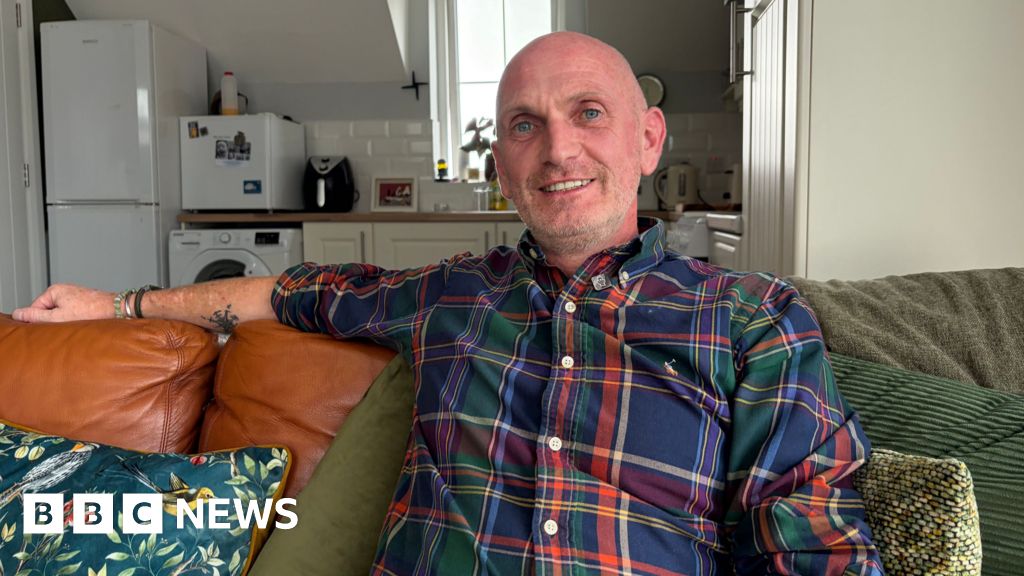
For the past-two-and-a-half years, some basic home comforts have been hard to come by for Ruari Morgan.
A fire in the backup generator of his old stone cottage on Rathlin Island left him without electricity, heating or hot water.
Now he's enjoying the simple pleasures of being able to come home and put the kettle on or have a shower after he moved in to a new social home two weeks ago.
The development of 10 social houses is the first on the island for more than a decade and it is hoped it will allow the unique community to sustain its population and provide a boost to its economy.
Rathlin is a small island off the north east coast of Northern Ireland, between Northern Ireland and Scotland, with a population of about 150 people.
Morgan, who was born and bred on the island and returned 15 years ago after living and working abroad, said social housing created more opportunities for islanders to come home.
"Obviously the more accommodation and the more affordable accommodation on the island is a good thing," he said.
"It's not always about encouraging new people to come to the island - which we do of course - but it's about making life here sustainable for the people who live here and have a connection to the island."
Morgan had been on the waiting list for four years before being allocated the property.
"I travel quite a lot and I volunteer abroad, but Rathlin's my base, this is my home," he said.
"We have a really good community here and it's not only people who have a lifelong connection...it's a nice mix."
The homes in Church Bay came following a housing needs assessment carried out by the Northern Ireland Housing Executive (NIHE), Rural Housing Association and Rathlin Development Community Association (RDCA).
The assessment found there was a need for more social housing to help sustain the island's population.
When it came to allocating the homes, NIHE's points-based system was used in conjunction with a local Rathlin lettings policy which included having a connection to the island.
Marina McMullan, the chairwoman of RDCA, grew up on the island and also lived and worked elsewhere before coming back.
She said the new scheme was vital to help keep the island's community thriving.
"It means people can stay here, families can stay here for employment, for school," she said.
"Social housing means the cost is not exorbitant, it means families don't have to move away and leave the senior citizens at home.
"It's great for the school, it keeps a small community.
"Some people have had to leave because of the lack of housing, now hopefully with these houses they'll be able to move back, especially young people with families because that's the future."
The assessment was carried out in 2016 and it has been a long road to finally getting the homes completed.
The scheme was delivered by Rural Housing Association and the NIHE along with the Department for Communities.
The task was not made easier by the logistics of getting workers and building material on to the island, with much of it having to be shipped over on a barge.
Both Morgan and McMullan were full of praise for the workers, who they said integrated with community life when they were on site.
McMullan said it was important an island like Rathlin was able to keep its way of life.
"We're the only island in Northern Ireland with a vibrant population that has been there for generations and there's no reason why we can't be here for future generations," she said.
One of the newer residents in Rathlin was Holly Hartley.
She came to the island just over a year ago to volunteer on the RSPB's Life Raft project to eradicate ferrets.
She never left and now works at the Manor House Hotel and the primary school.
She said she was pleased more islanders would have an opportunity to access social housing.
"It's a really good first step because it allows young families to move in and bring that next generation and I think that's really encouraging," she said.
"I know a lot of people who have family members who were born and raised on the island but have had to move away because there's nowhere for them to go.
"People might say 'why do you need more houses there's not that many people here'? But the point is it encourages people.
"I think if you give people that space to grow naturally they will expand and it just provides a longevity to the island."
"It's definitely the kind of place I can see myself staying for a considerable amount of time," she said.
"I can open my bedroom curtains and see dolphins out my window, it's so surreal, especially being from Kent where you don't really get much of that."
How an island became ferret free - thanks, in part, to Woody the wonderdog
Topics in this story
Gathered from external sources. Rights to this text belong to whoever originally published it.