Rubio seeks to expand Central Asia ties with pomp-filled Uzbekistan visit
The Trump administration has portrayed resource-rich Central Asia — wedged between Russia, Iran and China — as a geopolitical battleground that deserves more attention.
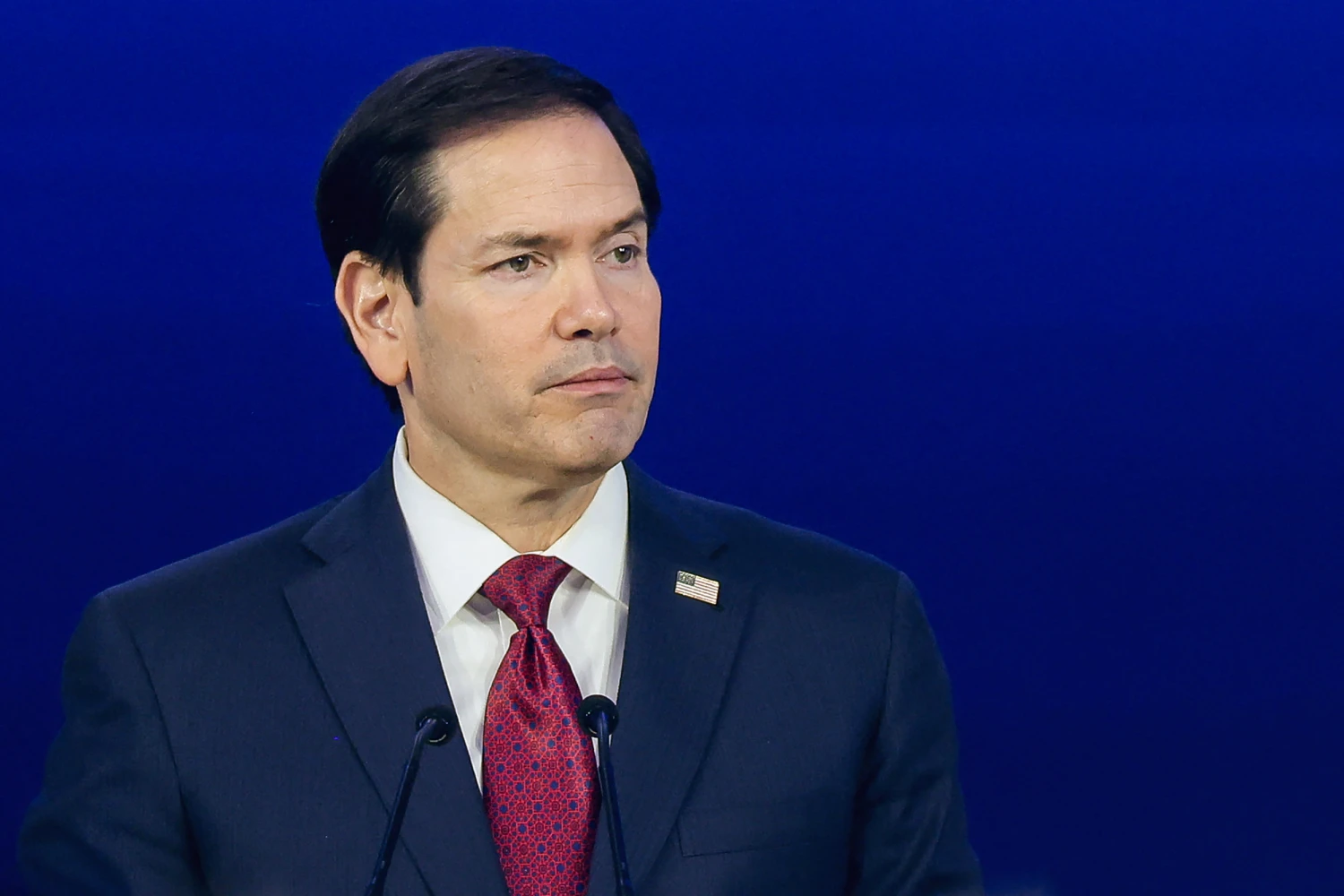
SAMARKAND, Uzbekistan — Secretary of State Marco Rubio met with counterparts from five Central Asian nations in Uzbekistan on Monday, a trip that resulted in relatively minor public deliverables, but which U.S. officials have presented as an opportunity to expand American soft power. Rubio, who arrived in the historic Silk Road city of Samarkand on Sunday night, met in the morning with the foreign ministers of Uzbekistan, Kazakhstan, Kyrgyzstan, Tajikistan and Turkmenistan. In the evening, he dined with Uzbek President Shavkat Mirziyoyev and participated in a U.S.-Uzbekistan business council event. The Trump administration has portrayed resource-rich Central Asia — wedged between Russia, Iran and China — as a major geopolitical battleground that deserves more attention than it has received under previous administrations. U.S. officials have placed a particular emphasis on trying to secure greater access to the area’s rare earth mineral supplies, and Rubio came to Samarkand with more than 200 U.S. business leaders in tow, the State Department said. “I mean, look, it’s competition,” Rubio told journalists Monday morning after strolling through Registan Square, a complex of three imposing, azure-tiled madrassas that date to the Timurid Empire. “We have products, we have companies, they make things, and we just want fair competition and an opportunity.” Upon landing in Samarkand on Sunday night, Rubio was warmly embraced by Uzbekistan’s foreign minister, Bakhtiyor Saidov, while two women clad in elaborate gold-and-black traditional dresses presented him with a bouquet. In Registan Square on Monday, Rubio’s Uzbek hosts released hundreds of pigeons into the sky and filled the vast space with local pop music. Rubio’s trip comes at a fraught time in international affairs, and the secretary has faced questions from reporters about whether traveling to Uzbekistan is the best use of his time. Speaking to assembled business leaders on Monday night, Rubio appeared to address those criticisms, saying foreign trips were too often designed to resolve immediate crises, rather than build long-term relationships. “Our focus on a problem region or a problem country or a problem issue in the world still has to be there, but it cannot come at the expense of embracing opportunities,” Rubio said. “You have to be able to do both. Certainly, a large country and an influential country like the United States needs to be able to do both.” U.S.-Ukraine relations are at a low point after Washington urged Kyiv earlier in the month to stop striking Russian refineries and agreed to buy Russian diesel in a bid to lower domestic fuel prices ahead of the U.S. midterm elections. The war with Iran shows little sign of resolution, and U.S. ally Saudi Arabia has entered a disruptive war with Yemen’s Houthis. While European diplomats have often viewed Rubio as more supportive of Ukraine than Trump, in Samarkand he showed no signs of disagreeing with his boss, telling reporters that Ukrainian President Volodymyr Zelenskyy should focus on ending the war and denying an assertion by Ukraine’s leader that the U.S. had paused intelligence sharing. There are indications that some of the Central Asian nations present, all of which are post-Soviet states, are deepening diplomatic and economic links with Washington. On Monday, Uzbekistan signed the Artemis Accords, a U.S.-led multilateral agreement that sets non-binding principles and legal guidelines for peaceful space exploration and resource management. The U.S. and Uzbekistan also signed an investment agreement across various sectors that the parties said would total $12 billion when implemented. But all five nations also maintain significant commercial and diplomatic links with Russia and, to varying extents, China and Iran, a fact that Rubio acknowledged. “Countries want to have as many relationships as possible,” Rubio told reporters while speaking alongside Saida Mirziyoyeva, the daughter of Uzbekistan’s president and the head of the presidential office. “Uzbekistan’s been clear: They want to be friends to everybody.”
Topics in this story
Gathered from external sources. Rights to this text belong to whoever originally published it.