In 2009, Nebraska collected 11,605 tons of scrap tyres and transformed them into playgrounds, running tracks, artificial turf and rubber roads
US News: In 2009, Nebraska's state-funded recycling program collected over 11,605 tons of scrap tyres, repurposing them into essential community materials like playgrounds, sports tracks, and rubber roads, while addressing the tyre waste crisis.
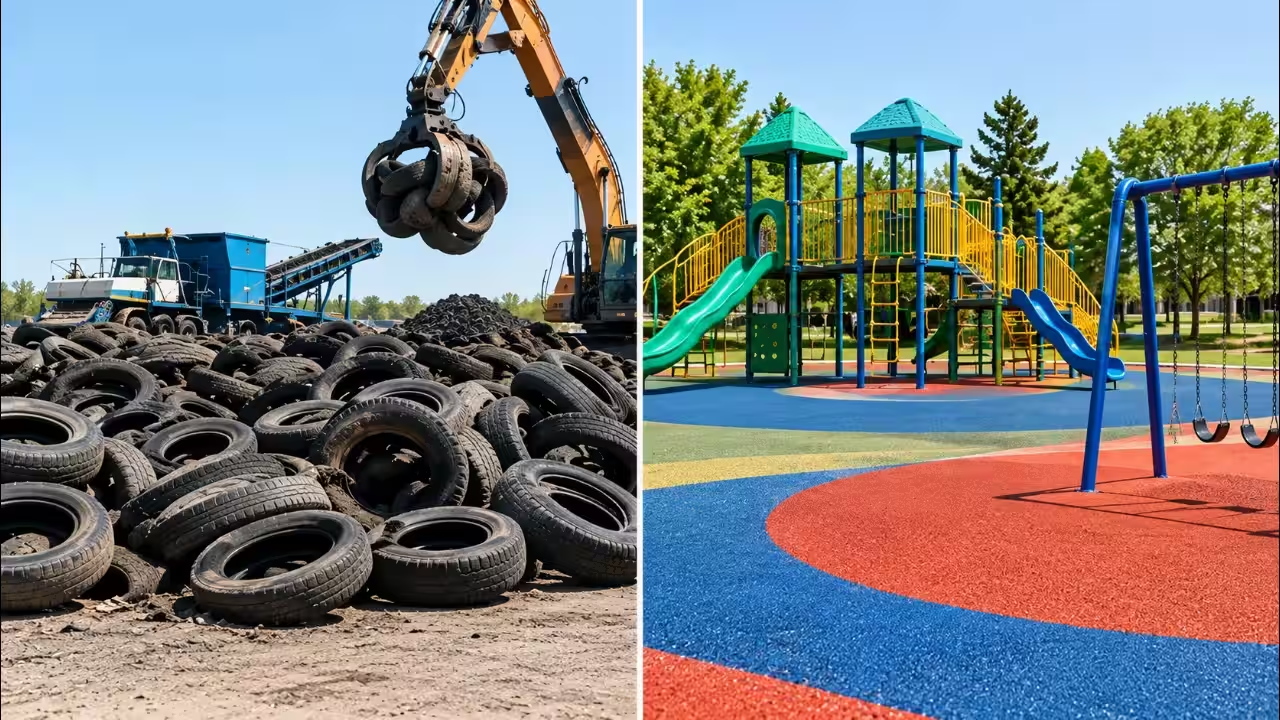
A worn-out tyre usually has little value once it is removed from a vehicle. Left in piles, however, old tyres can occupy large amounts of space and create problems of their own. In 2009, a state-funded recycling programme in Nebraska took a different approach, treating discarded tyres as a source of usable rubber rather than waste.According to the Nebraska Department of Environmental Quality, the state made funds available in 2009 to clean up 11,605 tons of scrap tyres from individuals, farms and businesses. The programme was part of more than $2.5 million in grants supporting 126 tyre collection and recycling projects across Nebraska. The collected tyres were to be processed into crumb rubber for playground surfaces, running tracks, artificial turf and rubber-modified asphalt, while some were also processed into larger shreds for other applications.A tyre fee became the starting pointThe programme was supported by a simple funding mechanism. Nebraska charged a $1 fee on each new tyre sold in the state, with the money directed towards waste reduction and recycling grants. In 2009, the grants were intended not only to remove accumulated tyres but also to help communities purchase products made from recycled tyre rubber.The problem was significant. In Nebraska, according to the environmental agency, the number of scrap tyres produced each year exceeded 1.5 million tyres. It was almost equal to one tyre per capita of the people living in Nebraska. The grants aimed to address two problems at once: collecting waste tyres and creating markets for the material they contained. Sixty political subdivisions had planned to conduct scrap tyre collections in 2009 using the money allocated. This allowed tyres from households, farms and businesses to enter the recycling process.From tyres to school tracks and playgroundsOnce processed, the rubber could be reshaped into products that no longer resembled the original tyre. Crumb rubber, made from crushing scrap tyres into smaller pieces, was employed in various recreational programs implemented with the support of the grant program. One project at Morrill Public Schools used approximately 80,000 pounds of crumb rubber from recycled tyres for an athletics track surface. Another project at Omaha Public Schools' Northwest High School used 40,000 to 45,000 recycled tyres to help build an artificial-turf football field. The two projects were measured differently, with the Morrill project reported by weight and the Omaha project by the number of tyres used.When old tyres became part of the roadNebraska Department of Environmental Quality also noted that recycled tyre rubber had already been used in Nebraska road projects before 2009. A 2001 Highway 2 project used the equivalent of about 16,400 scrap tyres, while a 2002 Interstate 80 project used roughly 47,000. In 2009, the department received $388,927 to partially fund rubber-modified asphalt at three locations: 1.27 miles of Highway 43 near Bennet, using 1,515 tyres; 11.28 miles of Highway 91 near Leigh, using 32,871; and 8.5 miles of Highway 159 near Rulo, using 6,376.Officials described the project as a continuation of their assessment of rubberised asphalt on Nebraska roads. This mattered because the programme was not meant to prove that tyre rubber outperformed road materials in every case. It was a test to see if a material that had served one purpose could be used in another structure.Catch the latest World News and Live updates. Download the TOI app.
Topics in this story
Gathered from external sources. Rights to this text belong to whoever originally published it.