Suvendu eyes Bengal sweep: Can Mamata, Congress unite to challenge BJP?
In a bold statement following significant bypoll victories, West Bengal CM Suvendu Adhikari aims for a clean sweep in the upcoming 2029 Lok Sabha elections. This article explores the rising tensions in Bengal's political landscape and the possibility of opposition alliances against the BJP's growing influence.
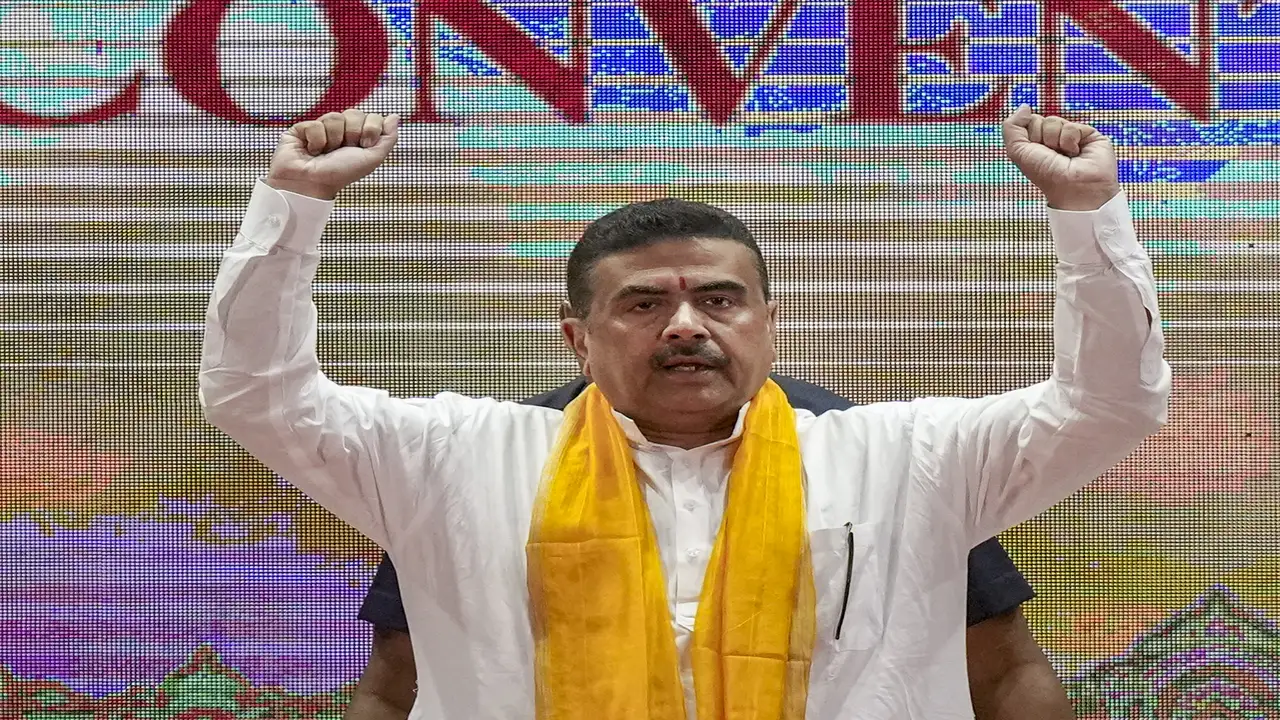
"We are set to win 42 out of 42 in the 2029 Lok Sabha election." West Bengal CM Suvendu Adhikari had made this grandiose claim even before the Nandigram and Rejinagar bypoll results. A visibly buoyant Adhikari reiterated the target after his party swept both seats. Victories in both constituencies were expected, yet the margins, particularly in Rejinagar, where roughly 70% of voters are Muslim, came as a revelation. With the all-important Kolkata and Howrah municipal polls likely to be held in late November, there is a perception that the BJP may win handsomely. It is up to the Opposition to put up a spirited fight.Bypolls have usually favoured the ruling partyWhat may give the Opposition some solace is the fact that bypolls, at least over the last decade or so, have followed an extremely predictable pattern in Bengal. Between the 2021 and 2026 Assembly elections, Trinamool won 20 of the 21 Assembly bypolls held in the state. Its dominance was particularly striking in 2024, when it swept all 12 by-elections, including four seats previously held by BJP legislators.In July 2024, Trinamool wrested Raiganj, Ranaghat Dakshin and Bagdah from the BJP despite the latter's electoral strength in these areas during the Lok Sabha election just weeks earlier. In November, TMC captured Madarihat, which the BJP had held since 2016. Even in June 2025, less than a year before its Assembly rout, Trinamool retained Kaliganj by more than 50,000 votes.There have been exceptions to the incumbent's advantage. In 2023, Congress, supported by the Left, defeated the ruling TMC in Sagardighi by nearly 23,000 votes. However, the MLA concerned, Bayron Biswas, soon joined TMC.Why BJP's victories still matterIn Nandigram, BJP's Hasi Rani Rath defeated Congress candidate Milan Pradhan, who had Mamata's support, by 1,22,753 votes. In Rejinagar, BJP's Shankharavh Sarkar defeated Aam Janata Unnayan Party candidate Golam Nabi Azad, son of party founder Humayun Kabir, by more than 75,000 votes.In both constituencies, BJP polled more votes than all its opponents combined. Rejinagar witnessed notable outreach from the CM, with Suvendu even saying that Muslims did not need to chant "Jai Shri Ram". He also urged them to turn over a new leaf and extend a hand of friendship to the new government.Following the result, Adhikari attributed BJP's success partly to support from beneficiaries of the Annapurna welfare scheme, under which eligible women receive ₹3,000 per month. Whether the BJP can really secure a share of the Muslim vote in elections with bigger stakes remains to be seen. But if it does, Suvendu's dream of a clean sweep in the Lok Sabha election may well look more realistic.Allegations of electoral excessesThe Opposition, though, has refused to grant legitimacy to the Assembly bypolls, citing alleged malpractices by the ruling machinery. Bengal Congress president Subhankar Sarkar demanded fresh elections in both constituencies, alleging booth capturing, intimidation, bogus voting and the forcible removal of polling agents. AJUP, which had won the seat previously, alleged that its candidate received zero votes in 33 booths and just one vote in another 19 booths. Mamata's TMC faction made similar allegations of rigging, while the rival Trinamool faction and the Left also complained about polling agents being prevented from functioning.In Nandigram, Congress candidate Milan Pradhan alleged that party agents had been driven out of booths and voters prevented from voting. His earlier arrest in connection with an old case related to the Nandigram land movement had already prompted allegations of political harassment.BJP rejected the rigging allegations, maintaining that polling was peaceful. The Election Commission described voting as largely peaceful despite receiving complaints. One widely circulated claim that BJP had received more votes than the number of registered voters at a Rejinagar booth was subsequently rebutted by election officials, who said the original electorate figure was incorrect.Such allegations are not new to Bengal's electoral politics, one of the reasons why the opposition have frequently asked for central forces to conduct polls. The 2018 panchayat elections witnessed widespread reports of violence and intimidation. More than a third of the seats were won uncontested, overwhelmingly by Trinamool, amid allegations that opposition candidates had been prevented from filing nominations. A year later, the BJP increased its Lok Sabha tally in Bengal from two seats in 2014 to 18 in 2019.Political observers have linked that breakthrough partly to resentment over the conduct of the panchayat polls. Very recently, Abhishek Banerjee’s Diamond Harbour model of winning by record margin of votes had also come under scrutiny. For BJP though, barely a few months into power, the chances of pushback to any alleged excesses remain relatively modest.What's next for the Opposition?The INDIA bloc has upped the ante in the capital, demanding the resignation of CEC Gyanesh Kumar over alleged vote manipulation during the SIR process. Leaders such as Rahul Gandhi, Mamata Banerjee and even those from the Left have been sharing the stage. With a common goal, the confluence is organic. But the state-level dynamics are very different, something that has affected the INDIA alliance for a long time.An INDIA alliance is unlikely to become a reality in Bengal, with Left and TMC cadres rarely seeing eye to eye. An alliance between Mamata's TMC and Congress remains an open question, with state leaders of the grand old party lukewarm about giving space to a leader who did not allow them much room to grow while in power.Mamata came to power in 2011 in alliance with Congress, but the two soon parted ways. Since then, the parties have hardly worked together politically, until this by-election. There have been several overtures from Congress in the past, but these were rebuffed by the then West Bengal CM, who wanted to maximise her political capital. Now that the script has flipped, Congress may not give in so easily.Former state Congress president Pradip Bhattacharya disclosed in September that the state leadership had advised against a proposed bypoll arrangement under which Congress would contest Nandigram and Mamata's Trinamool would fight Rejinagar. Adhir Ranjan Chowdhury's recent invitation to Mamata to return to Congress with her remaining MLAs and MPs came with a condition about leaving behind her political baggage, widely interpreted as a reference to Abhishek Banerjee.Even the Nandigram understanding was not a formal seat-sharing arrangement. Mamata supported Milan Pradhan after her faction's candidate withdrew. In Rejinagar, both parties contested separately. Many Congress leaders believe that it is time to rebuild the party in the state when opposition space is up for grabs. The BJP is still getting to grips with governance, and teething troubles in several areas, including the rollout of government schemes, have made headlines.The organisational crisis within Trinamool adds another dimension. Following the Assembly defeat, the party split into rival factions, prompting the Election Commission to temporarily freeze its original name and symbol. The Mamata-led faction and the Ritabrata Banerjee-led Democratic Trinamool Congress contested under different identities in the bypolls. Neither performed well. In Rejinagar, Mamata's faction received 3,847 votes, while Democratic Trinamool polled 2,044.The Left, meanwhile, continues to face the challenge of translating political visibility into electoral support. Younger leaders such as Satarup Ghosh, Dipshita Dhar and Srijan Bhattacharya have attracted attention, particularly on social media, but the party's electoral recovery remains limited.There were, however, modest improvements in the latest bypolls. In Nandigram, the CPI's Santi Gopal Giri increased his tally from 2,997 votes in May to 5,779. Congress also improved its vote count in both constituencies, although the Nandigram comparison is complicated by Mamata's support for its candidate.Municipal elections: The next big battleThe immediate electoral focus now shifts to the Kolkata and Howrah municipal polls, where voting is tentatively expected in late November. The stakes extend far beyond the two Assembly bypolls.In the 2021 Kolkata Municipal Corporation election, Trinamool won 134 of 144 wards, securing more than 72% of the votes. BJP won just three wards and Congress two. Interestingly, the Left Front, with nearly 12% of the vote, finished ahead of BJP in vote share despite winning fewer seatstThe forthcoming election will also be fought on a substantially altered map. Kolkata's wards have increased from 144 to 209, and Howrah's from 50 to 68. For both factions of TMC, this election will be the first major test of who enjoys greater public support. For Mamata Banerjee, south Kolkata remains her pocket borough, and following the humiliating defeat in Bhabanipur, she would be desperate to turn around her fortunes. For Firhad Hakim and others, it will be an opportunity to prove that they can win on their own without Didi's support.Congress and the Left have long been marginal forces in both Kolkata and Howrah, barring a few pockets. The Left appears inclined to contest independently in several areas, although the CPM has encouraged local discussions with Congress. Some Congress district leaders, meanwhile, have argued that the party should contest all 209 Kolkata wards on its own.The decisions are yet to be finalised, leaving Congress with a difficult choice between rebuilding independently, cooperating with the Left and exploring an understanding with Mamata.Road to 2029Nationally, Rahul Gandhi's success in rallying different INDIA bloc parties in the campaign demanding the resignation of the CEC has done his popularity no harm. The bonhomie between Sonia Gandhi and Mamata Banerjee at the recent press conference was there for everyone to see. They have maintained cordial personal relations despite the ebbs and flows in their political exchanges. But the political calculations in Bengal remain very different. Rahul's pointed attacks on Trinamool over corruption during the Assembly campaign had reinforced the Congress's adversarial position in the state. For local Congress workers, a sudden statewide alliance with Mamata would require a significant political adjustment. Didi however, remains in the frontlines in the protest against Election Commission and was detained on Saturday even as Rahul Gandhi skipped the protest and went to Chennai.At the same time, Mamata faces one of the most difficult phases of her political career, while the BJP confronts increasingly coordinated opposition protests at the national level. Hence the political equations could well change. After the municipal elections in Kolkata and Howrah, polls in more than 100 other civic bodies are expected next year, followed by panchayat polls in 2028 and the Lok Sabha election in 2029. Those who have power in the grassroots are likely to have a headstart in the Lok Sabha election.Suvendu has already set his sights on winning all 42 Lok Sabha seats in Bengal. Such a result would have significant implications for the BJP's national parliamentary tally. For Congress, the calculation is therefore not confined to the revival of its Bengal organisation. Its leadership must also consider the wider political ramifications of allowing the BJP a free-run in the state.For the Opposition, national unity over electoral issues is one thing. Building an effective political arrangement in Bengal is quite another. The coming municipal elections will provide the first major opportunity to see whether those differences can be bridged.Get the latest India News and Live updates. Download the TOI app.
Topics in this story
Gathered from external sources. Rights to this text belong to whoever originally published it.