The US should strongly advocate for political prisoner releases, global freedom
While celebrating recent political prisoner releases, author Nicole Bibbins Sedaca argues that the United States must use sanctions and diplomatic pressure to challenge the systemic use of imprisonment by autocratic regimes.
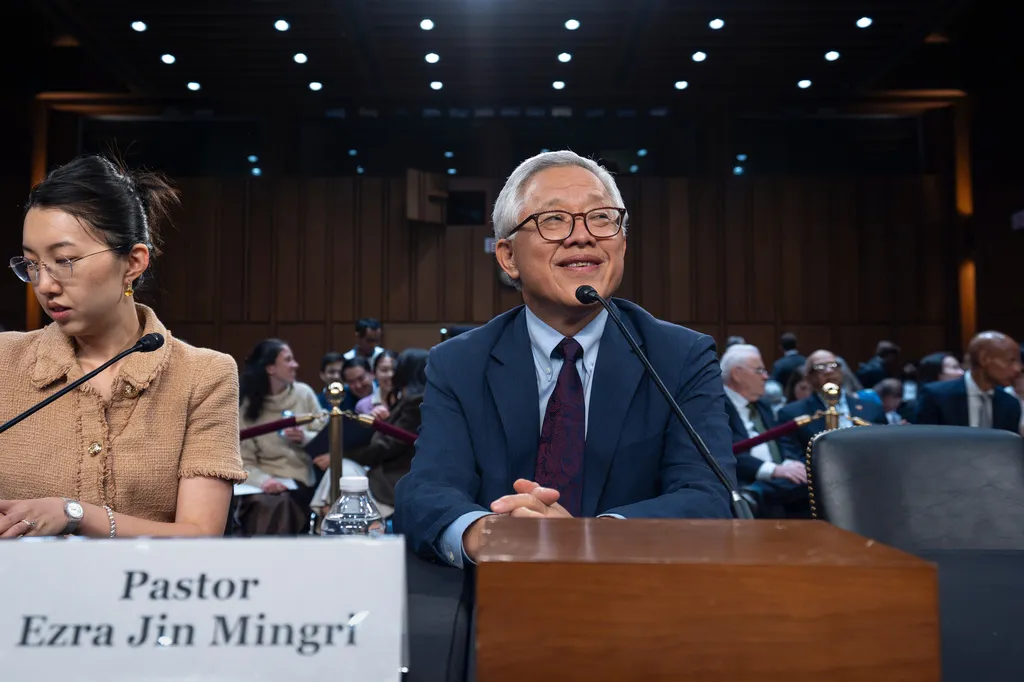
It is a familiar picture. An emaciated political prisoner walks off a plane, greeted by family and strangers stunned to see this person in the flesh. On the former captive’s face flash emotions of both incomprehensible relief and dizzying disbelief. These rare releases of political prisoners typically follow the tireless advocacy of family, friends, governments, and civil society.
As we celebrate these breakthrough moments of freedom, we should never forget the bigger picture that lurks behind each release, namely brutal autocratic regimes consolidating and asserting power by using human pawns and the capricious denial of freedom.
The United States should continue to advocate for the release of political prisoners, utilize tools to punish and deter such abuses, and — most importantly — recognize that any regime involved in political imprisonment lacks the values and trustworthiness for long-term American partnership.
We must naturally pursue short-term engagement with many nations to advance and protect American interests. We should also acknowledge, however, that the depravity of a regime denying freedom to its own citizens undermines that nation’s viability as a trusted partner. Those nations that share our democratic values are stronger, better, more sustainable partners.
We have celebrated the rare prisoner releases by name. Journalist Jason Rezian, freed from Iran. Pastor Ezra Jin , freed from China. Journalist Evan Gershkovich, freed from Russia. Activist Maryam Akbari Monfared, freed from Iran. Artist-turned-activist Luis Manuel Otero Alcantara , freed from Cuba. Pastor-turned-activist Evan Mawarire, freed from Zimbabwe.
Each release is unquestionably a welcome development, and at the George W. Bush Institute, we celebrate every individual who is restored to freedom. Yet each is a reminder of a growing tide of autocratic leaders, often loosely aligned with each other, willing to throw countless numbers of innocent people in prison, most often for practicing their faith, writing a news article, advocating for their rights, or demanding justice.
These autocratic leaders direct myriad government staff — from senior officials to the lowest prison guard — to deny these people their freedom, to harass their families and limit contact, to treat them with disdain and abuse, to deny access to medicine, adequate food, and fresh air, and — all too often — to subject them to inhuman abuse and torture. These are usually strategic, planned arrests designed not only to silence the individual but to send chills through the entire community.
All of this is because these individuals dared to worship, speak, assemble and associate, foundational freedoms we know well — and value deeply — in the United States.
Quite often, these regimes follow high-profile releases with the arrest of other activists or colleagues of the released person, a “replenishment” of political prisoners. And frequently they continue to harass the individual and their community long after the release has occurred. All too often, these individuals are forced from their home country permanently.
Each release is simply undoing a deeply unjust action that these rulers chose to do; it should be recognized as such, not as an act of charity.
Since Jin’s July release, at least seven Christian house churches have been raided. At least 150 pastors remain imprisoned, and eight Christians who were seized with Jin remain behind bars .
Since Otero Alcantara’s July release, at least a dozen more people have been incarcerated, according to Prisoners Defenders , a leading group tracking political imprisonment in Cuba. It estimates that Cuban jails held 1,339 political prisoners as of August, a number that has steadily increased over the course of the year.
The administration and members of Congress should expand their efforts to call for the release of political prisoners, especially those held by China, Russia, Iran and North Korea, authoritarian nations increasingly aligned in their interests.
American elected officials should continue to call for the release of individual prisoners by name: Wang Yi, Jimmy Lai , and Dr. Gulshan Abbas in China; Lev Schosberg in Russia; Narges Mohammadi in Iran.
This will serve as a powerful reminder that the U.S. stands for liberty and won’t turn a blind eye to repression by these regimes. It would also be an important boost for democracy defenders in each country, showing that they are not alone and that the democratic world stands with them.
Beyond individual case advocacy, the administration and U.S. Congress should use the powerful tools at their disposal, including sanctions under the Global Magnitsky Human Rights Accountability Act , to impose a real penalty on those involved with imprisoning innocent democracy activists.
Finally, the administration and Congress should calibrate relations accordingly with all nations that choose to use political imprisonment to silence freedom defenders.
Each person reunited with their loved ones is a reason to rejoice. But let us honor their stories, struggles and aspirations by focusing on the bigger fight against autocratic regimes and to show them that we won’t allow the normalization of their dehumanizing practice of political imprisonment.
Nicole Bibbins Sedaca is the Kelly and David Pfeil Fellow at the George W. Bush Institute.
Topics in this story
Gathered from external sources. Rights to this text belong to whoever originally published it.