In 2016, Barack Obama answered tribal calls to protect Bears Ears; he created a national monument; 1.35 million Utah acres were set aside
Explore the journey of Bears Ears National Monument from its designation by Barack Obama in 2016 to the successive changes under Presidents Trump and Biden. Uncover the significance of this sacred land for Indigenous tribes and its cultural heritage.
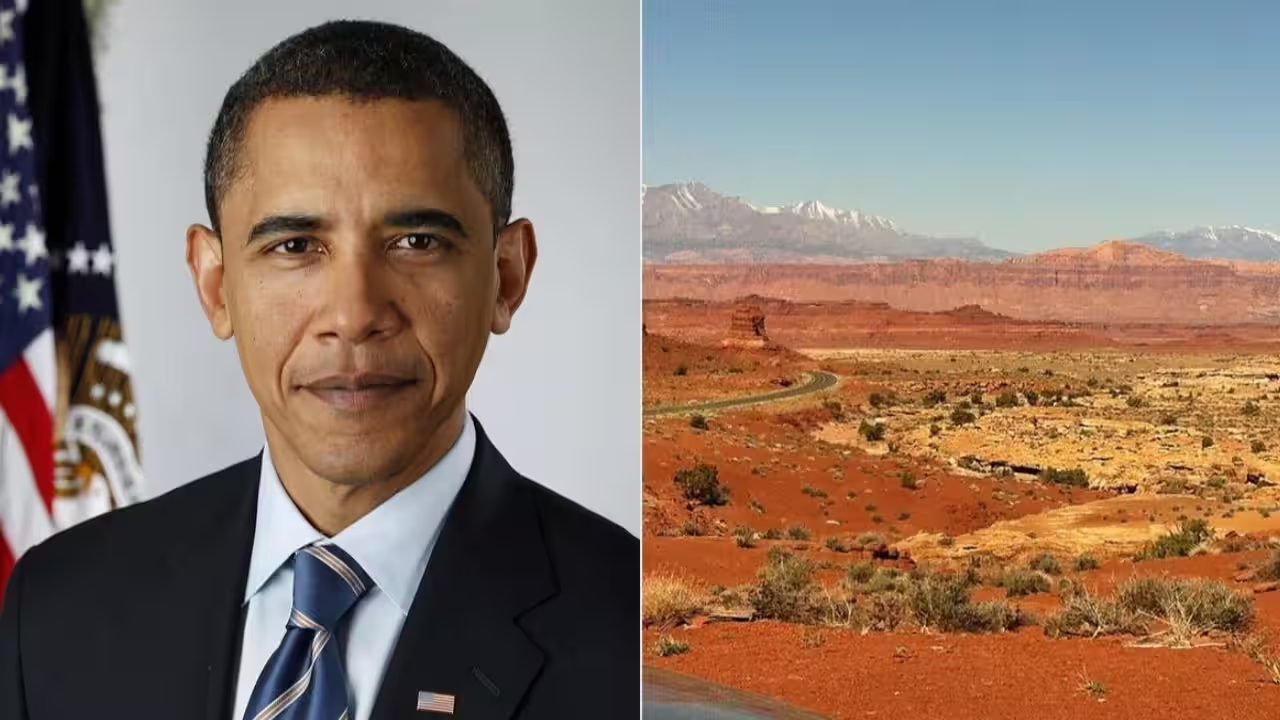
The national monument in Bears Ears was declared in December 2016 by then US President Barack Obama, who set aside an estimated area of 1.35 million acres of federal land in southeastern Utah. This declaration was for the purpose of protecting an area with immense cultural heritage value for the indigenous peoples. The decision came after decades of efforts by tribal communities, conservationists, and other advocates to secure federal protection for the region, which remains sacred to several Indigenous tribes. Obama invoked the Antiquities Act of 1906 to create the monument, thus placing management responsibility with the Bureau of Land Management (BLM) and the US Forest Service.Why Tribal nations sought protection for Bears EarsThe monument derives its name from two major buttes situated in the southeastern parts of Utah. There are canyons of sandstone, desert mesas, and forested mountains, among others. Additionally, Bears Ears is one of the cultural lands in the American Southwest that boasts dwellings of ancient humans. There are artifacts such as cliff dwellings, rock art and other ancient sites that reveal human presence in this place. The creation of a monument in Bears Ears by Barack Obama had its basis in these reasons, among others.On the other hand, for Indigenous communities, Bears Ears is not just an archaeological landscape. It remains connected to spiritual traditions, cultural practices and ancestral relationships with the land. In the proclamation made by Obama, he recognized the importance of the region to the Hopi Tribe, Navajo Nation, Ute Mountain Ute Tribe, Ute Indian Tribe of the Uintah and Ouray Reservation, and Pueblo of Zuni. The tribes have long-term ties to the area and use the area in their ceremonies and gathering of plants and other materials for their traditional use.The campaign for protection had developed over many years. Obama’s administration’s December 2016 fact sheet noted that efforts to protect the region traced back at least to 1936 and involved tribal leaders, members of Congress, local officials and conservation groups. An important development followed when five tribal governments formed the Bears Ears Inter-Tribal Coalition and proposed protecting a wider landscape.Obama set aside 1.35 million acresOn December 28, 2016, Obama signed Proclamation 9558, thus formally establishing Bears Ears National Monument. The Antiquities Act authorises presidents to designate national monuments on federal lands to protect objects of historic or scientific interest. Under this proclamation, approximately 1.35 million acres of federal land were reserved for the protection of the region’s identified resources. The responsibility for land management was assigned to the BLM. Meanwhile, the US Forest Service was assigned to manage the portion within the National Forest System. Therefore, the two federal agencies shared responsibility for the monument, but each managed the land under its own jurisdiction.One distinctive feature of the designation was the establishment of the Bears Ears Commission. This was made up of representatives of the participating tribal nations. The commission was intended to provide advice and recommendations to the government agencies, bringing their tribal expertise and knowledge into management decisions. The Obama administration’s fact sheet identified this arrangement as a way to incorporate tribal knowledge into the monument’s management.A monument reshaped by successive presidentsThe designation soon turned into a source of political and legal controversy. On December 4, 2017, President Donald Trump signed a document shrinking the Bears Ears area by about 1.15 million acres, which represents more than 85% of the original landmass covered under the title awarded by Obama. The revised boundaries also included around 11,200 acres that had not been there in Obama’s original monument. The five tribal nations that had sought the designation, alongside other organisations, challenged the reduction in court, arguing that the president lacked authority to remove lands.On October 8, 2021, President Joe Biden issued a proclamation restoring the boundaries established under Obama while retaining the approximately 11,200 acres included in Trump’s 2017 designation. The restored monument covered approximately 1.36 million acres. In addition, Biden's action reinstated the Bears Ears Commission's composition and function, including representatives of the tribes who were supposed to advise federal agencies.On July 13, 2026, Trump made a second proclamation to change the size of the Bears Ears National Monument to 121,100 acres in two units of Shash Jáa and Indian Creek. The proclamation stated that lands excluded from the monument would return to other forms of federal land management, subject to applicable laws and existing rights. This recent decision has greatly changed the monument from what was restored to around 1.36 million acres by Biden.You use AI every day. Now get your AI Quotient. Take the AIQ test.
Topics in this story
Gathered from external sources. Rights to this text belong to whoever originally published it.