In 1775, fruit jars were sealed under George Washington’s floor; 249 years later, archaeologists opened the site and found 29 bottles intact with whole cherries inside
A recent excavation at George Washington's Mount Vernon revealed 35 glass bottles from the 18th century, 29 of which contained preserved cherries and other fruits. This significant find offers insights into 18th-century food storage and historical food practices at the estate.
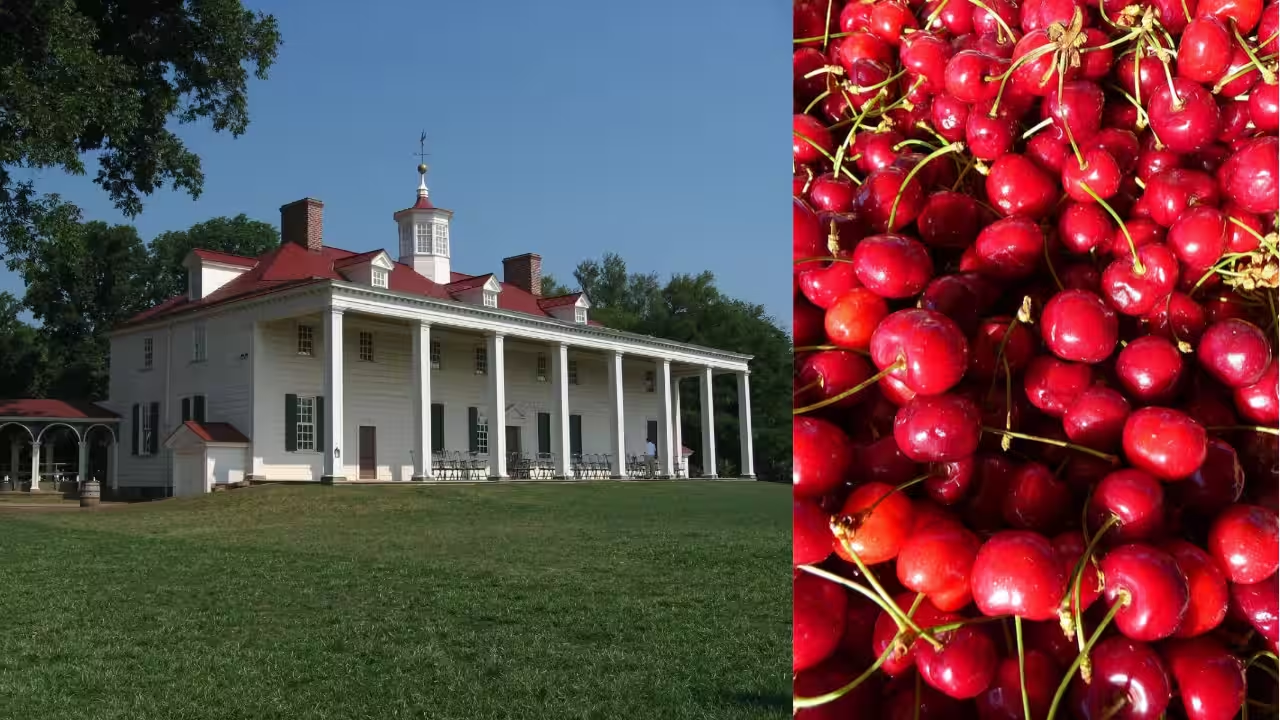
Archaeologists were excavating George Washington’s Mount Vernon mansion and discovered 35 glass bottles from the 18th century, and 29 of them were still intact with preserved fruit inside. The bottles were found in five storage pits in the mansion’s cellar during the $40 million Mansion Revitalization Project. Most contained cherries, while some of the fruit was identified as likely gooseberries or currants. The bottle shapes are characteristic of styles from the 1740s and 1750s, and Mount Vernon says the bottles may have been forgotten in the pits.The contents were carefully removed from the bottles and placed under refrigeration, and the glass was prepared for conservation. The discovery followed an earlier find in the cellar of two intact European-made bottles containing liquid, cherries and pits, and together, the finds gave archaeologists a rather well-preserved collection of biological material from Mount Vernon’s 18th-century household.What was inside the bottlesEarly analysis of the fruit found 54 cherry pits and 23 stems, along with cherry pulp. Researchers found that the stems had been neatly cut and deliberately left attached to the fruit before it was placed in the bottles, with microscopy suggesting that the cherries may have been harvested by snipping them from trees with shears.Mount Vernon says that the cherries are likely to have been a tart variety, and their higher acidity may have helped preserve the fruit, although researchers are still examining the material. The pits are also being tested to determine whether any remain viable for germination, while DNA analysis could eventually help identify the precise variety of cherry.Documentary records show that wine, whiskey and brandy were kept there, along with turnips, potatoes, butter, beef and pork, and the newly discovered bottles therefore fit into a wider picture of how the Washington household stored food. Mount Vernon also has a recipe for Cherry Bounce, which is a brandy-based cherry drink that was popular in the 18th century and known to have been enjoyed by George Washington. Researchers have not established that the newly discovered cherries were intended for Cherry Bounce, so the purpose of these particular bottles remains uncertain.The people behind the foodMount Vernon has connected the discovery to the enslaved people who managed food production and preparation at the estate, including Doll, who was a cook brought to Mount Vernon by Martha Washington in 1759 and was charged with overseeing the kitchen.The careful preparation of the cherries is one reason archaeologists are interested in the discovery, since the cut stems, preserved pits and fruit pulp provide physical evidence of how the food was handled before it was stored. Mount Vernon Principal Archaeologist Jason Boroughs said that the material could contribute to research into 18th-century foodways, the environment and the origins of American cuisine.Mount Vernon has partnered with the US Department of Agriculture’s Agricultural Research Service to analyze the contents. Only a small quantity of the samples had been analyzed when the initial findings were announced, which leaves further questions about the fruit, its variety and its preservation.Researchers are still examining the fruitScientists are examining whether any remain viable for germination, while DNA testing may help researchers compare the fruit with databases of heirloom varieties, which could help establish whether the cherries belonged to a variety that is still known today or one that has disappeared. Researchers can examine the fruit itself, rather than having to rely solely on written recipes or descriptions from the period. The physical evidence includes the fruit, pits, stems and the glass containers in which they were stored.Archaeological investigations have accompanied parts of the work that require digging around the mansion, which gave researchers access to areas that have rarely been examined. The cellar is expected to remain part of the ongoing archaeological and preservation work as Mount Vernon prepares for the next phase of the mansion’s restoration.The preserved fruit has become archaeological evidence of what was grown, prepared and stored at Mount Vernon, almost three centuries after the bottles were made. The remaining analysis could determine more about the cherries themselves and the food practices of the people who prepared them.You use AI every day. Now get your AI Quotient. Take the AIQ test.
Topics in this story
Gathered from external sources. Rights to this text belong to whoever originally published it.