Cumbria zoo welcomes 'troublesome' trio of rare baby fossas
Lakeland Wildlife Oasis says the triplets' arrival is a "very big step towards fossa conservation".
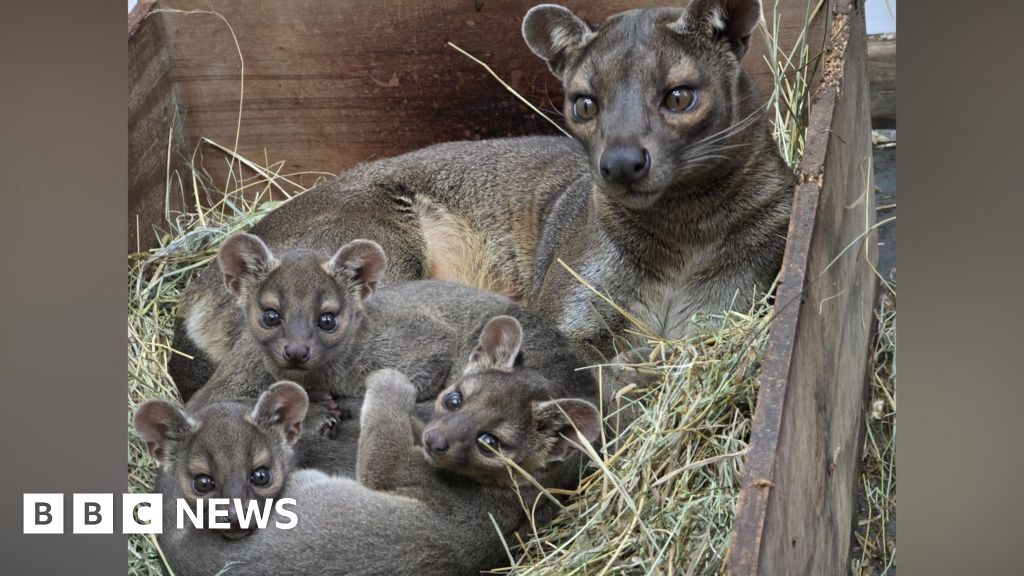
Zoo staff have been left "over the moon" after welcoming a trio of rare baby fossas.
The triplets were born at Lakeland Wildlife Oasis in Milnthorpe, Cumbria, about three months ago and can now be seen by visitors.
Animal manager Dan Eccles said they were the only ones born in the UK this year and only one other zoo in Europe had bred them so far in 2026.
"I honestly think I could sit and watch them for hours," he said. "They are brilliant, brilliant little things."
Fossas are native to Madagascar and are currently listed as vulnerable to extinction by the International Union for Conservation of Nature (IUCN).
Despite looking like cats, they are more related to mongooses.
The species is also rare in captivity and there are only about 15 in UK zoos, Eccles said.
Lakeland Wildlife Oasis staff had a tight window of only a few days during breeding season when future parents Mango and Makira would tolerate each other.
"You don't just put them together and be done with it," Eccles said.
"They are quite aggressive with each other as well, the male and the female don't typically live together, we have to mix them very carefully at a very precise time of year to make sure that they're actually receptive to each other."
He said staff were "over the moon" when the triplets were born, adding it was a "very big step towards fossa conservation".
An announcement from the zoo described the playful trio as "troublesome".
Eccles said they were "constantly" wrestling and climbing, putting their mum's patience to the test.
"I really don't understand how Makira, the female, puts up with them sometimes because they just never stop," he said.
"The only time they stop is when they are asleep.
"Thankfully they do sleep for part of the day, because I don't think Makira would manage otherwise."
The pups are born blind and toothless and reach maturity after two to four years.
They typically live between 15 and 20 years.
It is estimated that as few as 2,500 fossas remain in the wild.
Follow BBC Cumbria on X , Facebook , Nextdoor and Instagram and listen to Radio Cumbria on BBC Sounds.
Breeding hope as rare fossa arrives at zoo from US
Rare sighting of first fossa pups born at zoo
The first glimpse of Chester Zoo's rare baby fossas!
Topics in this story
Gathered from external sources. Rights to this text belong to whoever originally published it.