Headline: In 2018, Iowa researchers made concrete conduct electricity; 10 heated slabs remained free of snow and ice during several winter seasons
Discover how Iowa researchers developed electrically conductive concrete that effectively prevents snow and ice accumulation during harsh winter conditions, promising efficient winter maintenance solutions.
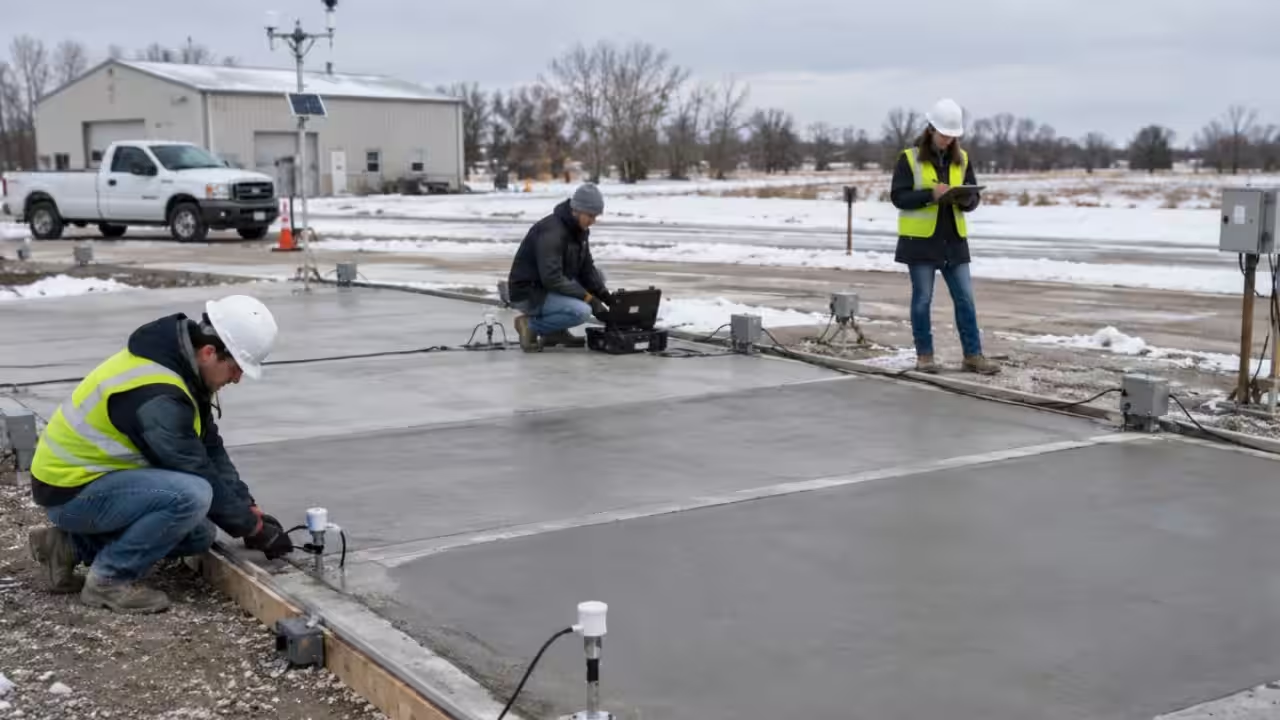
Researchers installed 10 electrically conductive concrete slabs in the south parking lot at Iowa Department of Transportation headquarters in Ames, Iowa. The experiment tested whether electrically powered pavement could stay warm enough to limit snow and ice accumulation. The InTrans project record says the slabs showed promising results during the 2018-2021 winter seasons. Heating performance was assessed through sensors during snow and ice events, while a programmable logic controller allowed the system to be operated and monitored remotely. The project was sponsored by the Iowa Department of Transportation and the Iowa Highway Research Board. The findings demonstrate how pavement materials and electrical systems could work together, but do not establish that the method can replace conventional treatment across an entire road network.How conductive concrete produces heat Ordinary Portland cement concrete is blended with conductive material, such as carbon fibre or steel shavings, which makes the pavement act as a resistive heating element. When electricity passes between electrodes embedded in the conductive layer, the material’s electrical resistance generates heat. The surface can then be warmed above freezing, which prevents the accumulation of snow and ice by melting them.As laid out in the Self-Heating Electrically Conductive Concrete Demonstration Project, the system is built around conductive concrete and embedded electrodes. The other components include wiring, conduits, and a power supply. The researchers tested different electrode configurations, and the standard concrete slabs served as control sections for comparison. Across the 10 slabs, measured power density ranged from 10.2 to 45.6 watts per square foot, averaging 24.6 watts per square foot. It would be remiss not to mention that these figures represent the power delivered per unit of surface and not the total electricity consumption, nor its operating cost or savings.The final report recommended further investigation before broad deployment because design requirements vary by application. For instance, a system intended for a bridge deck may need different considerations from one installed in a parking area or road.From a demonstration to wider infrastructure use The potential of the 10 electrically conductive concrete heated pavement system (ECON HPS) slabs extends beyond a parking lot because maintenance during winter can require ploughing and de-icing chemicals, consuming labour and equipment while creating corrosive and environmental effects. The AASHTO Innovation Initiative brief presents electrically conductive concrete heated pavement as a viable option for locations where operational problems can be created by snow and ice. The areas identified for applications include airports and high-foot-traffic areas managed by businesses or municipalities, along with road infrastructure such as bridges, ramps, tunnels, and rest areas.The system can be installed as an overlay on existing pavement or incorporated as the upper layer in a two-lift pavement design for new construction. That flexibility could let agencies consider the technology during rehabilitation or new projects. However, these are potential uses, not places where the Iowa demonstration tested the system, and the project provides evidence from one full-scale installation. AASHTO’s background material cites estimated US airline revenue losses associated with flight delays in 2019 and the quantity of de-icing chemicals used on roads in 2020. Those figures explain the scale of the problem; they are not measured savings from the conductive concrete installation. The brief also describes development work beyond the Iowa trial, which included two draft technical specifications and two patent applications. For transportation agencies, the next step is to determine where the system’s electrical requirements, construction design, and winter performance justify its use.You use AI every day. Now get your AI Quotient. Take the AIQ test.
Topics in this story
Gathered from external sources. Rights to this text belong to whoever originally published it.