In 1989, a Canadian couple bought 187 acres on Ontario’s Wilson Island as a family sanctuary; 36 years later, they donated it so its forests, wetlands and wildlife would stay protected
Rest of World News: A Canadian couple who spent 36 years protecting a 187-acre island property as a private family sanctuary have donated the land to conservation, ensuri.
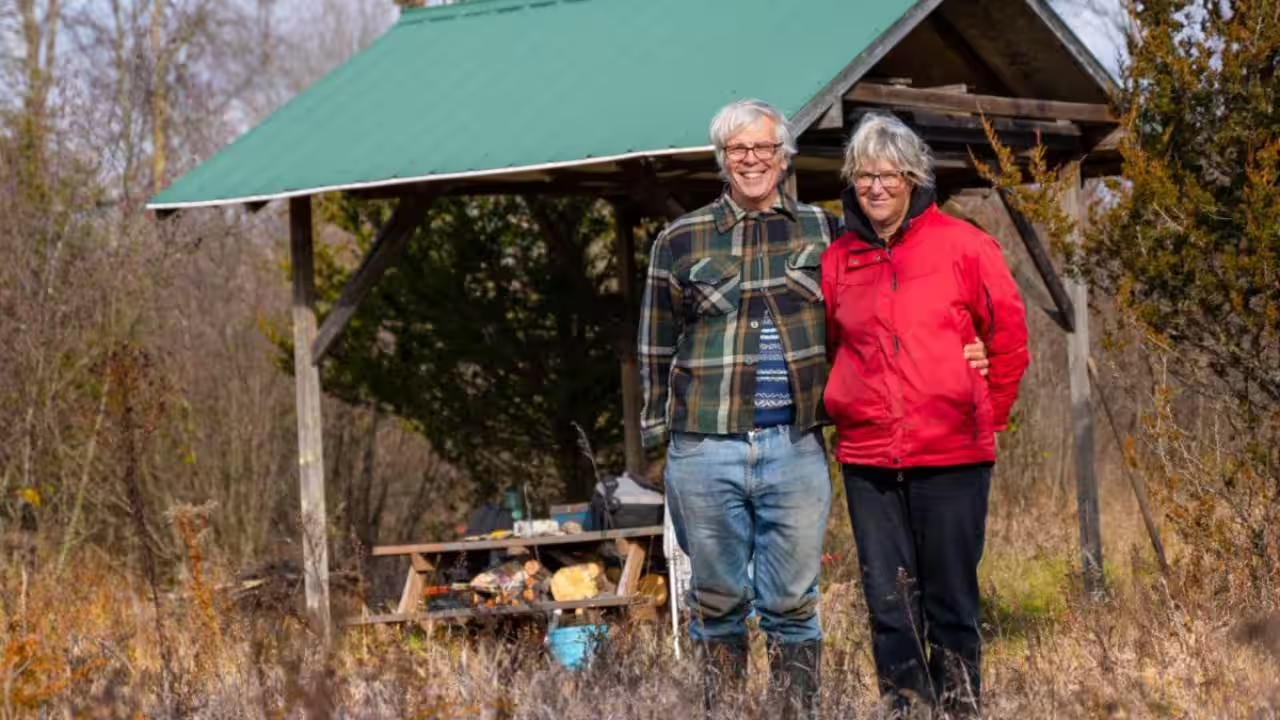
A Canadian couple who spent 36 years protecting a 187-acre island property as a private family sanctuary have donated the land to conservation, ensuring its forests, wetlands and wildlife remain protected for generations to come.Jim and Anne Purvis purchased the 187.4-acre property on Wilson Island in Ontario’s Trent Hills area in 1989. Over the following decades, they stewarded the land with the goal of preserving and restoring its ecological integrity.According to a media release, the property, which the couple named Inscape, has now been acquired by the Northumberland Land Trust (NLT). The conservation organisation announced the completed acquisition on January 7, 2026.Rather than developing or selling the land, the Purvis family chose to place it under long-term conservation protection.187 acres of forests, wetlands and natural habitatLocated at the western tip of Wilson Island, Inscape sits directly beside Murray Marsh, an area identified as an Area of Natural and Scientific Interest (ANSI).Almost 100 per cent of the property remains in a natural state, according to the Northumberland Land Trust.Around 130 acres consist of regionally significant woodlands, while much of the property is identified as a provincially significant wetland.The reserve contains several distinct ecosystems, including deciduous swamps, thicket swamps, cattail marshes, grassland and a vernal pool.The combination of habitats makes the property an important refuge for wildlife and contributes to the health of the surrounding ecosystem.Eight species at risk found on the propertyThe land is also home to several species considered at risk.Species identified on the property include the Least Bittern, Red-headed Woodpecker and Midland Painted Turtle, alongside other species such as the Eastern Meadowlark, Black Tern, Eastern Wood-pewee, Wood Thrush and Snapping Turtle.The property lies within the Trent River, but changes to water levels following the installation of dams have made the island land increasingly difficult to access.Because of its sensitive ecological features and difficult access, Inscape will remain closed to the public.The decision means the land will function primarily as a protected natural area rather than a public recreation site.Couple wanted the land protected ‘in perpetuity’The Purvis family had spent decades caring for the property before deciding to transfer its long-term stewardship to the land trust.“We have stewarded Inscape for 36 years for the purpose of protecting and restoring its ecological integrity,” Jim and Anne Purvis said.They added that they were excited to work with the Northumberland Land Trust's conservation expertise and network to preserve Inscape “as a natural area where plants, animals, birds will flourish in perpetuity.”The property was initially announced as a future land-trust acquisition in May 2025, when the NLT said it had signed a memorandum of understanding with the Purvis family.At the time, Rob Kennedy, president of the Northumberland Land Trust, said the Purvises had purchased the property in 1989 and used it as a natural sanctuary for their family for the next 35 years.A family effort to preserve the landThe conservation project also became a family fundraising effort.Amanda Newell, executive director of the Northumberland Land Trust, said the Purvis property became a cornerstone of the organisation's 2025 fundraising campaign.The campaign helped offset administrative expenses associated with accepting the donation while also supporting the long-term stewardship of the property.The Purvis family's commitment extended beyond Jim and Anne. Their son, Michael Purvis, made a substantial contribution to the fundraising campaign, helping the organisation surpass its fundraising target.“Their commitment truly became a family affair,” Newell said.Why land donations are important for conservationDonating land to a conservation organisation is not simply a matter of handing over a property deed.According to the Northumberland Land Trust, conservation land donations can involve appraisals, severances, surveys, legal documentation and township approvals.The process can cost as much as $40,000, in addition to the ongoing expenses associated with managing and stewarding protected land.Fundraising and donations therefore play an important role in enabling conservation organisations to accept properties and maintain them over the long term.For Inscape, those efforts will allow the Northumberland Land Trust to continue the conservation work started by the Purvis family more than three decades ago.Catch the latest World News and Live updates. Download the TOI app.
Topics in this story
Gathered from external sources. Rights to this text belong to whoever originally published it.