In 2013, an American billionaire backed $260 million to transform New York’s damaged Pier 54, creating Little Island eight years later
Little Island rises from the Hudson River where an ageing New York pier once stood, its planted slopes resting on a series of concrete structures that
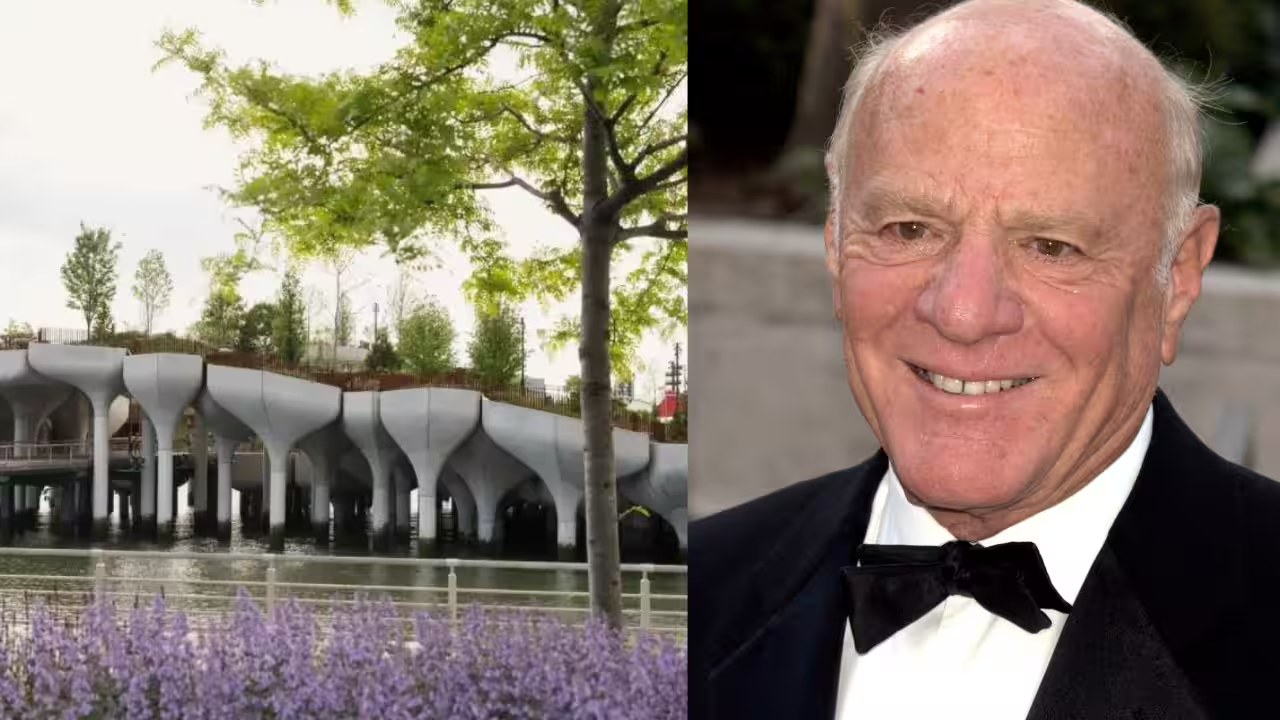
Little Island rises from the Hudson River where an ageing New York pier once stood, its planted slopes resting on a series of concrete structures that make the park appear to float above the water. The 2.4-acre public space opened in May 2021 after years of planning, legal disputes and construction, as reported by The New York Times. It was largely funded by billionaire media executive Barry Diller through the Diller-von Furstenberg Family Foundation, turning the former Pier 54 site into a new part of Hudson River Park. What began as a proposal to repair a damaged pier has since become a heavily visited waterfront destination. Reportedly, by 2026, Little Island had welcomed more than 7.5 million visitors.How Little Island gave New York’s Pier 54 a new purposeThe site has a long history before Little Island appeared. Pier 54 was where survivors of the Titanic arrived in New York in 1912 aboard the RMS Carpathia. Three years later, the RMS Lusitania departed from the same pier before being sunk by a German U-boat off Ireland, as reported by The New York Times.The structure later became part of the city's waterfront recreation scene. It hosted summer events and concerts and, from the 1980s, became associated with New York's LGBTQ community and the annual Dance on the Pier event. By the time Hurricane Sandy damaged the pier in 2012, however, its condition had become a growing problem, as reported by Hudson River Park and Little Island.In 2013, Diller and the Hudson River Park Trust began looking at ways to repair and reactivate the site. Rather than simply restoring the old structure, the proposal developed into something much more unusual: a new public park built over the river.Barry Diller backed a $260 million transformationReuters reported Diller's contribution ultimately became the financial foundation of the project. Contemporary reports put the project at about $260 million, with the Diller-von Furstenberg Family Foundation providing the principal private funding. Hudson River Park's own financial records later put the completed project cost at approximately $250 million, including $21.2 million funded by the Trust.Reportedly, the foundation also committed to paying for Little Island's maintenance for its first 20 years. That arrangement meant the park could operate as part of the wider public waterfront without leaving all of its above-deck operating costs with the Hudson River Park Trust.Diller brought in British designer Thomas Heatherwick, whose studio developed the distinctive concept. Landscape architect Signe Nielsen and her team at Mathews Nielsen Landscape Architects were responsible for the planting and outdoor environment, while engineering firm Arup worked on the complex structural system.The result was not a conventional pier. It was a park assembled from 132 tulip-shaped concrete pots supported by piles driven into the riverbed. Construction company Kiewit says 267 cylindrical piles were installed to support the structures, with the concrete pots varying in height from 10 to 30 feet.How 350 plant species transformed Little Island above the Hudson RiverFrom the shoreline, the unusual engineering is difficult to miss. The concrete supports rise from the water like a cluster of oversized flower stems, carrying a landscape that slopes, bends and changes elevation across the small site.More than 350 species of flowers, trees and shrubs were incorporated into the park. Paths wind between lawns and planted areas, while the elevated position gives visitors views across the Hudson and towards Manhattan.There are performance spaces within the landscape rather than a single conventional building. The largest is a 687-seat amphitheatre facing the river. A smaller stage and lawn provide another setting for performances and community events. The park was designed to combine everyday public use with arts programming, rather than functioning simply as a viewpoint or garden.That mix has remained central to the site's operation. Little Island's programme has included performances, workshops, educational activities and community events, alongside the ordinary business of people walking, sitting on the grass or looking out across the water.The project almost disappeared before it openedLittle Island was not built without opposition. The proposal became entangled in years of legal disputes, with opponents challenging aspects of the plan and its relationship with the wider Hudson River Park.The New York Times reported, at one stage, after the litigation appeared unlikely to end, Diller withdrew his support. A subsequent agreement brokered by then-Governor Andrew Cuomo helped put the project back on track. The settlement also included commitments involving wildlife habitat and improvements elsewhere in Hudson River Park.The dispute meant that a project initially conceived years earlier took a long route to completion. Little Island eventually opened to the public on May 21, 2021, after the pandemic had already delayed the planned opening period.Millions of visitors have since crossed onto Little IslandThe scale of its use changed quickly. Little Island says it received more than 1 million visitors during its first year. By July 2024, the organisation reported 4.6 million visitors since opening. That figure has continued to rise. Little Island's current information says the park has welcomed more than 7.5 million visitors since opening in 2021. That puts the small waterfront park firmly into the millions-of-visitors category despite its limited physical size.The wider Hudson River Park also attracts substantial footfall. The four-mile waterfront park stretches from Chambers Street to West 59th Street and records more than 17 million visits each year, according to the Hudson River Park Trust. Little Island forms just one part of that larger public landscape.Its popularity has also required practical controls. During its opening period, timed entry was introduced during busier hours to manage crowds, particularly while pandemic restrictions were still affecting public spaces.You use AI every day. Now get your AI Quotient. Take the AIQ test.
Topics in this story
Gathered from external sources. Rights to this text belong to whoever originally published it.