Merz vows to keep ruling coalition together for sake of Germany's 'democratic future'
The chancellor has come under increasing pressure after resounding state election defeats, but says the results "go far beyond my own person"
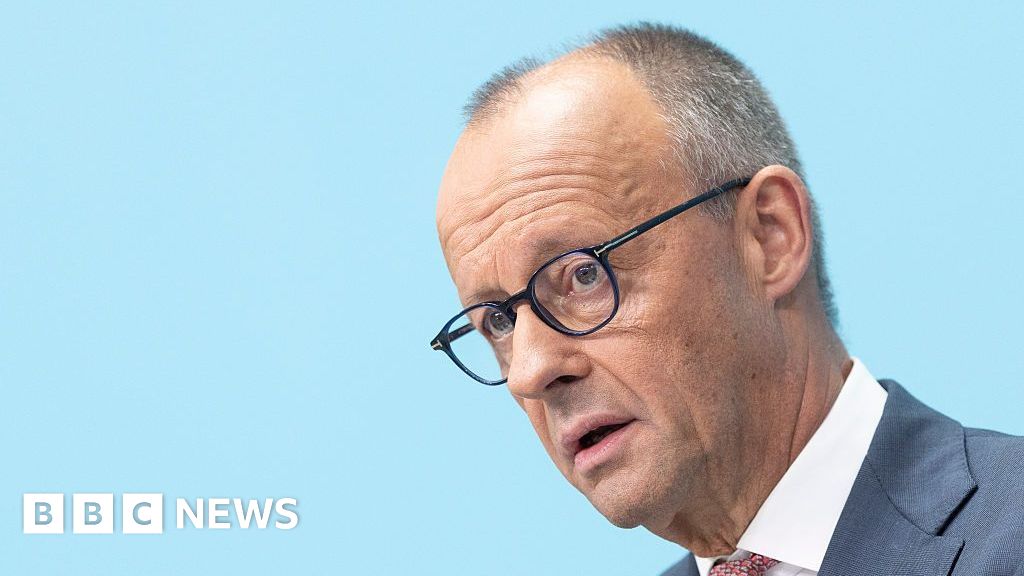
German Chancellor Friedrich Merz says he will keep his ruling coalition together for the sake of his country's "democratic future", following resounding defeats for his party in two state elections.
"We are determined to live up to the historic challenges our country is facing," Merz said, referring to the coalition between his Christian Democratic Unionist (CDU) party and the Social Democratic Party (SPD).
Merz's position has come under mounting pressure after Sunday's election results. In the north-eastern Mecklenburg-Vorpommern, the far-right Alternative for Germany (AfD) party won the most votes, with the CDU failing even to reach the threshold to stay in the state parliament.
Meanwhile in Berlin, the CDU came second to the hard-left Die Linke party, with the AfD also making significant gains.
Katya Adler: Merz's political crisis threatens Germany's obsession with stability
Speaking at the news conference on Monday, Merz described the result in Mecklenburg-Vorpommern as "a heavy blow" for the centre-right CDU.
"This election is a profound turning point. It is a dramatic, unprecedented result for the CDU in Germany," he acknowledged.
Merz said there had been no discussion about his own position since the results and pushed back against the idea that his low popularity ratings alone were behind the election defeats.
"I know that I as an individual played a role in these state elections," Merz said, before adding: "But the reasons for the results go far beyond just me."
"We are witnessing a profound transformation of Germany's political party system, as is happening in many other countries around the world."
There have been rumours Merz, who has only been in power for 16 months, could be replaced mid-term in a so-called chancellor swap due to his poor approval ratings.
Asked earlier on Monday how long Merz has left in office, the AfD's co-leader Alice Weidel told the BBC: "Pretty soon, he's going to leave."
The two elections took place on Sunday, a fortnight after the CDU saw its vote halved in the state of Saxony-Anhalt, where the AfD won a major victory.
In Mecklenburg-Vorpommern, the CDU fell short of a 5% threshold to enter parliament, underperforming against what had already been projected to be the party's worst ever result in the area. Merz earlier conceded that this result was "a disaster".
While the AfD won the most votes in Mecklenburg-Vorpommern, it was far short of a majority and is unlikely to govern as other parties may refuse to work with it.
Some branches of the party are classed as right-wing extremist by domestic intelligence, a designation it strongly rejects.
But its anti-immigration, Germany first, and Russian-friendly agenda has found fertile ground in the country's former communist east.
In Berlin, the CDU's defeat means Die Linke, which won the most votes, could now take power in a coalition.
Elif Eralp, who led the party to victory in the capital, promised to tackle unaffordable rent prices in remarks made after the results came out.
"The people of Berlin have clearly opted for a change in policy, specifically for an affordable Berlin, for policies that solve the rent crisis and put people first," she told German news outlet The Pioneer.
During the election campaign, Eralp pledged to expropriate more than 200,000 housing units from private landlords. Merz has promised to pursue legislation to prevent such actions, citing the impact on foreign investment.
German Chancellor Merz calls state election a 'disaster' for his party but vows to stay on
Topics in this story
Gathered from external sources. Rights to this text belong to whoever originally published it.