For half a century, Massachusetts' Mill Brook ran beneath a downtown parking lot; Athol has now uncovered it, created 12,000 sq ft of wetlands and turned 53,000 sq ft of pavement into vegetation
US News: For decades, a stretch of Mill Brook in Athol, Massachusetts, was hidden beneath asphalt, largely out of sight beneath what had become a downtown park.
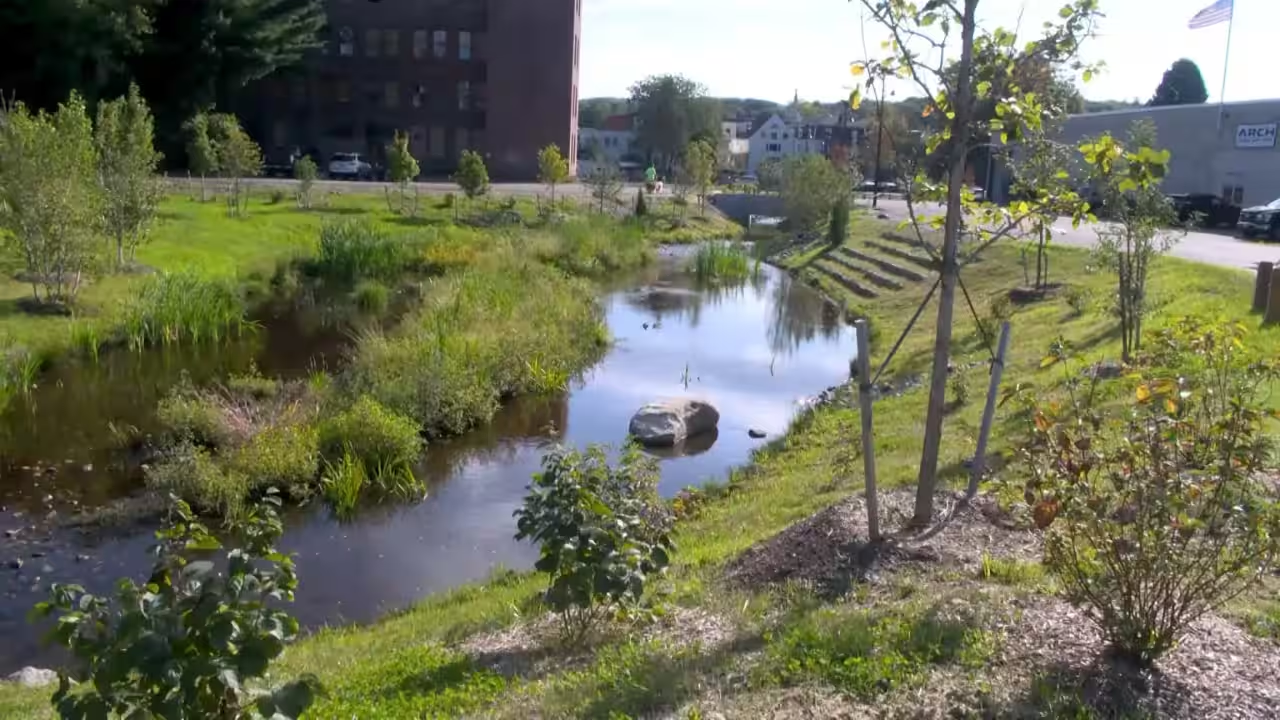
For decades, a stretch of Mill Brook in Athol, Massachusetts, was hidden beneath asphalt, largely out of sight beneath what had become a downtown parking area. This month, the small central Massachusetts town celebrated a very different landscape: the stream is flowing in the open again, new wetlands surround it and much of the former pavement has been replaced with greenery. The transformation, known as Mill Brook Crossing, was officially completed with a ribbon-cutting ceremony on September 16. Reporting by Streetsblog Massachusetts and the Athol Daily News, along with information from the Massachusetts government, shows how the project turned a heavily paved commercial area into a greener public space designed to address flooding, extreme heat and pedestrian safety.A stream hidden beneath the pavementThe site was formerly known as Lord Pond Plaza, a large commercial area where Mill Brook had been confined underground in a culvert. The idea of bringing the stream back into the open emerged through Athol’s climate resilience planning. Massachusetts state documents say the project was designed to improve stream connectivity while addressing the area’s vulnerability to flooding and excessive heat. The town had identified the plaza as an urban heat island, with the large expanse of asphalt contributing to higher temperatures in the surrounding downtown area. The completed project has now daylighted approximately 500 linear feet of Mill Brook, allowing the perennial stream to run through the newly redesigned landscape rather than beneath the parking area.53,000 square feet of pavement gives way to vegetationOne of the most striking changes is the reduction in hard, impervious surfaces. About 53,000 square feet of pavement has been converted into vegetated areas, according to information presented by Athol officials at the project’s completion. The change allows more rainwater to infiltrate the ground instead of rapidly running across asphalt and entering drainage systems.The project also created approximately 12,000 square feet of new wetlands, alongside habitat for pollinators and wildlife. More than 80 trees were planted, expanding the downtown tree canopy and helping address the urban heat island effect.Designed to manage stormwater naturallyMill Brook Crossing is not simply a landscaping project. Much of its design is based on using natural systems to manage some of the problems created by extensive pavement. The redesigned area incorporates rain gardens, bioswales and porous pavement, which can help slow and capture stormwater while reducing runoff and supporting better water quality. The Massachusetts Executive Office of Energy and Environmental Affairs has highlighted the project as an example of using stream restoration and green infrastructure to address both flooding and heat. That approach is particularly relevant in a location where the stream had previously been confined beneath a developed area.The parking lot was also a safety concernThe former plaza presented another problem beyond its environmental impact. The large, open parking area had complicated vehicle and pedestrian movement, with town planning documents previously identifying concerns around traffic circulation and pedestrian safety.The redesigned space introduces a more organised layout along with new sidewalks and pedestrian infrastructure. Massachusetts’ Complete Streets program provided nearly $250,000 for sidewalk improvements connected with the project.A project years in the makingThe transformation did not happen overnight. Athol began exploring the redevelopment through its Municipal Vulnerability Preparedness planning in 2020. The town subsequently received state funding for engineering and design before securing construction funding.The broader redevelopment ultimately became a roughly $3 million construction project, with additional support for related pedestrian improvements. In July 2026, Athol’s Select Board formally changed the site’s name from Lord Pond Plaza to Mill Brook Crossing, reflecting the restored stream and the area’s new identity.From parking space to climate-resilient public spaceWhat once largely functioned as a sea of asphalt is now a landscape built around a visible stream, wetlands, trees and other green infrastructure. For Athol, the project represents a shift in how a downtown space can be used: rather than treating the buried waterway and surrounding pavement simply as infrastructure, the town has brought part of the natural landscape back into view while creating a public area intended to better handle heat and stormwater. The result is a downtown setting where a stream that spent decades underground once again forms part of the town’s visible landscape.Catch the latest World News and Live updates. Download the TOI app.
Topics in this story
Gathered from external sources. Rights to this text belong to whoever originally published it.