In 2016, a Minnetonka collector paid $50 for a garage-sale painting; in 2025, a New York firm’s 450-page report called it a $15 million Van Gogh, and the museum maintained its earlier rejection
A Minnesota collector's $50 garage sale painting becomes a subject of controversy as a New York firm claims it to be a $15 million Van Gogh, but the Van Gogh Museum denies its authenticity.
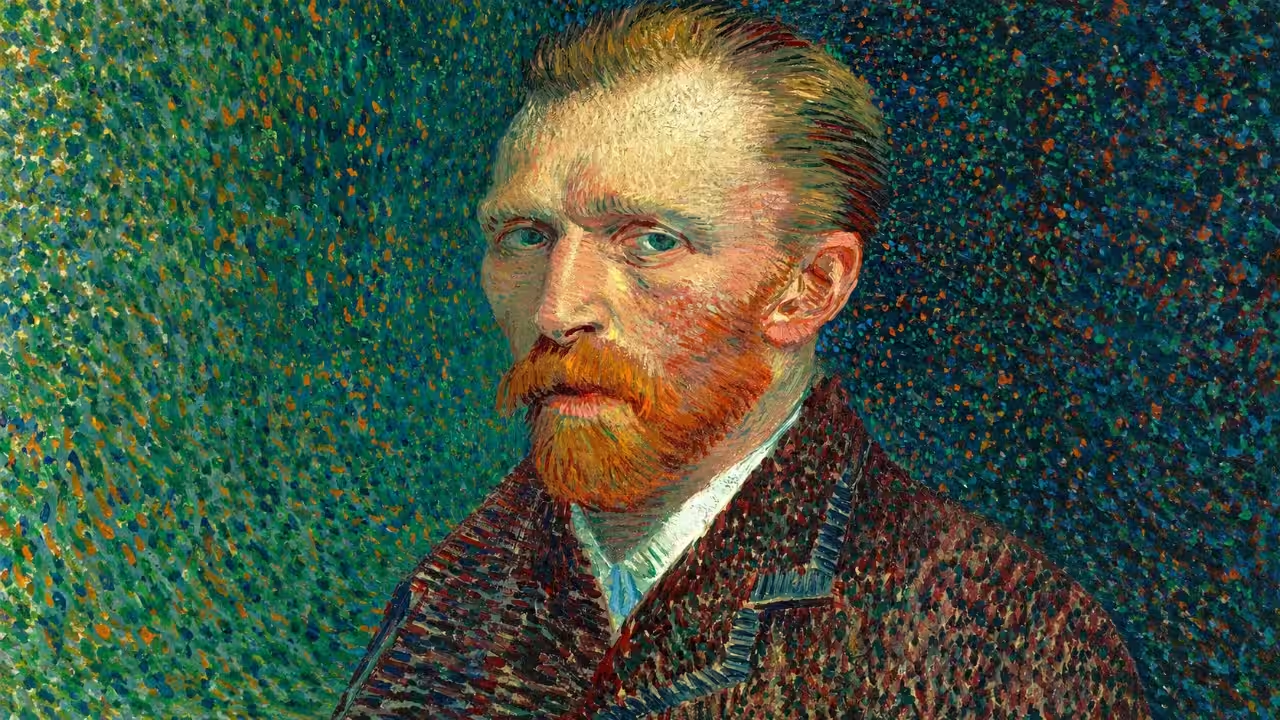
A masterpiece can lie unnoticed for decades, its true value hidden in the brushstrokes and an inscription in one corner. This exact scenario became palpable when a garage sale find was identified as a possible lost work by Vincent Van Gogh. A painting bought for $50 at a Minnesota garage sale became the subject of an interesting debate over its authorship. The work, a portrait of a fisherman titled Elimar, was later acquired by a New York art firm, the LMI Group International, which researched whether the artwork belonged to the post-impressionist painter Vincent Van Gogh. According to Smithsonian Magazine, the firm published its argument that the painting was made by Vincent Van Gogh in 1889 and posited its value at $15 million.The Van Gogh Museum’s response was blunt: it did not accept the attribution, ArtNet News reported. The firm’s case rested on Van Gogh’s working methods, the materials used and the inscription. For them, the evidence points to a series of works that the painter made during his stay at the Saint-Paul asylum in Southern France.The evidence behind LMI’s claim The painting illustrates a white-bearded fisherman repairing a fishing net near the sea. The name Elimar is inscribed in the lower-right corner. According to Smithsonian Magazine, the painting uses a thick application of paint or impasto, which MoMA notes is an Italian word for mixture. Although Van Gogh didn’t invent the technique, he elevated it to a primary visual language.The Wall Street Journal reported that Van Gogh produced an estimated 150 paintings during his time at the asylum, including Almond Blossom and Irises. He also reworked compositions of other works, a practice he called making translations. In a letter to his brother, Theo, he expounded on the creative process, describing it as “not copying pure and simple” but translating a composition into “another language, the one of colours”.LMI believe that Elimar was one such work, based on the Portrait of Niels Gaihede by Danish Painter Michael Ancher. Both paintings had a similar fisherman; this connection with Ancher is what made Art historian William Havlicek, commissioned by LMI, so convinced.The name Elimar was also connected to a character who appeared in Hans Christian Andersen’s 1848 novel, The Two Baronesses, which Van Gogh reportedly admired. LMI also commissioned a comparison between the handwriting on Elimar and the words “Emile Zola” in Van Gogh’s painting Still Life With Bible; the letter showed similarities.Jennifer Mass, president of the Scientific Analysis of Fine Art, found the canvas’ thread to match the fabric used during Van Gogh’s lifetime. The test had also identified a pigment known as the PR-50 in the sky. There was, however, a caveat: the pigment was thought to be used during 1905 or 1906, long after Van Gogh’s death in 1890. This date problem prompted the firm to consult patent lawyer Ben Appleton, who uncovered an 1883 French patent for the pigment. It had been registered by a chemical company in Saint-Denis, near Paris; this finding meant perhaps it was available during Van Gogh’s time, though a patent alone doesn’t prove it was sold.A strand of hair embedded in the paint found DNA associated with a redhead or someone with reddish-brown hair. Van Gogh was known to have ginger hair, though the test wasn't enough to confirm the person’s identity.Why did the museum reject it? The Van Gogh Museum had actually encountered the painting before LMI did when the collector submitted it for consideration in 2018, according to a January report from ArtNet News. The museum rejected the claim in 2019 on the grounds that its stylistic features didn’t carry the hallmark of Van Gogh’s oeuvre. The same year, the collector sold it to LMI.After reviewing LMI’s report, the museum didn’t budge an inch and stood by its earlier stance. A spokesperson said, as Artnet News reported, “We maintain our view that this is not an authentic painting by Vincent van Gogh. In response, LMI contested the assessment; their rebuttal, in a January 31 statement, was that the museum had spent less than one working day rejecting their 456-page report.For museums, authentication was a difficult measure, partly because definitive rulings put them in the line of legal disputes. The Van Gogh Museum had been bogged down with far more authentication requests than it could possibly examine. The Wall Street Journal reported on January 31, 2025, that requests had increased from 200 a year to around 500, and as a measure, they started accepting only 40 requests annually.You use AI every day. Now get your AI Quotient. Take the AIQ test.
Topics in this story
Gathered from external sources. Rights to this text belong to whoever originally published it.