In 2021, an Illinois grain farmer put a 499-foot wind turbine on his 1,100-acre farm; it used just 0.1% of the land and the lease paid more than the crops that land could produce
US News: Discover how Illinois farmer Clayton Rosenberger transformed his land into a profitable venture by leasing a 499-foot wind turbine, considerably boosting his income while preserving crop production.
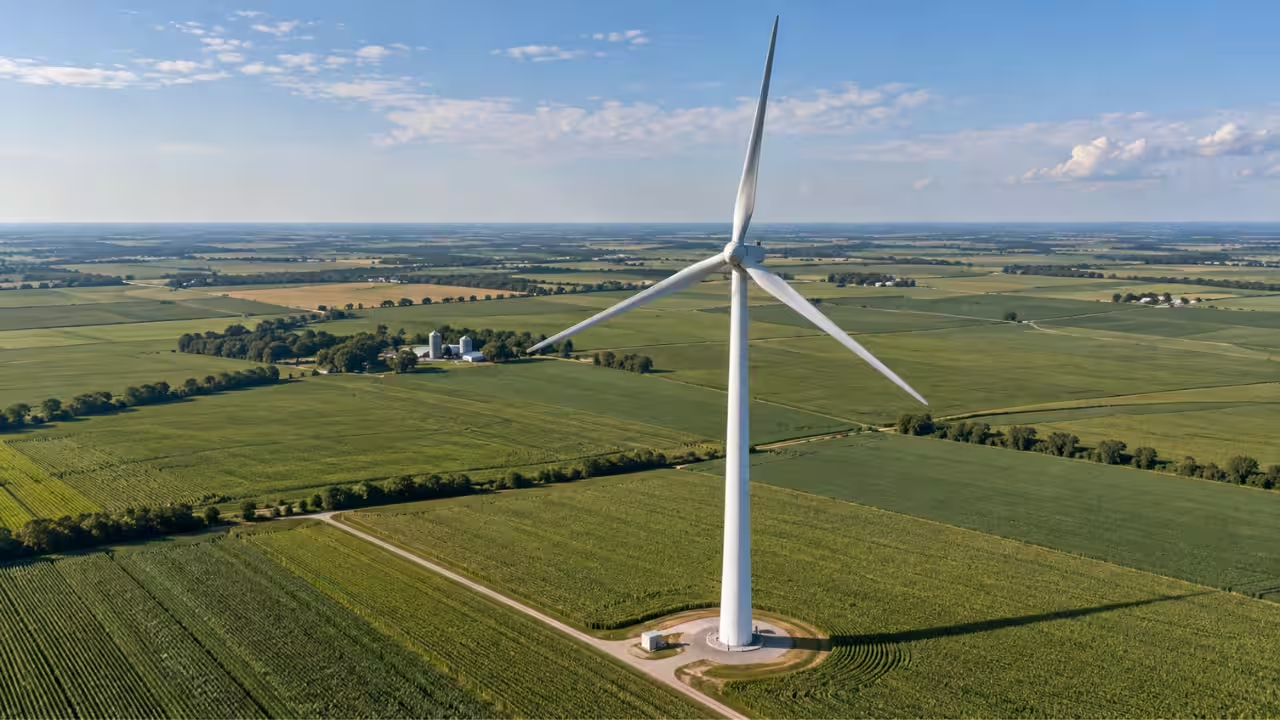
Illinois farmer Clayton Rosenberger was approached by a wind company about putting a turbine on his land, which he and his wife did not like. The turbine would be nearly 500 feet tall and would stand among the corn and soybean fields of their 1,100-acre farm in McLean County. Rosenberger was also concerned about what it would sound like and how it would affect his work. The financial calculation eventually changed his mind, since the turbine took about 0.1% of his farm, and the lease provided income that Rosenberger said more than compensated for the land taken out of production.The turbine occupies about an acreThe finished turbine stands 499 feet tall when one blade is positioned vertically, just one foot below the county's height limit. Its foundation is a large concrete structure buried deep beneath the field, and the bottom of the foundation extends about 12 feet below ground, with excavated soil packed back around the structure so that much of the concrete is no longer visible.Ambrook's 2025 reporting calculated the turbine's footprint, including the covered foundation and surrounding gravel, at about two-thirds of a football field. That amounts to roughly 0.1% of Rosenberger's 1,100 acres, and this relatively small footprint meant most of the farm remained available for crop production. Rosenberger could also farm around the turbine base, as the lease accounted for the disruption caused by construction and the loss of crop production around the structure. The turbine began operating around 2021, and by the time Ambrook interviewed Rosenberger in 2025, he said he had largely stopped noticing it.The numbers mattered more than the viewRosenberger's farm was already surrounded by wind turbines on neighboring properties, and he worked and plowed some of those farms even though he did not own them. He reconsidered the possibility of putting one on his own property once he realized turbines were going up nearby. Before signing, he and his wife drove to an existing wind farm and parked underneath a turbine, and found the sound to be less intrusive than expected.Rosenberger estimated that he would lose roughly 1.1 acres of farmland because of the turbine. Ambrook reported that the turbine's payments would replace the income from those acres and provide additional money. Rosenberger ultimately became the last landowner in the area to sign the lease for his part of the wind project, and the arrangement gave him a source of income that was less directly tied to crop yields. “I’m a self-employed farmer. I don’t have a 401-K. I don’t have a retirement plan, but now I do,” Rosenberger told Ambrook. Ambrook also reported that farmers who add turbines to their properties typically receive between $8,000 and $33,000 a year, and cited USDA research that covered wind-energy costs from 2011 to 2020.Farming continues around the turbineAmbrook cited another USDA study finding that 94% of farmland remained in agricultural use as its primary use between 2012 and 2017 after a turbine was placed on the property. Rosenberger's continues to plant and harvest crops around the turbine, and adjusts his machinery's path near the foundation.The turbine took about eight months to build, and large equipment had to move across the farm during installation, but once construction ended, however, Rosenberger could return to regular field operations. The turbine is operated by EDP Renewables, which leases the land. Rosenberger also said the company would compensate him for damage caused by incidents such as lightning strikes.Rosenberger said his township covers only about six square miles and has roughly 300 residents, and receives additional tax revenue from the wind project. He recalled that the township had struggled financially before the wind farm arrived and said the new revenue had helped pay for infrastructure and fire equipment. The turbine therefore occupies a small physical part of the farm while creating a separate income stream for the landowner.Catch the latest World News and Live updates. Download the TOI app.
Topics in this story
Gathered from external sources. Rights to this text belong to whoever originally published it.