Archaeologists find 19 injuries in 12 people whose remains were placed in houses, wells and pits across Iron and Viking Age Scandinavia
Archaeologists have identified evidence of traumatic injuries in 12 people whose remains were deposited in houses, pits, wells, and postholes across Iron
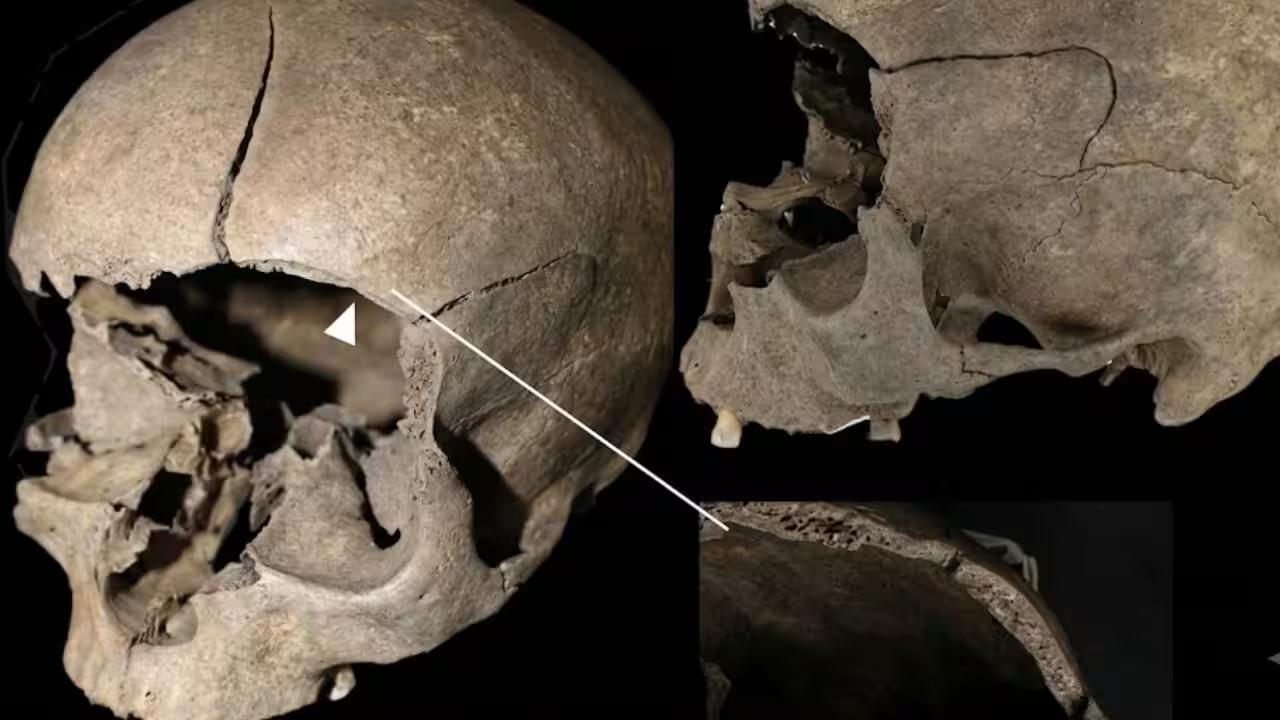
Archaeologists have identified evidence of traumatic injuries in 12 people whose remains were deposited in houses, pits, wells, and postholes across Iron and Viking Age Scandinavia. The individuals lived between approximately 500 BCE and 1050 CE, and their skeletal remains showed 19 injuries sustained before or around the time of death.According to research published in the Journal of Archaeological Method and Theory titled ‘Broken bodies in Domestic Spaces: Direct and Structural Violence in an Atypical Mortuary Dataset from Iron and Viking Age Scandinavia’, some people may have faced violence and social vulnerability during life before receiving unusual treatment after death.How did researchers identify signs of violence in ancient Scandinavian remainsThe study examined human remains recovered from domestic settings across southern and central Scandinavia. These included skeletal fragments and well-preserved remains found beneath house floors, in pits, wells, postholes, and other settlement features. The researchers identified 19 traumatic injuries among 12 individuals from a wider dataset containing remains of an estimated 192 people across 197 depositional contexts.The injuries included sharp-force trauma, blunt-force trauma, and fractures. Six individuals had head injuries, while seven had bone damage in other parts of the body. Four had multiple injuries. Eight, possibly nine, individuals showed evidence consistent with deliberate violence, although some injuries could have had other causes. The researchers used osteological examination, digital imaging, genetic analysis, and radiocarbon dating to investigate the remains and assess the injuries.What do skeletal injuries reveal about life in Iron Age communitiesSeveral individuals showed evidence of repeated injuries or health problems that may have affected their lives. One adult man had multiple injuries at different stages of healing, including fractures to his collarbone and forearm, alongside three blunt-force injuries to the forehead.One individual had a forearm fracture that had not healed properly. The injury may have occurred while trying to protect themselves during a violent encounter. Other remains showed dental problems, joint degeneration, spinal changes, and signs of physiological stress during childhood. Together, these findings point to potentially harsh living conditions, hazardous work, limited access to care, or repeated exposure to violence.Human bones found in houses, wells, and pits point to unusual burial practicesThe remains differed from conventional burials because they were frequently deposited as individual bones or fragmented body parts rather than complete bodies in cemeteries. Some were placed beneath house floors, while others were found in wells, pits, and postholes. In several cases, the remains appeared to have been exposed to the elements before their final deposition.One example involved a child aged two to four whose frontal bone showed evidence of sharp-force trauma around the time of death. The bone was eventually placed between two floor layers inside a longhouse in Denmark. The researchers also found evidence of injuries in remains deposited at Uppåkra in Sweden, an important centre of ritual and political activity.Researchers examine possible causes of violence in Iron Age communitiesThe study explored several possible explanations for the injuries, including warfare, domestic and interpersonal violence, and ritualised violence. Some injuries were consistent with weapons such as swords, spears or axes, while others may have resulted from attempts to defend against an attack. In certain cases, the evidence could not establish whether an injury occurred during life or during the processing of a body after death.The researchers also considered structural violence, which refers to harm linked to social conditions and inequalities that restrict people's lives. Signs of physical stress, repeated injuries and unusual burial treatment may indicate that some individuals experienced greater vulnerability than others.You use AI every day. Now get your AI Quotient. Take the AIQ test.
Topics in this story
Gathered from external sources. Rights to this text belong to whoever originally published it.