In 2002, New Mexico mixed discarded toothbrush fragments and plastic tubing into a 2-mile interstate; it projected 25% longer life and 27% less waste
In 2002, New Mexico introduced a groundbreaking approach to road construction by paving a section of Interstate 25 with asphalt containing recycled plastic from toothbrushes and tubing, leading to longer-lasting roads and less waste.
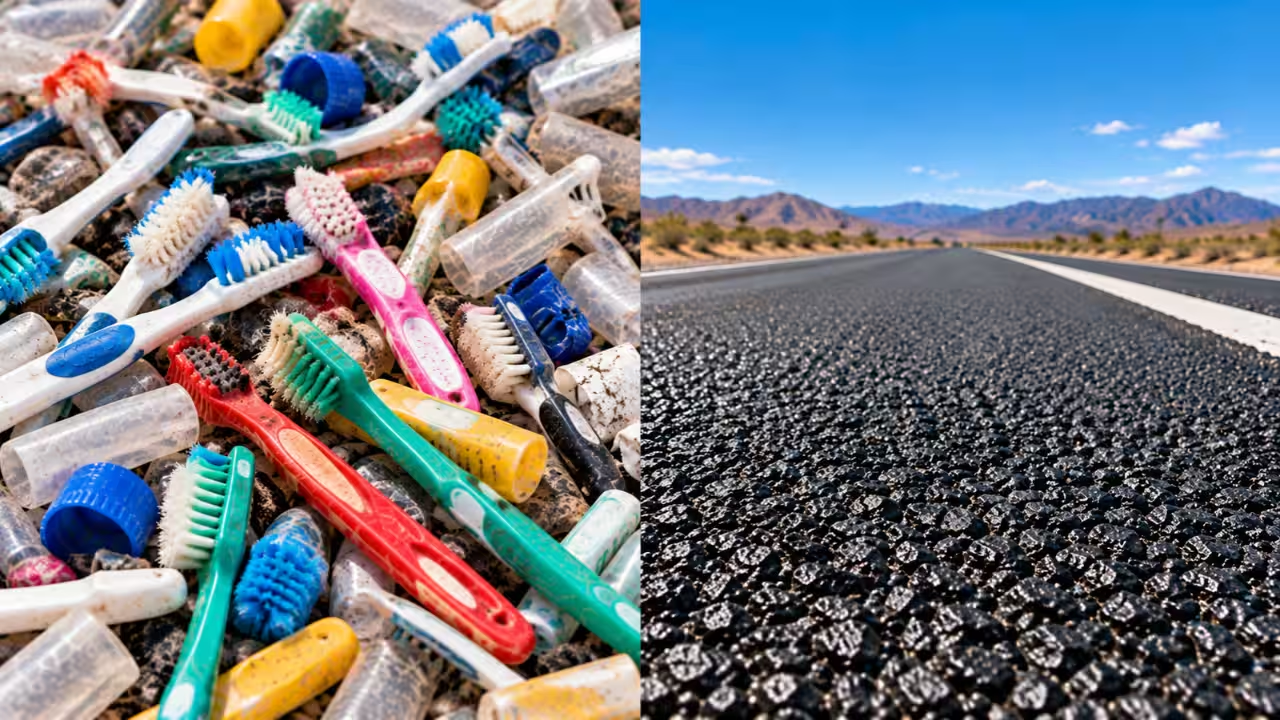
A two-mile section of Interstate 25 in New Mexico was paved with an asphalt mixture that contained recycled plastic in 2002, and included material from discarded toothbrushes and plastic tubing. The project was developed by Albuquerque-based TEWA Technology and used what the company called "plasphalt," which is a proprietary mixture of asphalt and recycled plastic. Wired reported at the time that the material was expected to last 25% longer than conventional asphalt while diverting 27% of the waste that is used in the process from landfills.Wired described purple fragments from toothbrushes and green pieces of tubing mixed into the road material, and TEWA's local suppliers included Philips Semiconductors, Intel, Coca-Cola and Sandia National Laboratories, which gave the project access to industrial plastic waste that might otherwise have required another disposal route. Gary Fishback was one of the inventors named on U.S. patents that covered plastic asphalt paving material. A 1999 patent described a paving material that contained recycled plastic and could supplement or replace part of the rock aggregate that is normally used in asphaltic concrete. The patent covered plastics from several waste streams, including discarded articles and containers.The road was part of a bigger waste experimentThe concept behind plasphalt was to take plastic that had little or no useful destination and incorporate it into a material that has already been used on roads. The patent described mixtures that contained at least 5% recycled plastic, with a preferred range of 5% to 20% in the patented formulation. The plastic could be granular material that supplemented or replaced some of the aggregate in the paving mixture.Ciel Bergman is an artist and Fishback's former partner, who had developed the idea of using discarded plastic in road construction after working with plastic waste that has been collected from beaches. Records from the Nevada Museum of Art describe Bergman's earlier interest in recycling waste plastic and the subsequent work by Fishback, Hal Stelmar and Dennis Egan to develop and patent the paving material.TEWA was presenting plasphalt as both a road material and a way to redirect waste by the time the I-25 section was installed, and Wired reported that the mixture cost about 10% more than conventional asphalt at the time. The company said that the material could last 25% longer, and also said that 27% of the waste that is incorporated into the process was diverted from landfill and instead used in the highway.Those figures need to be read as claims reported about the technology at the time, rather than as the result of a modern independent lifecycle study. The Wired report described the expected performance of the proprietary mixture, while the patent established the technical concept and its intended composition. Neither source provides a long-term independent assessment of the particular two-mile I-25 section that would establish how it performed over decades.Plastic had already been part of the road's designFishback and his collaborators had spent years developing the material before the New Mexico installation. Two U.S. patents were issued for plastic asphalt paving material in the late 1990s, which covered methods for incorporating recycled plastic into paving materials. The later 1999 patent specifically described recycled plastic as a component that could supplement or replace conventional aggregate.Bergman's work with discarded plastic preceded the road technology, while Fishback and other collaborators translated the idea into a patented paving material. The Nevada Museum of Art's archive includes documentation related to the project, including samples of plasphalt, source plastics, patent paperwork and field-testing material. The 2002 I-25 installation therefore represented the field use of a technology that had already been patented and tested as a way to combine road construction with the disposal of difficult plastic waste. At the time, the project provided a different use for materials as ordinary as toothbrush fragments and discarded tubing: a highway surface rather than a landfill.You use AI every day. Now get your AI Quotient. Take the AIQ test.
Topics in this story
Gathered from external sources. Rights to this text belong to whoever originally published it.