Masha’s husband was fighting on the front line. But she was the one killed by a Russian drone
It was not meant to be Masha. Her husband, Danylo Yivzhenko, is the soldier in the family. Masha was a civilian, back home in Kyiv, worrying about her husband on the front line.
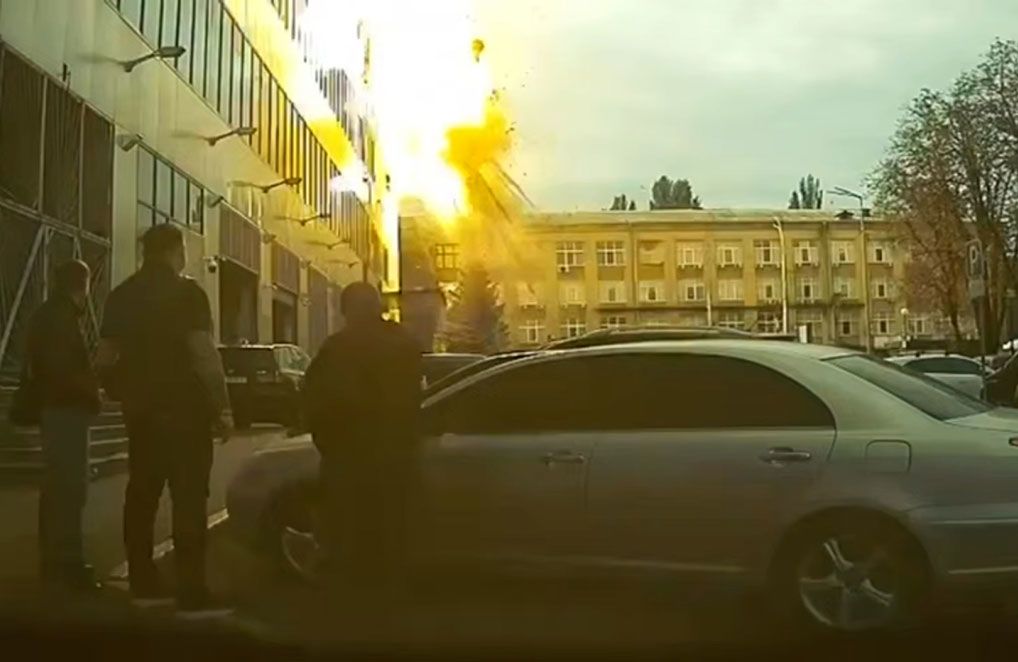
It was not meant to be Masha. Her husband, Danylo Yivzhenko, is the soldier in the family. As a combat medic with Ukraine’s Third Separate Assault Brigade, he made the decision to go to war, knowing the risk. Masha was a civilian, back home in Kyiv, worrying about her husband on the front line. But it was Masha, 29, who was killed by the Russians when a powerful drone struck her office building in the Ukrainian capital on September 25. It’s an injustice that Yivzhenko cannot comprehend. “I am a soldier and I am fighting against Russia. If a Russian military drone or a ballistic missile, or whatever else, kills me – that is fair. We kill Russians. Russians kill us. We are servicemen; we understand what we are doing,” he told CNN. “Killing a soldier is horrible, but it is normal. But Masha was a civilian. She did not assemble drones, she did not hold a weapon in her hands, she did not wear a military uniform. She was a civilian in a civilian city who was simply doing her civilian job that day.” Daily life as it was known in Kyiv stopped on August 27, when Russia began pounding the city with near non-stop aerial assaults. Since then, not a single day has passed without an air raid warning in the city. On average, there have been seven air raid alerts a day. Some days, there have been as many as 13. The Ukrainian military is increasingly unable to defend Kyiv from these assaults because of critical shortages of air defense weapons to bring down Russia’s missiles and its newest jet-powered drones. Ukraine’s president, Volodymyr Zelensky, has been begging allies to help, and the Ukrainian military is racing to develop effective interceptors domestically – but neither has yet led to a meaningful shift. In just over a month – between August 27 and Oct 4 – at least 98 people have been killed and 435 injured in Kyiv and the wider Kyiv region, a number that is significantly higher than in previous months. Several high-profile buildings at the heart of the capital have been struck by Russian drones during this period, including the headquarters of the Security Service of Ukraine, the National Academy of Sciences, High Council of Justice and a TV and internet provider’s data center. Russia consistently claims it only strikes military targets, despite ample evidence of civilian sites being struck on a regular basis. Russia used to launch its aerial attacks overnight under the cover of darkness, to minimize Kyiv’s chances of intercepting them. This meant people were often exhausted after a sleepless night in a shelter, but their lives could go on relatively as normal during the day. But Russia’s newest jet-powered drones have made it possible for Moscow to terrorize Ukraine at any time of the day. And each time Russia fires at Kyiv, an air raid alarm is triggered and life in the capital stops. Many businesses and services, including some public transit operations, shut down, and everyone is meant to head to a shelter. The Ukrainian capital is split in half by the Dnipro river. The right bank is home to the majority of Kyiv’s business centers, offices and government institutions, whereas the left bank is mostly residential. The bridges connecting the two sides are crucial – some 600,000 vehicles cross them every day. And these vital links have become the most recent target for Russia. Kyiv’s Southern Bridge, which serves ground transportation as well as the city’s subway system, was hit five times within two days on Thursday and Friday. The city’s Northern Bridge was hit twice on Saturday and Sunday. The disruption has forced Kyiv authorities to start work on creating a new pontoon bridge. Schoolchildren suffer Russia’s shift toward this new strategy coincided with the start of a new school year in Ukraine – and children are among those hit hardest by the constant interruptions. According to Kyiv authorities, roughly half of the city’s 250,000 children are attending schools in person full time, while most of the rest alternate between remote and in-person learning. A handful of schools are operating fully online. Some schools have gone as far as moving all of their classes underground. Others spend precious learning time moving children to shelters. The enormous risks of bringing children into classrooms were made clear on Thursday, when a Russian drone struck one of Kyiv’s schools while more than 100 children were inside. The school’s headteacher, Olena Chorna, said an earlier air raid alert had only just ended when the sirens started blaring again. “We all hurried down to the shelter and stayed there … 104 children were in the shelter. We could hear things being destroyed; the school was filled with smoke, but in the shelter all the doors were closed and we couldn’t feel a thing.” No one was injured but extensive damage was caused to the building. But with alerts now much more common, many find it hard to keep following the official guidance. “I can’t stay in shelters all the time, because I have to keep living, keep studying,” university student Sophia Zaremba told CNN. Zaremba, who is 20, said the day-to-day reality of living under fire was catching up with her. She witnessed a Russian drone strike next to her university building the day before speaking to CNN. She knew an air raid alert was in place, but she had urgent errands to take care of, she explained. “It was unexpected. You get used to the fact that drones are flying around and that there are various places nearby where they might hit… but this was loud, and it caught us off guard,” she said. She told CNN that all she could think of in the moment was that another explosion might be imminent. “I just thought the alarm was still going off and, God forbid, the next strike might be nearby.” All her remaining sense of security has been shattered, she added. “I haven’t been able to get out of bed for half the day today because I just don’t have the mental strength to do anything.” Russia’s current weapon of choice against Kyiv is its new wave of jet-powered drones, known as the Geran-4 and Geran-5. These killer machines resemble tiny cruise missiles, flying at speeds of up to 600 kilometers per hour (310 miles per hour) and often carrying powerful warheads. They often travel too fast and too high for Kyiv’s mobile fire groups to shoot down, so ground-to-air missiles, fighter jets or interceptors must be deployed – all of which are in extremely limited supply in Ukraine. At the same time, these drones cost as little as one-tenth as much as a traditional cruise missile to produce than traditional cruise missiles, which means Russia can afford to launch dozens of them at the same time. According to Yurii Ihnat, spokesman for the Ukrainian Air Force, Russia launched 2,850 jet-powered drones in August and 3,177 in September. Masha Yivzhenko was killed when her office building in central Kyiv was hit by a Geran-5 drone on September 25. According to Serhii Beskrestnov, an adviser to Zelensky, another jet-powered drone was circling the site of the strike at high altitude, providing a radio signal for the device. Once the building was struck, the second drone flew off to attack a McDonald’s warehouse in the suburbs of Kyiv, Beskrestnov said. Yivzhenko told CNN that one of the things he loved most about Masha was the fact the two of them — both former journalists – always had something interesting to talk about. “She was my best friend and my whole life was built around the fact that we had each other,” he said. When Yivzhenko enlisted in 2024, after working as a volunteer medic since the beginning of the war, the couple got a dog, Jessie, so that Masha wouldn’t be completely alone. They took out a mortgage to buy an apartment and were planning their future, despite the war. “We bought Masha a car because we were planning to have children,” he said. Yivzhenko was in Kyiv for a few days last week. On the day of the attack, he drove Masha to her office to pick up her laptop so she could work from home. She popped in for a few minutes and he walked Jessie while waiting for her to come back. And then the drone struck. First responders at the scene told Yivzhenko that his wife had died on impact. Her body was found under the stairs on the first floor of the office building. “She didn’t burn, she didn’t bleed to death. She died instantly. The blast wave threw her down from the fifth floor,” he told CNN. “I identified her, and they let me go. I have buried my brothers-in-arms and I am mentally prepared for the fact that I will bury my parents when they get old. And all of that is normal. That is life. But by killing Masha, they killed me.”
Topics in this story
Gathered from external sources. Rights to this text belong to whoever originally published it.