Hollywood star William Holden helped buy an 1,800-acre Kenyan game farm in the 1960s; it became one of East Africa's pioneering breeding projects
Rest of World News: William Holden was one of Hollywood's biggest stars, but some of his most lasting work happened far away from the film sets of Los Angeles. In Kenya, .
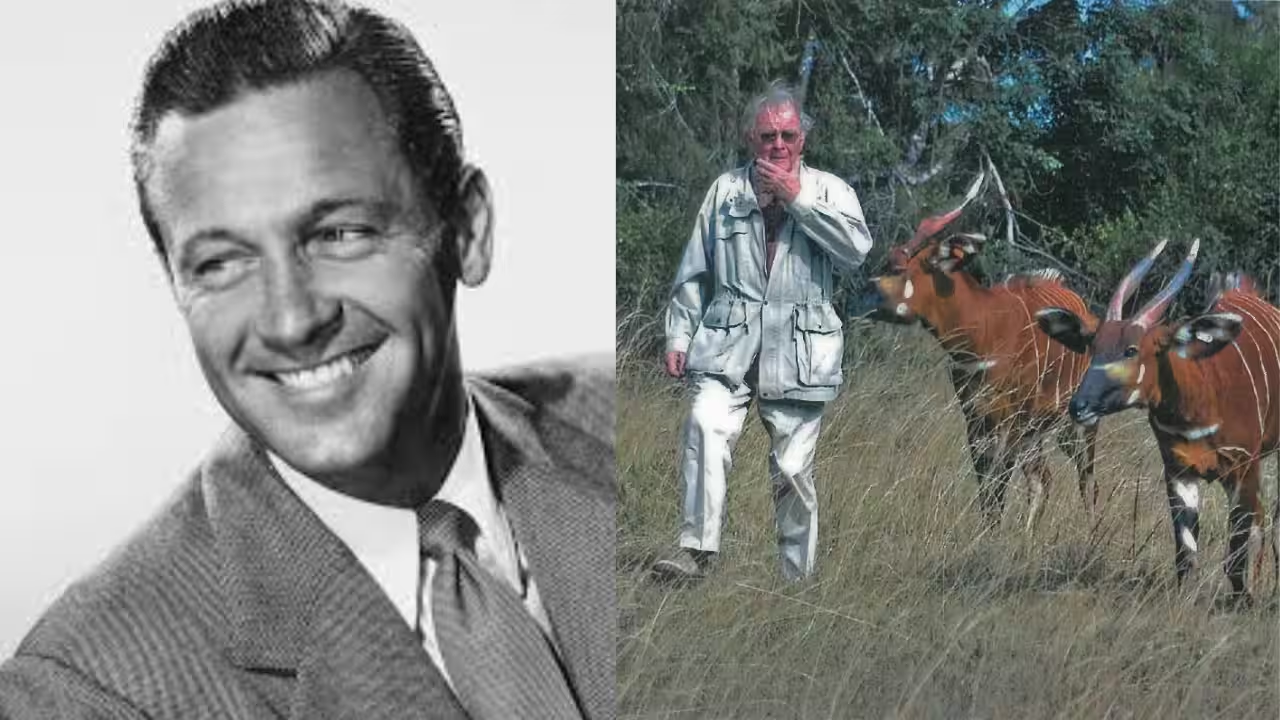
William Holden was one of Hollywood's biggest stars, but some of his most lasting work happened far away from the film sets of Los Angeles. In Kenya, his fascination with wildlife led him to support an ambitious conservation experiment that began in the 1960s. Holden became involved in the development of a vast game ranch on the slopes of Mount Kenya, where threatened African animals could be protected and bred. The project was unusual for its time: rather than simply keeping wildlife for display, its founders wanted to create viable breeding populations that could help safeguard species disappearing from the wild. The ranch eventually became associated with pioneering work involving animals such as the mountain bongo, one of Kenya's most endangered antelopes. According to the William Holden Wildlife Foundation (WHWF), the conservation effort would later grow into a wider mission combining wildlife protection, environmental education and community outreach.William Holden's unlikely connection to KenyaHolden developed a deep attachment to Kenya after visiting the country and becoming increasingly interested in its wildlife. During the 1960s, he joined conservation-minded partners in developing the Mount Kenya Game Ranch, a large private wildlife project near Mount Kenya. The William Holden Wildlife Foundation records that the ranch became an important early experiment in African wildlife conservation, with Holden providing financial support while also remaining personally involved in the project. Its purpose went beyond creating a scenic retreat. The founders wanted to establish a protected environment where endangered and threatened animals could reproduce safely. At a time when conservation breeding was still developing, the idea was remarkably forward-looking. The ranch eventually became home to numerous African species and developed breeding programmes intended to maintain populations that could potentially support future conservation efforts.The mountain bongo became a conservation priorityAmong the animals that became particularly important to the ranch was the mountain bongo, a large, vividly marked forest antelope native to Kenya. By the 1960s, populations were under growing pressure as their forest habitat was reduced and hunting took its toll. According to historical material published by the William Holden Wildlife Foundation, Holden and ranch manager Don Hunt began a determined effort in 1967 to capture young mountain bongos and establish a secure breeding population. Over several years, 20 young animals were eventually transferred to zoos in the United States. The decision created a population outside the species' increasingly threatened natural habitat. What initially appeared to be an extraordinary intervention later proved significant. As wild mountain bongo numbers continued to decline, the animals descended from those early transfers became an important genetic reserve for future conservation and reintroduction efforts.A breeding project became a broader wildlife missionThe Kenyan ranch did not focus on a single species. Its conservation work expanded to include numerous animals, while an orphanage and rehabilitation programme provided care for young wildlife that had been abandoned or otherwise needed protection. The project reflected a growing understanding that simply protecting individual animals was not enough; conservation also required maintaining viable populations and educating people about the ecosystems supporting them. The William Holden Wildlife Foundation later built on this philosophy. Following Holden's death in 1981, his conservation legacy continued through the foundation established in his name. Its education centre was created on part of the former game ranch, bringing conservation education directly to Kenyan communities and schools. The organisation now combines wildlife protection with environmental education, biodiversity programmes and sustainable-development initiatives.William Holden's conservation legacy lives onHolden remains best known for his Oscar-winning Hollywood career, but his work in Kenya created a very different legacy. The breeding efforts at the Mount Kenya Game Ranch helped preserve animals at a time when wildlife populations were facing mounting threats. Most notably, the mountain bongo population established through animals sent overseas eventually provided the foundation for later conservation and repatriation efforts. The story demonstrates why the ranch was more than a celebrity's African retreat. It became an early example of how captive breeding, habitat protection and education could work together to protect endangered wildlife. Today, the foundation continues that broader conservation philosophy through education and environmental programmes in Kenya. Holden's greatest contribution, therefore, may not have been a film performance at all, but helping create a conservation project whose influence continued long after his death.Catch the latest World News and Live updates. Download the TOI app.
Topics in this story
Gathered from external sources. Rights to this text belong to whoever originally published it.