In 2024, a Welsh ecologist posted a moth on Instagram; museum experts found it was a Guyana species unknown to science, 4,300 miles from home
UK News: Amateur naturalists now routinely provide sightings, photos, and specimens that go on to inform genuine scientific work, demonstrating the growing val.
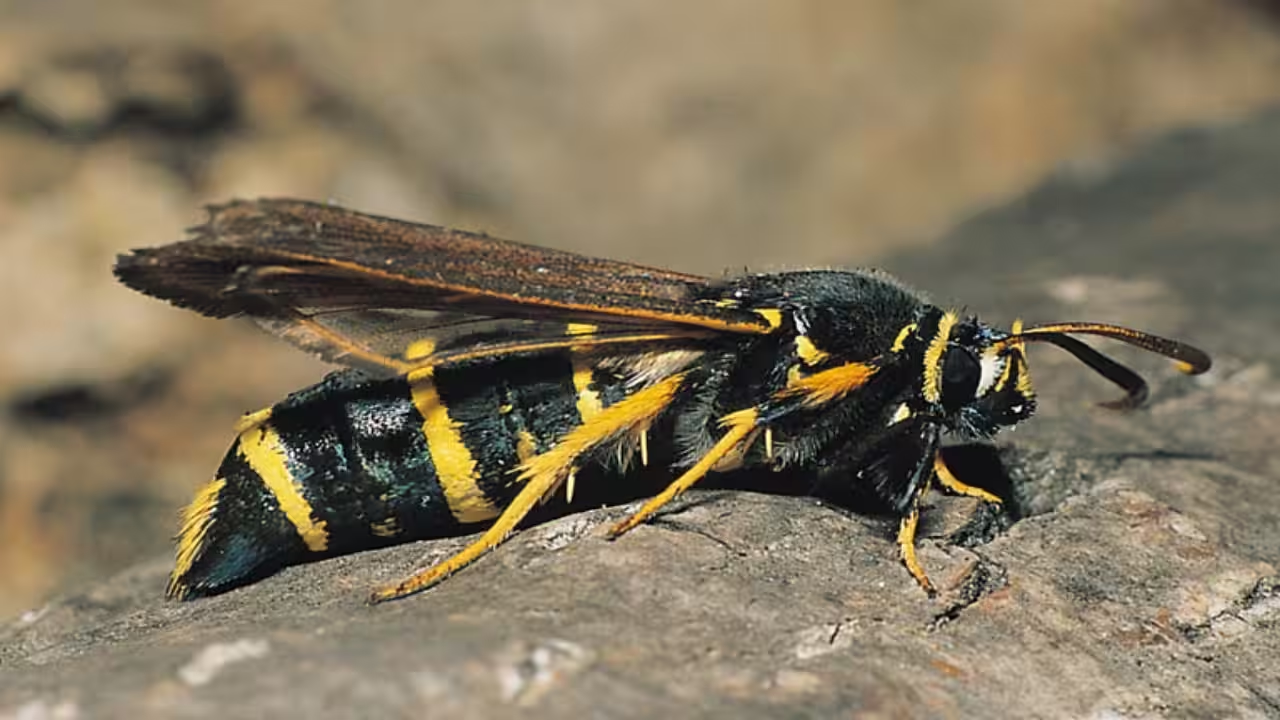
Amateur naturalists now routinely provide sightings, photos, and specimens that go on to inform genuine scientific work, demonstrating the growing value of citizen science in disciplines previously exclusive to professional researchers. Few instances better capture that change than a finding discovered in a typical Welsh living room in 2024, when a coincidental photo posted on social media reached London's Natural History Museum and sparked a two-continental scientific inquiry.In February 2024, biologist Daisy Cadet, who lives in Port Talbot, was at home with her mother Ashleigh when she spotted a strange moth flying near a window. Nearby was a second dead example of the same insect. Cadet didn’t just assume it was an ordinary neighbourhood visitor; she took a picture of the moth and posted it to her Instagram account, not knowing what kind it was.Museum gets involvedThat was a pivotal decision. An amateur lepidopterist who had read Cadet’s description noticed that the moth was unlike any species normally recorded in the United Kingdom and reported the observation to the charity Butterfly Conservation, a UK-based group set up to safeguard butterflies and moths. The organization sent the sighting on to scientists at London’s Natural History Museum, triggering a chain of expert attention that a lone snapshot in a private home would seldom attract.The moth researchers at the museum who looked at the photographs noticed it as something out of the ordinary for British settings, and it prompted a further in-depth inquiry into how it could possibly have ended up flying around a Welsh living room in the dead of winter. When the explanation did emerge, it was almost by accident. Ashleigh had just returned from a photography trip to Guyana, and it appeared that the moths had hitched a journey back to Wales hidden in the mud that was caked inside the boots she had worn on the trip.Along a most unusual pathCadet, responding to enquiries from the museum, inspected her mother's mud-caked boots and discovered two dainty pupal casings, mostly intact but already vacated, in dried mud with a small piece of woody plant material with tiny bore holes from feeding larvae. Further study showed the plant fragment to be from Mora excelsa, a big leguminous tree native to the rain forests of South America. The seed pods were the very habitat in which the moth's larvae feed and develop.The chances of the discovery were astounding, said researchers at the Natural History Museum. Clearwing moths are famously difficult to detect even for experienced entomologists working directly in their native habitat, let alone to grow successfully by mistake. It was almost inconceivable, in the words of one museum scientist, that two specimens could survive a journey of more than 4,300 miles hidden in travel luggage, emerge from their pupal casings months later and then be maintained in excellent enough condition for scientific research.New species confirmedEventually, DNA analysis and comprehensive comparison with existing museum collections proved what experts had anticipated from the outset: that the item was an altogether new species unknown to science. It was formally called Carmenta brachyclados, after a unique short vein on the hindwing, and the discovery was published in the journal Nota Lepidopterologica. Remarkably, even in the nation where it occurs naturally, the species had never been publicly listed until its first scientific description came from specimens found thousands of miles beyond its native habitat.The case has now become a well-cited example of how amateur observation, when rapidly coupled with expert verification, can generate conclusions that might otherwise take years of dedicated fieldwork in isolated rainforest habitat. The encounter was a rare and direct illustration for Cadet, an early-career ecologist who enjoys noting down uncommon sightings, of how curiosity, a smartphone photo, and a willingness to ask questions can sometimes lead all the way to a page in the scientific record. The moth that blundered into a Welsh living room now carries her contribution to science in its name, a small but lasting reminder of how far a single photograph can travel.Catch the latest World News and Live updates. Download the TOI app.
Topics in this story
Gathered from external sources. Rights to this text belong to whoever originally published it.