In 2019, three Pennsylvania investors paid $100,000 for an abandoned high school; after an 18-month, roughly $3.3 million conversion, its classrooms became 31 apartments that reached full occupancy within six months
A high school that sat empty for years is now home to dozens of people, after three Pennsylvania investors turned its old classrooms into apartments.
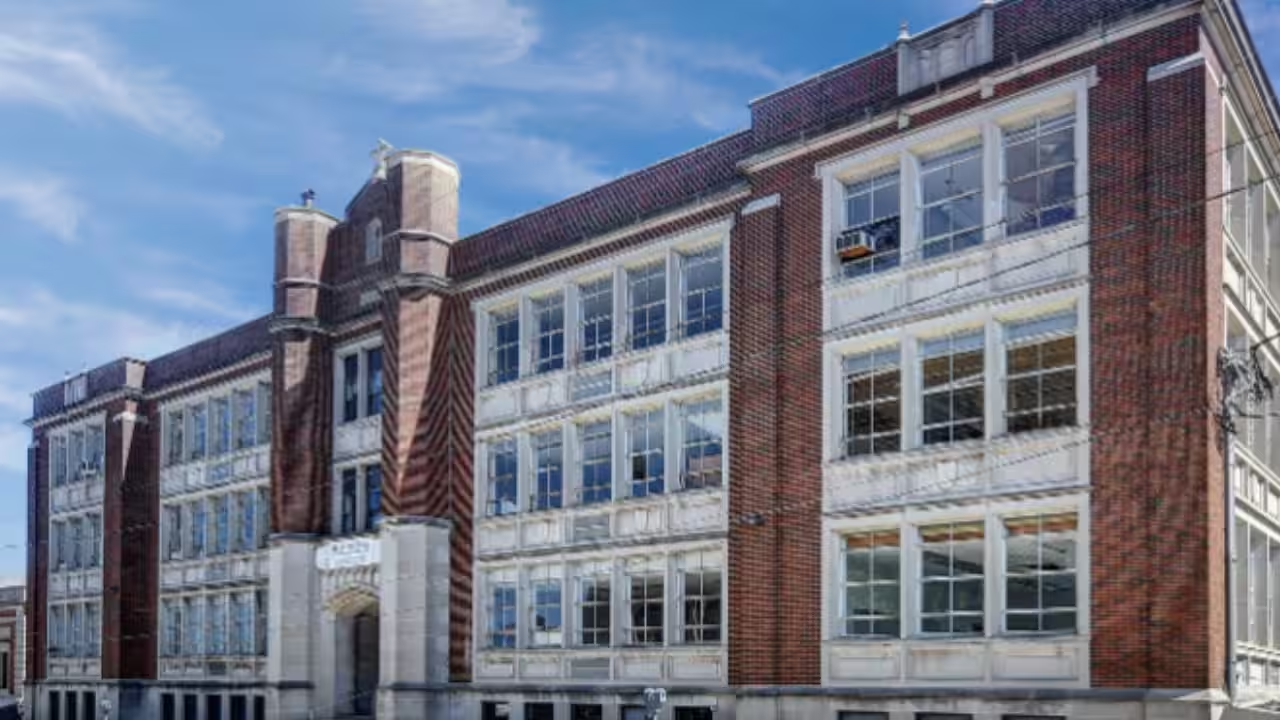
A high school that sat empty for years is now home to dozens of people, after three Pennsylvania investors turned its old classrooms into apartments. In 2019, three friends bought an abandoned school building in Homestead, Pennsylvania, for just $100,000. What followed was far more expensive than the purchase price. Over the next 18 months, they spent roughly $3.3 million transforming the former school into a 31-unit apartment building. The project involved gutting and rebuilding much of the interior while keeping some of the features that made the building recognisable as a school. In interviews with CNBC Make It, the investors detailed how they took on the unusual conversion and eventually filled all 31 apartments within six months of opening them for rent.The $100,000 building that needed a new purposeThe property had been sitting vacant for years when the three investors, Jesse Wig, Adam Colucci and Dan Spanovich, purchased it. Rather than starting with a traditional apartment building, they were dealing with a former high school that had already seen better days. The partners initially considered several different uses for the building. According to CNBC Make It, ideas included turning it into a co-working space, a concert venue or a beer garden. They eventually decided that converting it into housing offered the most practical use for the property.The building had around 55,000 square feet of space, although only about 20,000 square feet was ultimately available for leasing because of the building’s large hallways, staircases, gym and auditorium. The $100,000 purchase price also turned out to be only the beginning. The renovation ultimately cost approximately $3.3 million, turning a relatively inexpensive property acquisition into a major redevelopment project.Classrooms were rebuilt as apartmentsThe investors did not simply divide the old school into identical rental units. The renovation involved rebuilding the former classrooms as modern apartments while retaining several details from the building's past. The completed property has 31 apartments, including one- and two-bedroom units. Former classrooms were converted into living spaces with kitchens and bathrooms, while features such as the building's high ceilings and large windows helped give the apartments a distinctive character.Some of the old school features were deliberately kept rather than removed. Original chalkboards remain in some apartments, providing an obvious reminder of what the rooms were once used for. The building's shared spaces also received new purposes. The former auditorium, for example, was restored rather than simply stripped out. The renovation preserved parts of its original character while turning it into a communal area for residents.The gymnasium was given another life as well. The old basketball court was retained, while the space was adapted into a fitness area. Instead of becoming unusable remnants of an abandoned school, these large spaces became amenities for the people living in the building.A costly renovation that quickly found tenantsThe finished property, known as Bowtie High, began leasing in 2021. The investors had put millions of dollars into a building that had once been empty, but the apartments attracted tenants quickly. According to CNBC Make It, all 31 units were occupied within six months of the building becoming available for rent.The completed development included 27 one-bedroom apartments and four two-bedroom apartments. The homes combined features expected from newly renovated apartments with details inherited from the former school. Modern kitchens, bathrooms and other residential amenities were installed, while the original architecture helped keep the property from feeling like a completely new building. That mixture was part of the appeal. Instead of hiding the building's history, the renovation incorporated it into the finished homes.What happened to the rest of the old school?After completing Bowtie High, the investors took on another abandoned school nearby. Their next project involved the former Schwab school, which they purchased for $90,000. That building required an even more extensive renovation and was planned to become another apartment complex. The second project showed how the investors had moved from an unusual one-off idea to a broader strategy: finding old buildings that had lost their original purpose and adapting them for housing.The Bowtie High conversion, however, remains the clearest example of that approach. A property that had once been associated with classrooms, school corridors, an auditorium and a basketball court was reworked into a residential building without completely wiping away those earlier identities. The numbers also illustrate how dramatically the economics of the property changed. The investors paid $100,000 to acquire the abandoned school, then spent roughly $3.3 million on the redevelopment. After 18 months of work, the result was a 31-apartment building that was fully occupied within six months.The project is an example of adaptive reuse, in which an existing building is given a new function rather than being demolished and replaced. In this case, classrooms became homes and former school facilities became shared amenities. For the people who now live there, the building is no longer an abandoned school. But its past has not disappeared entirely. Chalkboards, high ceilings, the old gym and other surviving details continue to hint at what the property once was, even as the former classrooms serve a completely different purpose.You use AI every day. Now get your AI Quotient. Take the AIQ test.
Topics in this story
Gathered from external sources. Rights to this text belong to whoever originally published it.