Georgia built two oyster reefs in the Savannah River in 2023; nearly 18 months later, oyster cover reached 17%–40%, and wave energy was 40% lower than at control sites
Discover how Georgia's oyster reef restoration project in the Savannah River is reducing wave energy by 40%, offering a natural solution to coastal erosion and benefiting marine ecosystems.
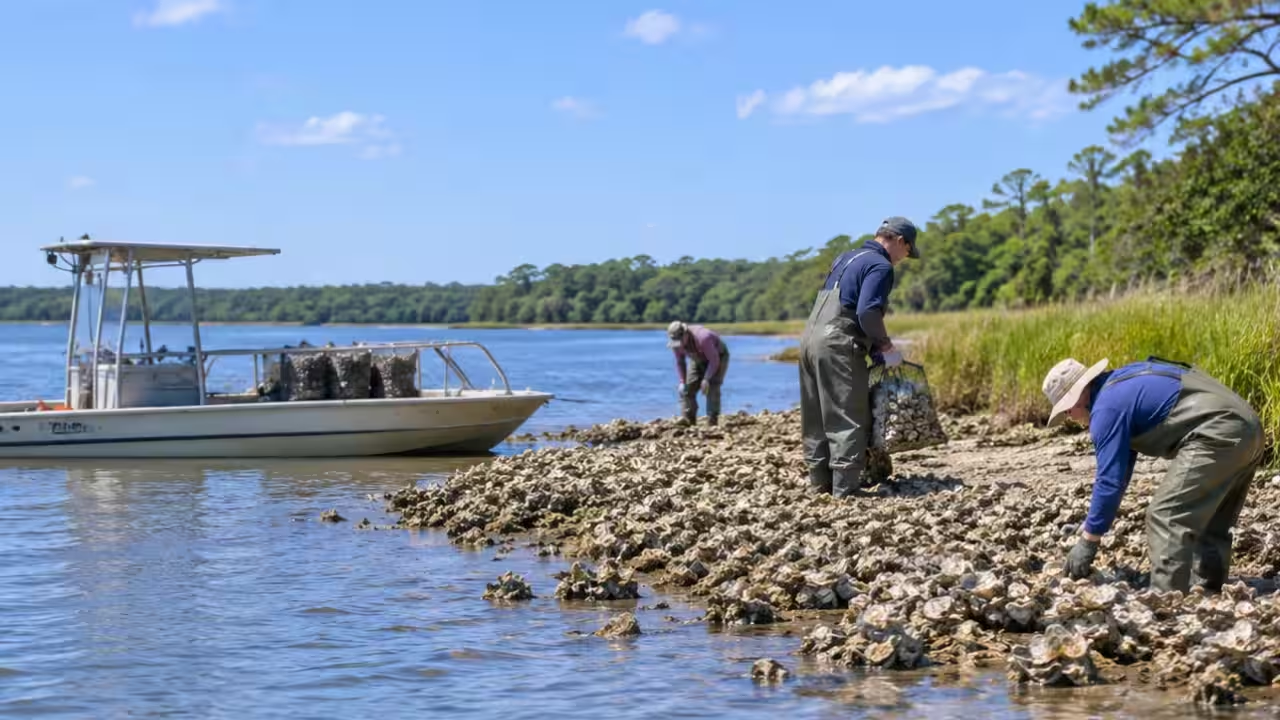
Oyster reefs are also gaining recognition as a natural solution to guard vulnerable riverbanks from wave damage. To complement conventional engineered coastal defences like anchored concrete barriers or permanently fixed seawalls, these growing oyster populations are acting as a natural buffer to dissipate waves and reduce wave impacts.According to a 2025 study published in Ecological Engineering, oyster reef restoration may be a viable solution to safeguard erosion-vulnerable areas, especially in places with a substantial amount of boat activity. The study measured two restored reefs along Georgia’s Savannah River, where oyster recovery had reached 17% to 40% after almost 18 months. The reefs also blocked up to 40% of the power compared with nearby control sites without reefs.How Georgia constructed the oyster reefsGeorgia deployed the two reefs in May 2023 in the intertidal zone of the Savannah River near Savannah. Researchers identified areas susceptible to erosion, including spots with regularly generated waves and areas with fluctuating water conditions. For the restoration, researchers focused on a technique called spat-on-shell construction. The term spat refers to tiny oysters that attach to a substrate at the beginning of their lives. In this process, prepared oyster shells became a surface for young oysters to attach and grow until a reef forms.Reefs were placed about one to two metres from the marsh edge. They were designed to break incoming waves before the water interacted with the vulnerable marsh plants and exposed sediments. This configuration allowed the structures to serve as living breakwaters while creating ideal conditions for oysters to flourish. The Savannah River was a fitting location to try this technique due to its high boat traffic. Commercial vessels passing by the Port of Savannah and recreational vessels can cause consistent waves to beat against the shoreline, which can lead to the loss of sediments and marsh edge erosion over time.Oyster growth and wave measurements show promising resultsScientists surveyed the reefs for nearly a year and a half, assessing oyster coverage, quantity, and size to gauge how quickly the reef grew. They also deployed water pressure sensors to the newly installed reef and to reference sites without reefs to track wave activity. These sensors, which measure the motion of waves at different locations, were used to determine if the oyster reef created less energy for the coast. Monitoring occurred at several time points after the reef’s construction.They also found that wave energy at the reefs was 40% lower than at the control sites. This indicated that even smaller, younger oyster structures can have an impact on the riverbed and offer protection to the exposed river banks. These results, published in NOAA, provide empirical data on the benefits of oyster restoration. These findings also align with the research published in Ecological Applications, which examines oyster populations living along the shorelines of the Atlantic and Gulf coasts of the United States. The research highlights how these structures can reduce wave impacts, even though their effectiveness depends on local environmental conditions and reef design.Why oyster reefs could benefit coastal environments Oyster reefs provide benefits from their ability to slow down waves. As they grow, oysters form dense colonies that produce a rough surface to deflect incoming waves, decreasing the energy that reaches the shore and exposed sediments, which may help reduce erosion along the shoreline. They also provide habitat for fish, crabs, and other marine life. As filter feeders, oysters extract suspended particles from the water column while feeding, and this can have a positive impact on water quality and marine life in the area.One other interesting aspect of this project is its connection with the marsh vegetation. As wave action decreases, marshy plants may find it easier to take hold, which further strengthens the sediment and helps protect the shoreline from deterioration. Ultimately, the effect of the reclaimed structure depends on whether the oysters survive, how fast the reef grows, and other aspects of the water conditions. Effects such as salinity, water depth, tidal cycle, and movement of sediment influence how well the restored structures thrive. These 18-month results are promising, but more monitoring is required to assess whether these positive results persist in the long term.You use AI every day. Now get your AI Quotient. Take the AIQ test.
Topics in this story
Gathered from external sources. Rights to this text belong to whoever originally published it.