A 10-year-old started a wildlife project after finding a US park covered in trash; years later, he rescues turtles, pelicans and fish
US News: At just 10 years old, John Carl Tilghman encountered something during a family trip that changed the direction of his life, a US national park littere.
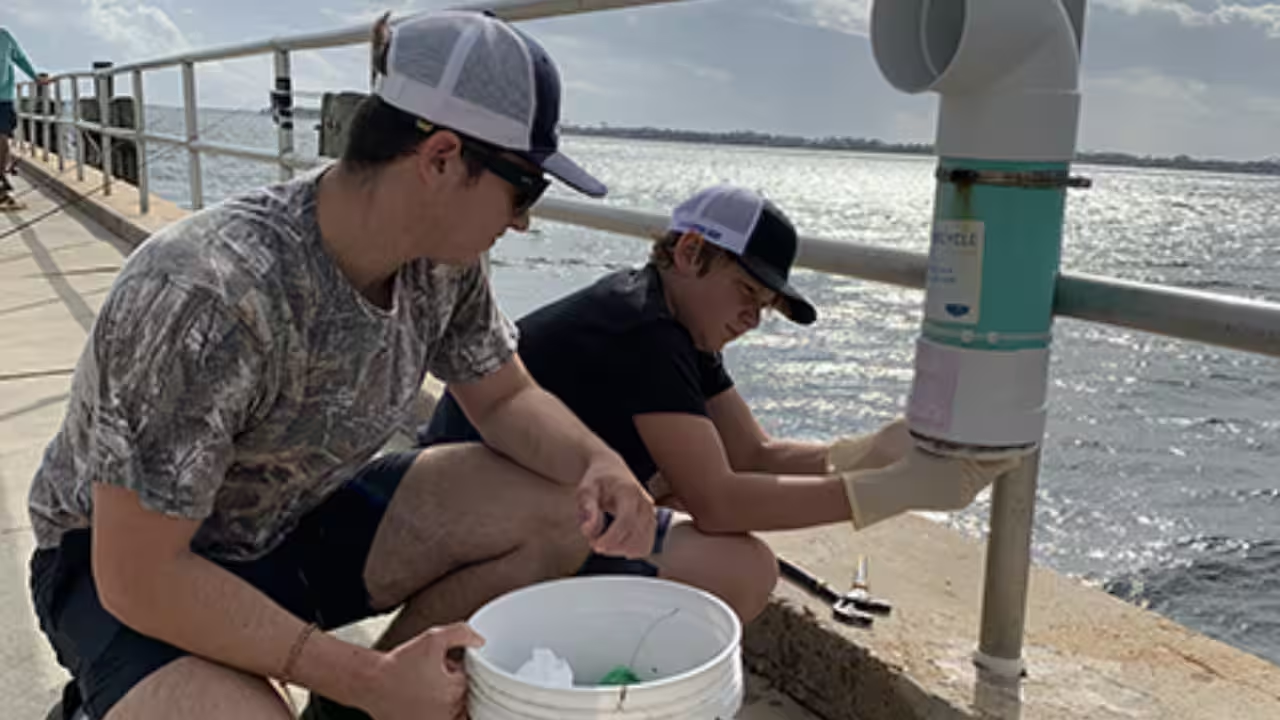
At just 10 years old, John Carl Tilghman encountered something during a family trip that changed the direction of his life, a US national park littered with rubbish. Instead of simply walking past it, he and his brother began thinking about what they could do to protect the wildlife affected by human waste. That conversation eventually became Conservation Brothers, a hands-on conservation initiative focused on protecting natural resources and helping animals. Years later, Tilghman is still carrying that mission forward. Now a high school junior, he spends time rescuing fish, sea turtles and pelicans caught in discarded fishing line, installing monofilament collection bins and building nesting boxes for wood ducks.A family road trip sparked a conservation missionTilghman's journey began during a 2017 cross-country trip with his family, when he and his brother visited a national park and were shocked by the amount of rubbish scattered throughout the area. According to Points of Light, the experience stayed with the brothers after they returned home. They began discussing ways they could make a difference and eventually created Conservation Brothers, drawing on their family's previous experience with nonprofit work. What started as an idea between two children developed into a continuing programme of practical conservation activities. Rather than limiting their efforts to raising awareness, the brothers focused on projects they could physically carry out, including shoreline clean-ups, fishing clinics, wildlife protection and habitat improvement. For Tilghman, the early encounter with litter also became a lesson in how everyday human behaviour can have consequences far beyond what people see.Fishing line became an unexpected threat to Florida wildlifeAs Tilghman grew older, his conservation work became closely connected to his experience as a deckhand on a charter boat. Working offshore, he regularly encounters wildlife suffering from discarded fishing line. Fish can become tangled and need to be carefully freed before being returned to the water, while sea turtles and pelicans can become seriously entangled around docks and waterways. Tilghman told Points of Light that he has assisted with sea turtle rescues and encountered pelicans caught in fishing line almost daily at the dock. His response has gone beyond rescuing individual animals. Through Conservation Brothers, he builds monofilament fishing-line receptacles and helps install them at marinas and docks, giving anglers a safer place to dispose of unwanted line. The approach tackles the problem before it reaches wildlife, turning personal encounters with injured animals into a broader prevention effort.Wood duck boxes are helping rebuild lost nesting habitatOne of Tilghman's proudest conservation projects involves an animal that needs suitable nesting spaces to reproduce, the wood duck. After a Category 5 hurricane struck the area in 2018 and destroyed trees and nesting habitat, Tilghman and his family researched the species and began constructing wooden nesting boxes. Four were installed around their backyard, where they could watch the ducks return and raise their young each spring. Each nesting box can produce as many as two broods of 12 to 15 eggs during spring, meaning the project's four boxes can potentially contribute to hundreds of hatchlings. The Conservation Brothers later placed five additional boxes in a cypress swamp on their northern Florida property, where Tilghman says the local population grew dramatically. What began as habitat replacement after a hurricane has become an annual wildlife project that lets the family watch new generations emerge.A teenager's conservation work is becoming a lifelong missionTilghman's work now stretches well beyond the project that began when he was 10. Conservation Brothers continues to organise shoreline clean-ups, fishing clinics and habitat projects, while Tilghman remains directly involved in planning and carrying out its activities. His experiences have also shaped his ambitions for the future. Tilghman is considering careers in biology or environmental engineering, reflecting how closely conservation has become tied to his interests. He also hopes the organisation will continue after he leaves for college, with plans to eventually pass its responsibilities to two younger cousins who share his enthusiasm for the outdoors. His story is a reminder that environmental action does not always begin with a large organisation or an elaborate plan. Sometimes, it starts when a child sees a problem, refuses to ignore it and decides to do something about it.Catch the latest World News and Live updates. Download the TOI app.
Topics in this story
Gathered from external sources. Rights to this text belong to whoever originally published it.