In Indonesia, communities packed dead branches between rows of bamboo in damaged coastal areas; the permeable barriers trapped sediment and helped mangroves return
Rest of World News: Discover how Indonesian communities are fighting coastal erosion and restoring mangrove forests using bamboo barriers that trap sediment, creating sustainable habitats for marine life.
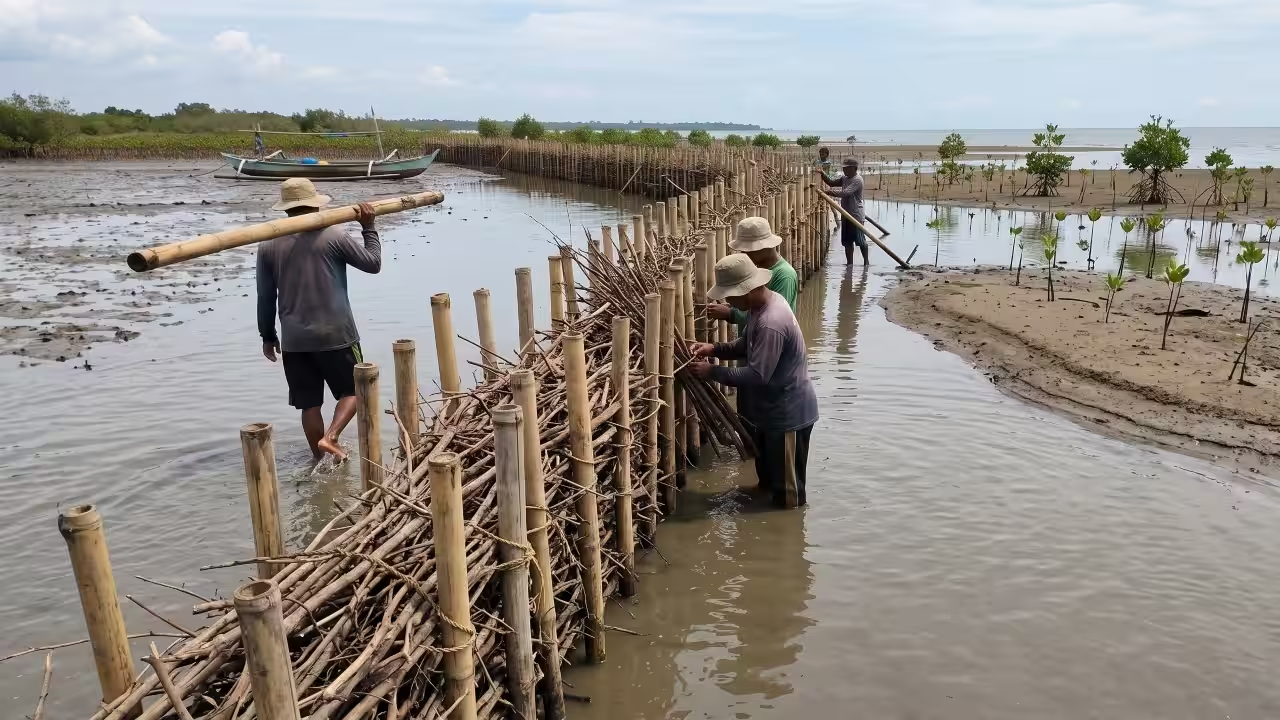
Indonesia has the greatest expanse of mangrove forest anywhere on Earth, which formerly meant its coastline was one of the best protected in the tropics. But in the last few decades, significant swaths of that forest have been removed to make way for shrimp and fish ponds, exposing swathes of Java and Sumatra to waves that earlier smashed harmlessly against extensive root systems. Villages that never had to worry about the sea began to witness it move steadily inland, graveyards, homes and fields lost to water that mangroves used to hold back.The obvious initial response, simply transplanting seedlings, continued failing. Saplings placed in soft, wet muck are washed away before they can take root, and a study of Philippine mangrove programmes published in Wetlands Ecology and Management found long-term survival rates for conventional replanting schemes as low as ten to twenty per cent. In the end, a more patient approach worked, one that followed how mangroves naturally colonise land rather than fighting the mud. Coastal engineers and community groups began to drive bamboo poles into the shallows and pack the gaps between with dead branches, creating a permeable barrier that allowed water to flow but slowed it enough to allow silt to settle out.Building barriers that work with the tide, not against itThere is a basic, deceptive logic to this design. A concrete seawall stops water completely. Sounds protective, but in soft coastal mud it backfires, because the wall sinks under its weight and the water it deflects just erodes the land next to it. A bamboo and brushwood barrier behaves differently. Tidal water runs through the gaps in the branches, but the structure slows the current enough for suspended mud to drop out of the water column rather than being pushed further inland. Over months and years, this trapped silt gradually raises the level of the seabed behind the barrier, producing circumstances similar enough to a natural mudflat that mangrove seeds carried in by the tide can settle, root and flourish without being swept away.Communities in Demak, on Java's northern coast, are the most documented example of this approach. According to Wetlands International, locals have built more than three kilometres of wave-calming structures along a 20-kilometre stretch of shoreline, creating the calm, sediment-filled conditions mangroves need to re-establish themselves. This case shows why the practice has expanded well beyond a single community, and the same basic concept has now been tried across river deltas from Vietnam to Indonesia.A technique that spread from village experiments to national policyWhat started as cottage industry experimentation has been researched in detail by coastal engineers with a view to finding out exactly how much wave energy these tiny structures could soak up and how far the design might be pushed. A study published in the journal Ecological Engineering documented how the approach, often called the Building with Nature method, was scaled up by the Indonesian government after early trials, with more than 20 kilometres of permeable dams constructed across Java, Sumatra, Sulawesi and Kalimantan between 2017 and 2019 alone. The same researchers note that success depends heavily on local site conditions and sustained maintenance rather than a fixed formula, a more measured contrast to the often poor survival rates of conventional planting schemes.Part of the reason the technology is appealing to policymakers is that it is cheap and uses resources already at hand in coastal towns. Bamboo is abundant and inexpensive throughout much of Indonesia, and branches that otherwise would be wasted become the very material that captures the mud needed for fresh mangrove development. In several documented cases, fishermen and farmers who agreed to convert part of their ponds back to mangrove have seen their fish and shrimp catches rebound as habitat returned, since the trees provide nursery grounds that many commercially valuable species depend on.Lessons for other shores confronting rising seasIncreasing sea levels and groundwater extraction are increasingly posing threats to coastal erosion in South and Southeast Asia, including areas of the eastern shoreline of India, where the cover of mangroves has also reduced drastically in the past few decades. The Indonesian example is a valuable reminder that not all coastal preservation needs to be expensive engineering and that patient, low-cost initiatives based on natural processes can occasionally do better than more costly options.Catch the latest World News and Live updates. Download the TOI app.
Topics in this story
Gathered from external sources. Rights to this text belong to whoever originally published it.