In 1949, a Danish fisherman began covering his house with seashells, and 25 years later it became a folk-art landmark
In 1949, Danish fisherman Alfred Chr.
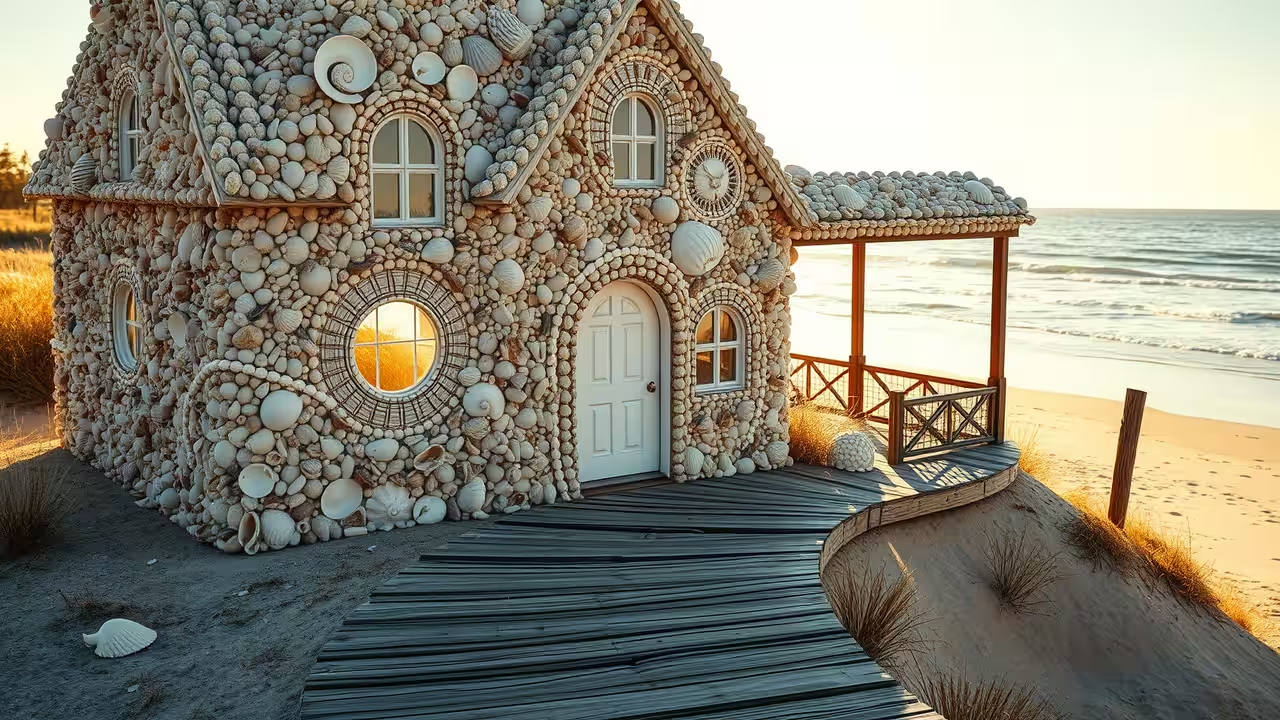
In 1949, Danish fisherman Alfred Chr. Pedersen began decorating his house in Thyborøn with seashells after promising his wife that he would build her a house unlike any other, one that people would travel from near and far to see. According to VisitDenmark, Pedersen continued the work until 1974, meaning the project took 25 years to complete. During that time, he covered the house both inside and outside with tens of thousands of snail shells and conch shells arranged in artistic patterns. VisitDenmark says residents were initially sceptical about the project, but eventually became enthusiastic and proud of what Pedersen had created. The house became known as Sneglehuset, or the Snail House, and today operates as a small museum in the coastal town of Thyborøn.Sneglehuset in Thyborøn: how Alfred Pedersen covered a house in shellsThe scale of Sneglehuset's decoration is what distinguishes the building. Pedersen spent 25 years working on the project, adding shells to surfaces throughout the house and arranging them into different patterns and designs. VisitDenmark describes the finished building as being covered inside and outside with tens of thousands of snail shells and conch shells.The attraction is more than the shell-covered building itself. Sneglehuset also contains a large exhibition of bottle ships, detailed vessels constructed inside glass bottles. VisitDenmark describes bottle-ship making as a traditional hobby among fishermen along the West Jutland coast and highlights the craftsmanship represented in the collection. The bottle ships form a separate part of the attraction alongside the extensive shell decoration.Inside Sneglehuset: seashells, conch shells and bottle shipsVisitors to Sneglehuset can see the shell decoration throughout the building as well as the collection of bottle ships. The attraction contains shells and other objects associated with the sea, while the bottle ships provide another example of detailed craftwork connected with the region's fishing communities. The collection grew alongside the building over the 25-year period in which Pedersen worked on Sneglehuset. As the project developed, additional space was created for the growing collection. The site's historical material describes a hall associated with the exhibition, as well as a workshop and storage building connected with Pedersen's work. A 14-metre-high tower was also added to the property toward the end of the project. These structures remain part of the attraction today.The decoration is not limited to a single section of the property. Shells were incorporated into the building's interior and exterior, while the exhibition spaces contain additional objects collected or made as part of the attraction. This means the visitor experience combines the decorated architecture with the collections displayed inside the building. The bottle-ship collection is particularly connected to the area's maritime history. The vessels are constructed inside glass bottles and represent a craft associated with fishermen along the West Jutland coast. The collection therefore sits alongside the shell-covered building as another part of the attraction's displays. Today, Sneglehuset operates as a small museum with exhibitions, a shop and an ice café. It is located at Klitvej 9 in Thyborøn, North Jutland. VisitDenmark lists a coach park and a restaurant or café among the facilities at the attraction.Visiting Sneglehuset today: attractions around ThyborønSneglehuset is located close to several other attractions in Thyborøn. VisitDenmark lists Thyborøn Surfcenter immediately behind the attraction, where visitors can try surfing. The town's skate park also offers skateboard and scooter rentals. Other attractions in Thyborøn include JyllandsAkvariet and Iskunsten, an ice-art exhibition. JyllandsAkvariet focuses on marine life from the North Sea and Limfjord, while Iskunsten presents ice art in a former freezing facility. What began in 1949 as Alfred Chr. Pedersen's effort to create a unique house eventually became a building covered with tens of thousands of shells. The work continued for 25 years before being completed in 1974. Today, Sneglehuset remains a museum in Thyborøn, preserving the shell-covered building and the collections assembled alongside it.You use AI every day. Now get your AI Quotient. Take the AIQ test.
Topics in this story
Gathered from external sources. Rights to this text belong to whoever originally published it.