Chhattisgarh village liquor ban: 16 fined Rs 45,000, gram sabha’s powers come under focus
Raipur: A Chhattisgarh gram panchayat’s attempt to enforce complete prohibition might run into a legal question after it collected Rs 45,000 in penalties
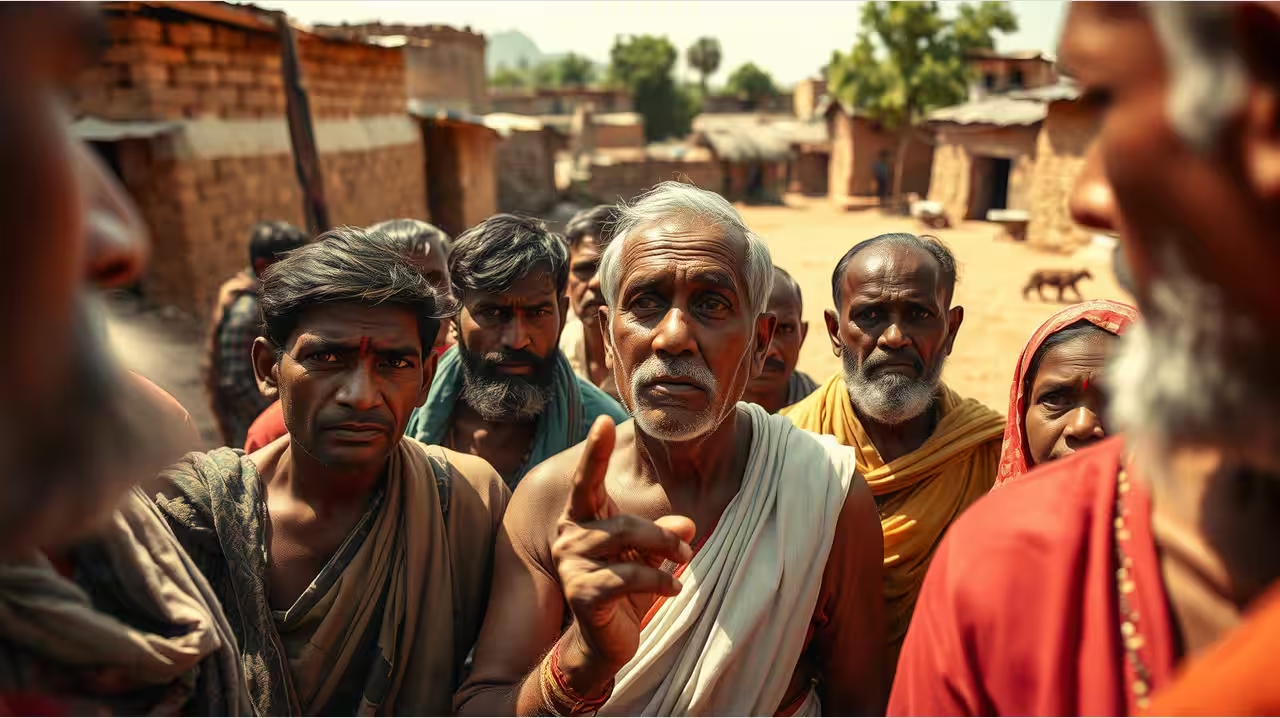
Raipur: A Chhattisgarh gram panchayat’s attempt to enforce complete prohibition might run into a legal question after it collected Rs 45,000 in penalties from 16 residents who had consumed liquor outside the village and returned home intoxicated, with senior police officials questioning the legality of the recoveries.The village in Surguja’s Lakhanpur block had declared prohibition from Sept 1 after complaints that drinking was leading to quarrels and disturbances. The decision was backed by a gram sabha and supported by several women in the village.Under the locally framed rules, manufacture or sale of liquor attracts a Rs 5,000 penalty, consumption Rs 1,500, while those found fighting after drinking or returning drunk from another village can be fined Rs 3,000.A monitoring committee was formed to enforce the decision.The panchayat within a fortnight caught 16 residents who had allegedly consumed liquor elsewhere before returning to Kevra. Fourteen were fined Rs 3,000 each and two Rs 1,500 each, taking the total collection to Rs 45,000.Village representatives said the money would be used for development works and maintained that the rules had been adopted with the consent of residents after a door-to-door awareness drive.Surguja IG Deepak Jha said gram sabhas have the power to regulate the manufacture and consumption of liquor and discourage them through the Gram Sudhar Abhiyan samiti, particularly in Scheduled Areas under the Panchayati Raj system. Police, meanwhile, said action would be taken if the matter involved a violation of excise or criminal laws.The legal position is more nuanced than a complete bar on gram sabha fines. Under the Chhattisgarh gram sabha (constitution, meeting procedure and conduct of business) rules, 2022, gram sabhas have limited powers to impose penalties for a specified list of offences, with the maximum amount fixed for each.Surguja collector Ajeet Vasasnt said that according to the rules, the schedule includes misconduct in public by a drunken person under IPC Section 510, but caps the fine at Rs 10. It does not appear to confer a general power on a gram sabha to prohibit lawful consumption of liquor or frame its own penalties running into thousands of rupees for drinking elsewhere and returning to the village.The 2022 rules were framed by the state govt under powers conferred by the Chhattisgarh Panchayat Raj Act, 1993.The controversy therefore presents an unusual contradiction: while villagers say the prohibition has reduced fights and brought greater calm — including during the recent Karma festival — the panchayat appears to have stretched a social resolution into a punitive system of its own.Monitoring committee member Dayawati said residents had noticed fewer quarrels since prohibition was introduced and that women strongly supported the initiative.The village’s campaign against alcohol may continue to enjoy social legitimacy, but the Rs 45,000 collection has raised a more fundamental question: not whether a gram sabha can ever impose a fine, but whether Kevra has exceeded the narrow punitive powers that the law gives it.You Can Also Check: Gold Rate in Raipur | Silver Rate in Raipur | Bank Holidays in Raipur | Public Holidays in Raipur | Raipur AQI | Weather in Raipur | Petrol Price in Raipur | Diesel Price in Raipur | CNG Price in Raipur | LPG Price in RaipurStay updated with the latest Raipur news. Download the TOI App.
Topics in this story
Gathered from external sources. Rights to this text belong to whoever originally published it.