Usha Vance, please speak up: Indians are not ‘indentured servants’
For Indians, the phrase indentured servant is not an ordinary political insult.
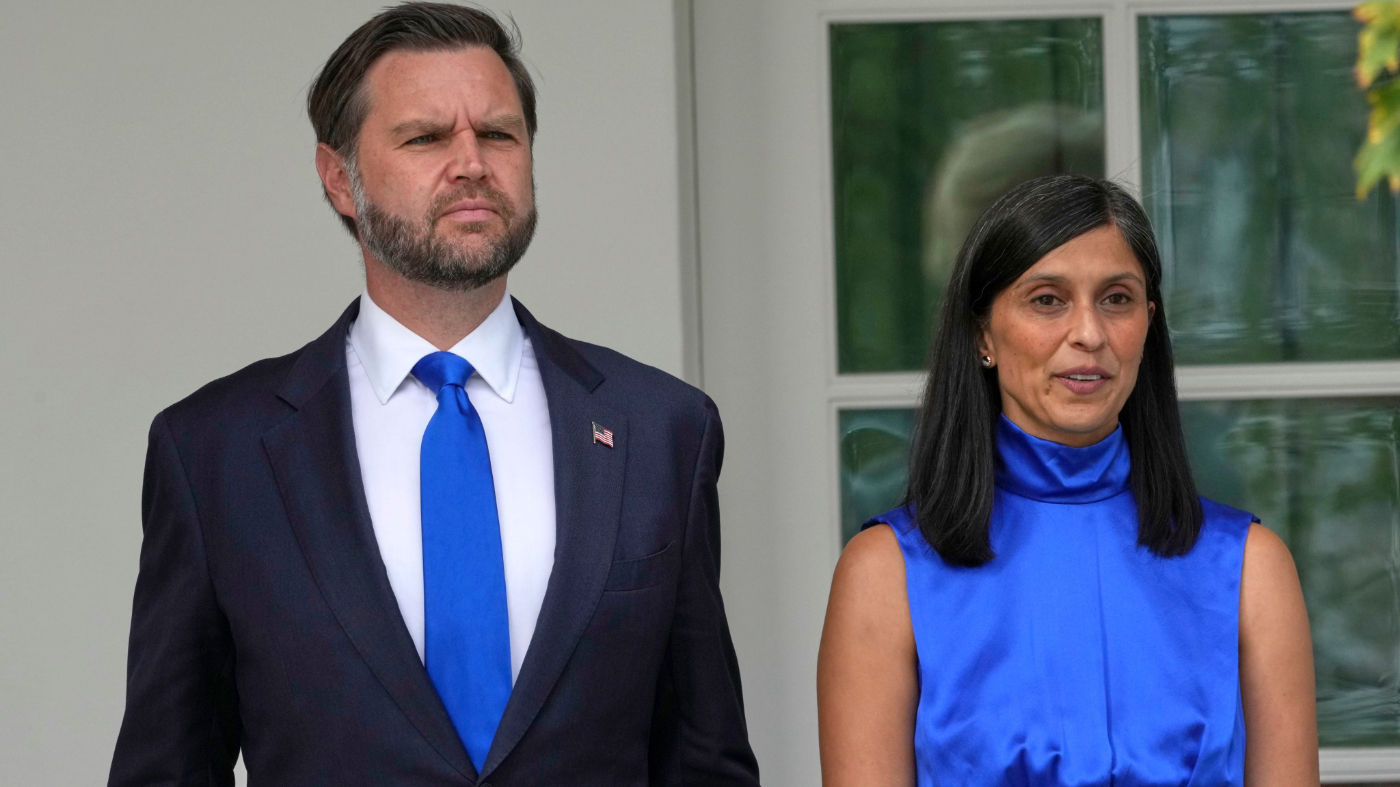
Vice President JD Vance has a legitimate argument to make about the H-1B visa program. But the messaging is off.
American workers deserve protection from employers who use immigration to suppress wages, circumvent fair hiring practices and replace domestic employees with cheaper labor. But when Vance describes H-1B workers as “indentured servants,” he crosses a line between criticizing a policy and demeaning the people who participate in it.
His wife, Usha Vance, has an opportunity to remind him, and the country, that Indian professionals are not a class of people whose contributions can be dismissed through such careless language.
Mrs. Vance is an accomplished attorney who has built her own professional career. Her Indian heritage is part of her personal story, just as her husband’s public statements are part of the national immigration debate. Her parents immigrated to this country seeking opportunity just as mine did.
For Indians, the phrase indentured servant is not an ordinary political insult. During British colonial rule, millions of Indians were transported to plantations and other destinations under indenture agreements. Many endured harsh conditions, restricted freedom and systematic exploitation.
Although indenture was not identical to slavery, it was a coercive labor system whose legacy continues to shape the history of the Indian diaspora. To apply that terminology indiscriminately to Indian professionals who come to America to work, innovate and build their futures trivializes that history. Calling Indians indentured servants is highly offensive.
The H-1B program, despite its shortcomings, is not a system of indenture. It is a temporary employment-based visa program designed to enable American employers to recruit foreign professionals for specialized occupations.
Workers can face real vulnerabilities because their immigration status is connected to qualifying employment, particularly when they lose their jobs and must find another employer within the time allowed by immigration rules. Those vulnerabilities deserve serious attention. They do not, however, make every H-1B employee an indentured servant.
I have employed H-1B professionals from India for more than two decades, including during nearly 15 years running a software company. I have seen the value these professionals bring to American businesses, from their technical capabilities to their ability to solve difficult problems under demanding conditions.
Indian professionals have helped advance America’s technology, medicine, scientific research and entrepreneurial sectors. American businesses recruit these professionals because they possess skills and experience that employers value. That does not mean every foreign candidate is more qualified than an American applicant, nor does it mean every employer uses the visa program responsibly. It means the discussion should be based on evidence rather than stereotypes.
Vance’s concerns about American workers deserve examination. If a company lays off domestic employees while using immigration programs to obtain less expensive replacements, regulators should investigate whether the employer has complied with applicable laws and program requirements.
But layoffs occurring alongside H-1B employment do not by themselves establish that visa-holders replaced American workers or that a company acted unlawfully. The facts matter. Allegations must be tested against evidence.
There are also genuine abuses within the recruitment system. There have been legitimate concerns involving fabricated résumés, exaggerated experience, deceptive staffing practices and candidates whose qualifications did not match the positions they were hired to fill. Such practices harm American workers, undermine legitimate Indian professionals and erode public confidence in the program. Employers and staffing firms that knowingly misrepresent qualifications should face meaningful consequences.
The solution is a more accountable system, with credible verification of qualifications, transparent compensation, fair recruitment practices and rigorous enforcement against employers and intermediaries that circumvent the rules. Immigration policy should protect the integrity of American hiring without treating nationality as evidence of wrongdoing.
The U.S. has every right to prioritize its domestic workforce. But it should do so through sound policy rather than language that diminishes the dignity of the people who contribute to its economy.
This is why I would ask Mrs. Vance to speak up, not to defend every aspect of the H-1B program or to disagree with her husband for the sake of doing so, but to affirm a principle that should transcend partisan politics. We can acknowledge the failures of a visa program without accepting language that confuses employment dependence with servitude.
America’s strength has always depended, in part, on its ability to attract people who want to contribute their knowledge, ambition and labor. Indian professionals are part of that story. They are physicians treating patients, engineers developing technology, researchers pursuing discoveries and entrepreneurs creating businesses. They are also parents, citizens, neighbors and colleagues whose lives cannot be reduced to the terms of a visa.
Mrs. Vance has her own voice and must decide how to use it. But this moment offers an opportunity to remind the country that respect for American workers need not come at the expense of respect for Indian professionals.
Indians are not indentured servants. They are professionals who come to America to work, contribute and pursue opportunities. The answer to an imperfect immigration system is to fix its flaws, not demean the people who participate in it.
Sreedhar Potarazu, MD, MBA, is an author, board-certified ophthalmologist and clinical director at American Eye Care.
Topics in this story
Gathered from external sources. Rights to this text belong to whoever originally published it.