By 2023, a Washington State entrepreneur had developed a credit system for fashion brands to fund textile recovery; the system was processing about 50 tonnes of textile waste a month
US News: Discover how Clarabeth Concaret's Fabricure is transforming the fashion industry by turning textile waste into a currency, facilitating 50 tonnes of recovery monthly across multiple nations.
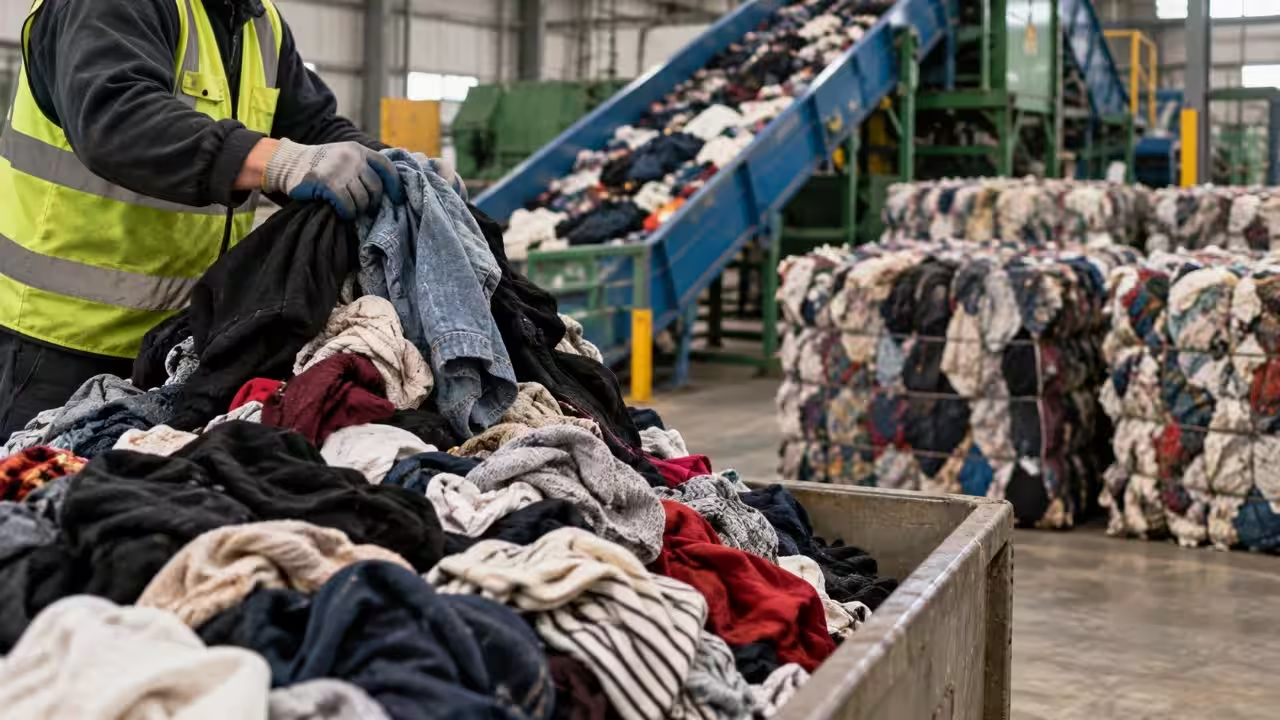
Once clothes are damaged, unsold or discarded, they can become difficult to reuse, particularly when different fibres, dyes and blends are mixed. A Washington State entrepreneur was trying to change that by assigning textile waste a financial value. According to UNICEF Innovation, Clarabeth Concaret, who was born and raised on Orcas Island in Washington State, developed Fabricure around the idea of fabric credits. The model was inspired by carbon and plastic credits: fashion brands could purchase credits corresponding to the amount of textile waste they generated, with the money channelled into textile recovery and recycling projects. By November 2023, UNICEF reported that Fabricure was processing about 50 tons of textile waste a month across Ghana, Togo, Kenya and Chile.Giving textile waste a priceTextile waste is difficult to manage because garments can contain different fibres and blends, making identification and processing more complicated. Research published in the Journal of Cleaner Production examined the use of infrared spectroscopy and automatic classification to identify different types of post-consumer textile waste, highlighting the role that improved sorting technologies could play in recovering discarded fibres. Fabricure's approach was to add a financial mechanism to this wider waste-recovery challenge. Instead of requiring every fashion company to establish its own recycling infrastructure, the credit system allowed brands to finance textile recovery projects in places where discarded clothing was already accumulating.This distinction mattered as a Fabric Credit was more than just a voucher for returning a specific item of clothing. Fabricure states that one credit equals 1 kg of textile waste that would otherwise have ended up in a dump or been incinerated. Brands could then buy credits based on the amount of waste they produced, matching Fabricure’s supply-chain interventions. By 2023, the model started to be piloted outside the USA. UNICEF claimed that Ghana, Togo, Kenya, and Chile were the nations receiving support from Fabricure, with women-led recycling partners playing key roles in its implementation. It was also reported by the company that three major brands were collaborating with the firm on neutral fabric collections.What happens after the clothes are collected?According to Forest Valley Institute, the Fabricure co-founder Payton McGriff and Concaret saw recycling and upcycling initiatives that were capable of reducing waste but depended heavily on grants or charitable funding. The credit model was designed to create a commercial source of revenue for such projects. Fabricure’s current model involves collecting material from landfills or other waste sites, sorting it by fibre type and weight, and then sending it to recycling partners equipped to handle different materials. The recovered textiles can then be used in different ways rather than following a single recycling route.Fabricure's work with Eco2librium in Kenya provides an example of how this approach could be applied on the ground. Fabricure says a pilot launched in autumn 2023 aimed to divert 7.5 tonnes of textiles from Kenyan landfills, while investigating whether cellulose-based textile waste could be used as compost for agricultural soils. The project therefore connected textile recovery with an environmental problem of declining soil quality. This was part of a broader effort by Fabricure to explore different uses for recovered material.Can credits change fashion's waste problem?Paying for waste recovery does not, on its own, make the fashion industry circular. Fabricure's approach recognises that reducing the amount of fabric used, the number of clothes produced and overall consumption should come first, with recovery dealing with the waste that is left behind. The credit system works at this later stage. It puts a financial value on discarded textiles and directs money towards projects that can collect and process them, rather than asking every fashion company to build its own recycling system.This approach could become more important as governments and consumers put greater pressure on fashion brands to take responsibility for the waste they generate. According to Concaret, the idea was to put a price on textile recovery and give brands a way to support waste-recovery projects. In 2023, Fabricure said it was processing tens of tonnes of textile waste each month, suggesting that the system was already being used beyond the pilot stage.But credits alone cannot solve fashion's waste problem. If brands use them simply to balance out the waste created by producing more clothes, they could allow the industry to carry on with the same pattern of consumption. Their role could be more useful if the money helps recover, recycle and reuse textiles that would otherwise be thrown away. In the end, the real measure of the system is not just how much waste it recovers, but whether it also forms part of a wider effort to produce and throw away less clothing.Catch the latest World News and Live updates. Download the TOI app.
Topics in this story
Gathered from external sources. Rights to this text belong to whoever originally published it.