Hot chilli legacy of summer heatwave
An amateur gardener from Stoke Gifford says he has produced a bumper crop of chillies.
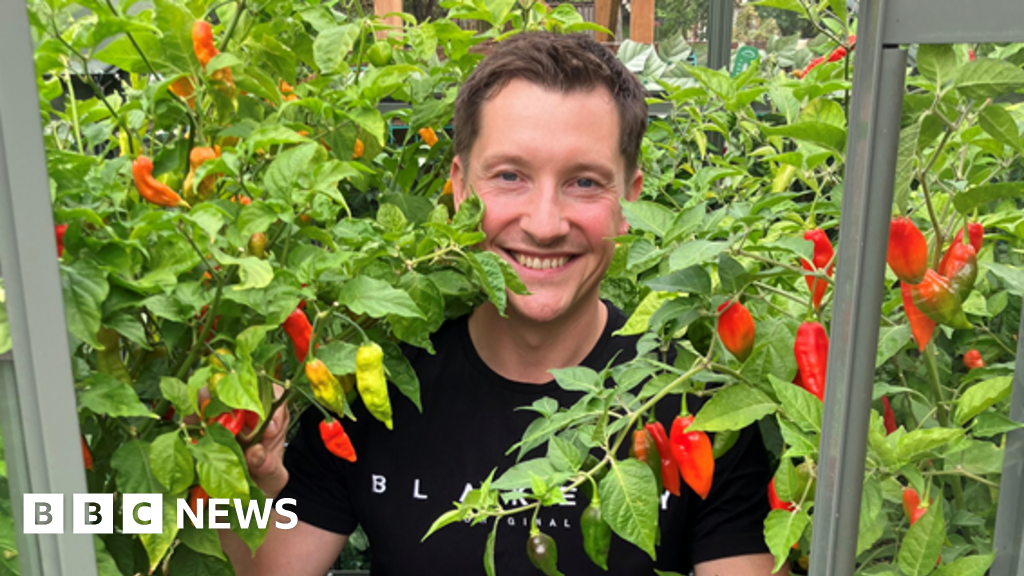
An amateur gardener has produced a bumper crop of chillies - boosted by the scorching hot summer.
Jeremy Crumb from Stoke Gifford near Bristol only began growing the South American plants a few years ago but now tends dozens of varieties in his small back garden.
He said: "What's been very interesting this year, is normally it's the plants in the greenhouse that flourish, but because of the very hot summer even the ones outside are healthy and absolutely stacked out with fruit.
"I've been on a mission to produce the biggest, healthiest chilli plants I can - it's really addictive and there's so many different varieties, they've all got these little unique nuances to them."
Among the varieties he grows are familiar chillies - such as Habanero, Bird's Eye, Jalapeno and Peri Peri - alongside more exotic choices such as Turtle Claw, Volcano and Paper Lantern.
He has produced so many this year that he's had to invest in a dehydrator.
He says: "It's like a little oven and it dehydrates them at 50C (122F). I had to get it because I just had so many chillies and I can only freeze or give so many away.
"I also ferment them and turn them into sauces, seasonings and rubs."
Crumb says the hottest chilli he has grown this year is the Caramel Scorpion which, like the Carolina Reaper, is measured at around 1.6 million Scovilles - the scale on which the heat of a chilli pepper is recorded.
He says: "They've got really interesting sort of pumpkin-shaped fruits and they're ridiculously hot, if you ate one it would be very uncomfortable and it would give you a bad stomach ache.
"But I think people focus on the heat and they don't understand that each chilli - if you get past the heat - has a distinctive flavour - and it's a flavour that you perhaps haven't tasted before and can't replicate with any other fruit."
Crumb never forgets about the potential danger of handling chillies.
He says: "Even if you're chopping them up or processing them, you need to wear gloves or you'll forget what you've touched."
He adds that even after washing your hands, there will still be capsaicin, the oil from the middle of the chilli, on them.
However, he says that several garden visitors have happily chomped on his crop, adding: "Birds don't have capsaicin receptors, neither do slugs.
"So that part of our mouth that can detect the spice, those animals just don't have.
"And because of that, they are happy to eat as many as they like."
Man says growing vegetables as big as babies is like a sport
Why parts of the West look like autumn already
Topics in this story
Gathered from external sources. Rights to this text belong to whoever originally published it.