Don’t throw away banana peels: 5 easy ways to turn them into natural plant fertiliser at home
Banana peels often end up in the bin after the fruit is eaten, but they can be reused in the garden instead.
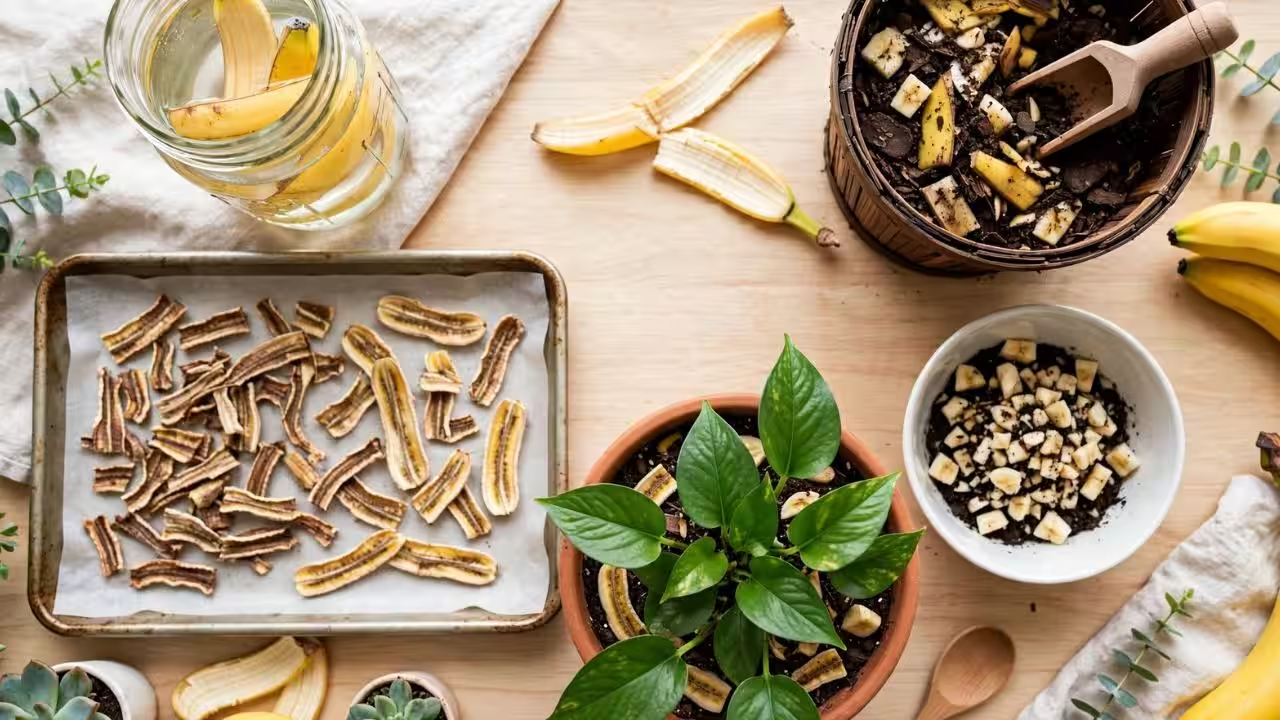
Banana peels often end up in the bin after the fruit is eaten, but they can be reused in the garden instead. With a few simple steps, the peels can be turned into banana water, dried pieces, or a fine powder for plants. These homemade preparations are easy to make and require ingredients that are commonly available at home. Banana peels contain nutrients such as potassium, phosphorus, calcium, and magnesium, making them useful as an occasional plant supplement. Gardeners can soak chopped peels in water, dry them before adding them to soil, or grind them into a powder. However, banana peel preparations are not a complete fertiliser and should be used alongside regular plant care.5 ways to make banana peel fertiliser at homeSoak banana peels in water for an easy plant feedCut banana peels into small pieces and place them in a clean jar or container. Add enough water to completely cover the pieces and leave the mixture for two to three days. Strain out the peels before using the liquid on plants. The leftover pieces do not need to be thrown away and can be added to compost. This method is one of the simplest ways to reuse banana peels because it requires no special equipment or complicated preparation.Boil banana peels for a liquid feedBanana peels can also be used to prepare a liquid feed by combining soaking and boiling. Cut the peels into small pieces and soak them in water for two to three days. The softened pieces can then be boiled for around 30 to 45 minutes. Once the liquid has cooled completely, strain it before use. The resulting liquid should be diluted with fresh water rather than being applied directly in a concentrated form.Dry banana peels before using themInstead of making a liquid, gardeners can dry banana peels and use them directly in the soil. Cut the peels into small pieces and place them in sunlight or dry them in an oven at a low temperature. They need to become completely dry before storage or use. Once dry, the pieces can be added around plants or incorporated into the growing medium. This method takes longer to prepare but creates a form that can be stored and used later.Turn dried peels into powderCompletely dried banana peels can be ground into a powder using a blender, food processor, or coffee grinder. The peels should be dry and brittle before grinding so they break down easily. The resulting powder can be mixed into soil or combined with water before being applied to plants. Powdering the peels makes them easier to handle and distribute in smaller quantities. It also provides another way to reuse banana waste without keeping fresh peels around the plants.Try fermented banana peel liquidA fermented preparation takes longer but can also be made at home. One method uses ripe banana pieces and dark brown sugar in equal amounts. The mixture is placed in a container and left for about two weeks to ferment. The resulting liquid is a concentrate and needs to be diluted before it is given to plants. Because fermented mixtures contain sugars, they can attract flies or other insects. This method therefore requires more care than simple banana peel water.5 things to know before using banana peel fertiliserDilute banana peel water before using itBanana peel water should be diluted before it is applied to plants. A simple approach is to mix one part prepared banana water with five parts fresh water. This creates a weaker solution that can be used around the soil instead of applying a concentrated mixture. Dilution is particularly useful when gardeners are trying the preparation for the first time. The diluted liquid can then be added during normal watering rather than being poured directly onto leaves or stems.Use banana water once a weekBanana water does not need to be used every time a plant is watered. Once a week is generally enough for this type of homemade plant feed. Plants still need ordinary water according to their individual requirements, especially during hot or dry weather. Increasing the amount of banana water simply because a plant needs more moisture is not advisable. It is better to keep the banana preparation as an occasional supplement while regular watering continues according to the plant's needs.Use it for suitable houseplants and garden plantsBanana water can be used with a range of plants, including several common houseplants and garden varieties. Pothos, snake plants, monsteras, philodendrons, anthuriums, orchids, tomatoes, bell peppers, roses, ferns, and okra are among the plants that can receive diluted banana water. However, every plant has different watering and nutrient requirements. Gardeners should consider the needs of each plant instead of assuming that the same amount of banana water will work equally well for every pot.Be careful with succulentsSucculents generally require less water and fertiliser than many leafy houseplants. If banana water is used for succulents, it should be diluted and applied carefully. The growing medium should not remain excessively wet. This is especially important because succulents are adapted to conditions where water is less available.Do not use it as a complete fertiliserBanana peel preparations provide only a limited range and amount of nutrients, so they should not replace a complete plant fertiliser. Flowering plants, vegetables and fruiting plants can have higher or more specific nutritional requirements that homemade banana water cannot meet on its own. Using banana peel preparations as an occasional supplement is a more suitable approach. Plants still need appropriate soil, light, water, and a balanced supply of essential nutrients for healthy growth.You use AI every day. Now get your AI Quotient. Take the AIQ testGet the latest Lifestyle News and more. Download the TOI app.
Topics in this story
Gathered from external sources. Rights to this text belong to whoever originally published it.