She fled Ukraine to safety in Alberta. Now, she’s worried about her place after the referendum
Ukrainians in Alberta fear what the outcome of the immigration questions in the referendum could mean for their standing in the province they now call home.
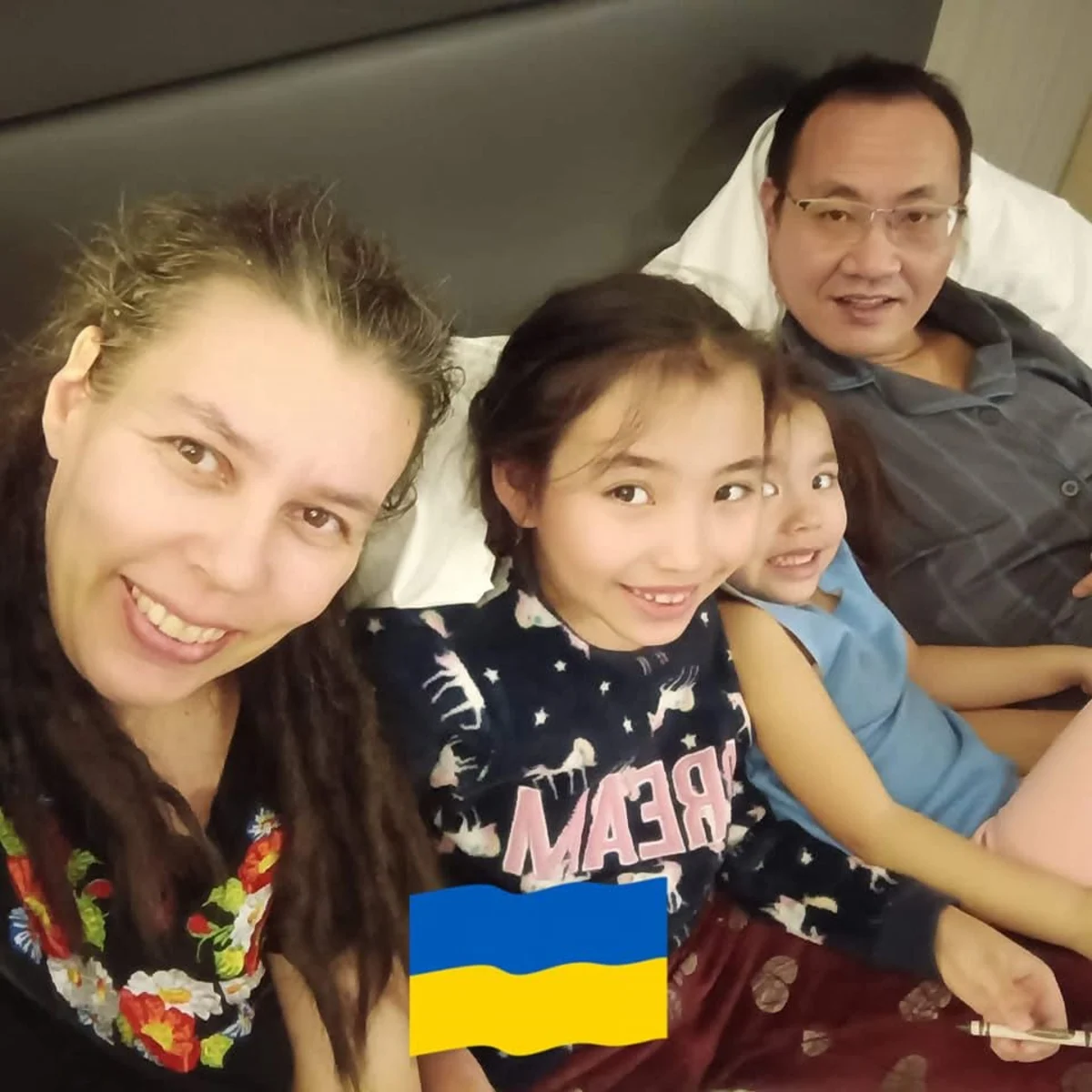
When Anna Tselukhina first read the five immigration-related questions Alberta put on the Oct. 19 referendum ballot, she felt her family's future plunge into "total uncertainty."
Since 2022, the mother of two has been living in Calgary, along with thousands of other Ukrainians who were welcomed here while Russia continues its war with her homeland. Now, she and her family are facing new unknowns.
"Will the war in Ukraine stop in the nearest future? We don't know. Will we get permanent residency here in Canada soon? We don't know. Will we have to pay for medical insurance? For education? We don't know," she said.
"A lot of that we don't know. And nobody knows so far."
The current president of the local Ukrainian Canadian Congress branch arrived in Calgary through a federal government program after fleeing Sievierodonetsk, a city in eastern Ukraine now under Russian military occupation.
Now, Tselukhina fears what the outcome of the immigration questions in the referendum could mean for her and her family's standing in the province they now call home.
The upcoming referendum poses 10 questions to Albertans, including one on whether the province should hold a binding referendum to separate from Canada, and five immigration-related questions that could impact tens of thousands of non-permanent residents.
Those questions propose limiting eligibility to public services, instituting a 12-month waiting period before non-permanent residents can access social programs, and introducing a mandatory fee for access to public health care and education, among others.
"That would be a huge question whether we'll be able to afford to pay for [our kids'] education if people will vote yes to those questions and of course, this just adds to the overall anxiety that we have," Tselukhina said.
In Calgary, Tselukhina works as a kitchen manager in a fast food restaurant, and her partner works as a caregiver. Their children have fully integrated into life in Canada, Tselukhina said.
While the couple's financial situation makes it possible to make ends meet for now, Tselukhina said the prospect of having to pay extra for public services could force them to move to a different province.
" I hate to say that we will have to consider moving from here because we don't wanna move. We love it here. We love Calgary, and our children, they love it here, and they love school. But I don't know if it will be possible for us to afford everything."
LISTEN | The stakes of Alberta's referendum questions on immigration:
Most Ukrainians who arrived in Canada after Russia's full-scale invasion of Ukraine came under a federal program called the Canada–Ukraine Authorization for Emergency Travel (CUAET).
It was a temporary measure meant to fast-track their arrival to Canada so those escaping the war wouldn't have to go through the usual, often slow refugee process. Approximately 300,000 Ukrainians arrived in Canada after Russia launched its invasion on Feb. 24, 2022.
The CUAET visa does not offer a direct pathway to permanent residency.
A spokesperson for Lena Metlege Diab, the federal Minister of Immigration, Refugees and Citizenship, said as of July 31, there are about 43,500 temporary residents in Alberta whose country of citizenship is Ukraine, according to preliminary data.
That number includes Ukrainians who arrived under CUAET and other pathways. Of those, about 6,500 have applied for permanent residency.
In February, Canada's immigration department said it expects Ukrainians who fled the war with Russia to return to their home country once the conflict ends. But with the war showing no signs of ending, many of those Ukrainians are hoping to make Canada a permanent home.
Now, people like Tselukhina are left in a limbo — and it's why the referendum's five questions on immigration are so worrying.
A 'huge hurdle' for Ukrainian immigrants
With the vote looming, Calgary-based immigration consultant Tetiana Karbovanets is hearing concerns from several of her Ukrainian clients.
Many of them, she said, are worried about how their access to free public health care and education may change depending on the outcome of the referendum.
Question four of the referendum proposes charging non-permanent residents a "reasonable fee or premium" for their and their family's use of the public health care and education systems.
Alberta Premier Danielle Smith has said her government is considering charging temporary residents a $1,900 fee akin to a premium charged in the United Kingdom for access to public health care.
"A lot of Ukrainians are struggling [in Alberta]. They are having, like, low-paid positions … So this is a huge concern for them, hearing those questions about temporary residents losing access to education," Karbovanets said.
"For some people, it would be a huge hurdle in that situation as they are not making enough here and they have no other options. They already built some life here, they adjusted, their children — usually smaller children — go to schools here.
"So starting over after what they went through in Ukraine, it would be devastating for them."
If the public health and education fee is implemented and applied to Ukrainians, Karbovanets said, some Ukrainians may have to consider moving to another province as life would become too expensive for them.
Province doesn't say which residents could be impacted
The second of five immigration questions suggests only giving certain non-permanent residents with an "Alberta-approved immigration status" access to public health care and education altogether.
That designation doesn't currently exist. When asked by CBC News to define the term on several occasions, the province has consistently said it will be decided in the legislature after the vote.
But knowing the answer now is critical for immigrants like Tselukhina, as she contemplates her and her family's future in Alberta.
Alberta's Minister of Jobs, Economy, Trade and Immigration Joseph Schow didn't commit to an answer on whether Ukrainians would count as an "Alberta-approved" immigrant when asked by The Sunday Magazine host Piya Chattopadhyay.
"What I'm saying is that no one's going to be left out, but we are going to make sure that things are sustainable," Schow said.
"I want to go back to the main point of this, which is ensuring that we, as our burdens, have an immigration program that works for Alberta. You know, we continue to attract investment from all over the world. We have labour demands that need to be met, and some of those labour demands cannot be met by people yet."
Schow also did not say whether any of these policies would affect only new temporary residents, or if they would also apply to current temporary residents already in the province.
"A lot of people forget that Ukrainians who came through these programs, they are here on a temporary status." Karbovanets said.
"They are not refugees … They're evacuees, but they only have temporary status and they are in the same situation as anyone else. They have to pay their taxes, they have to pay for their housing. They don't have any additional supports."
Even if Ukrainians are exempted from new fees, Mariana Sirko, a cultural coordinator with the European Cultural Society of Calgary — who arrived in Alberta from Kyiv in 2024 — worries a system that singles out one group could breed division amongst diasporic communities.
"If Ukrainians will be picked up in this process, we could be relieved because of our personal reasons, but we still will be uncomfortable regarding the relationships with other groups," Sirko said.
"Because, of course, the situation of picking someone will create questions between different groups and throughout the time, those prejudices could grow. We want to live with mutual support and respect with other groups."
Tselukhina said when it is so unclear whether Ukrainian immigrants will continue to access public and social services the way they do now, it's hard to keep calm amidst the uncertainty.
"You just depend on the results of the voting and then you still depend on the officials because obviously it will be them who will decide who will be included in that group, who will be exempt from any kind of influence of the results of this referendum."
Listen to The Sunday Magazine's full road trip in Alberta .
Topics in this story
Gathered from external sources. Rights to this text belong to whoever originally published it.