In 1987, Delaware built Interstate 495 access ramps with nearly 10,000 tons of stockpiled fly ash; two years later, settlement was under one-eighth of an inch, matching conventional fill
Delaware engineers utilized 10,000 tons of fly ash in the construction of Interstate 495 ramps, achieving minimal settlement and showcasing environmentally friendly practices in highway engineering.
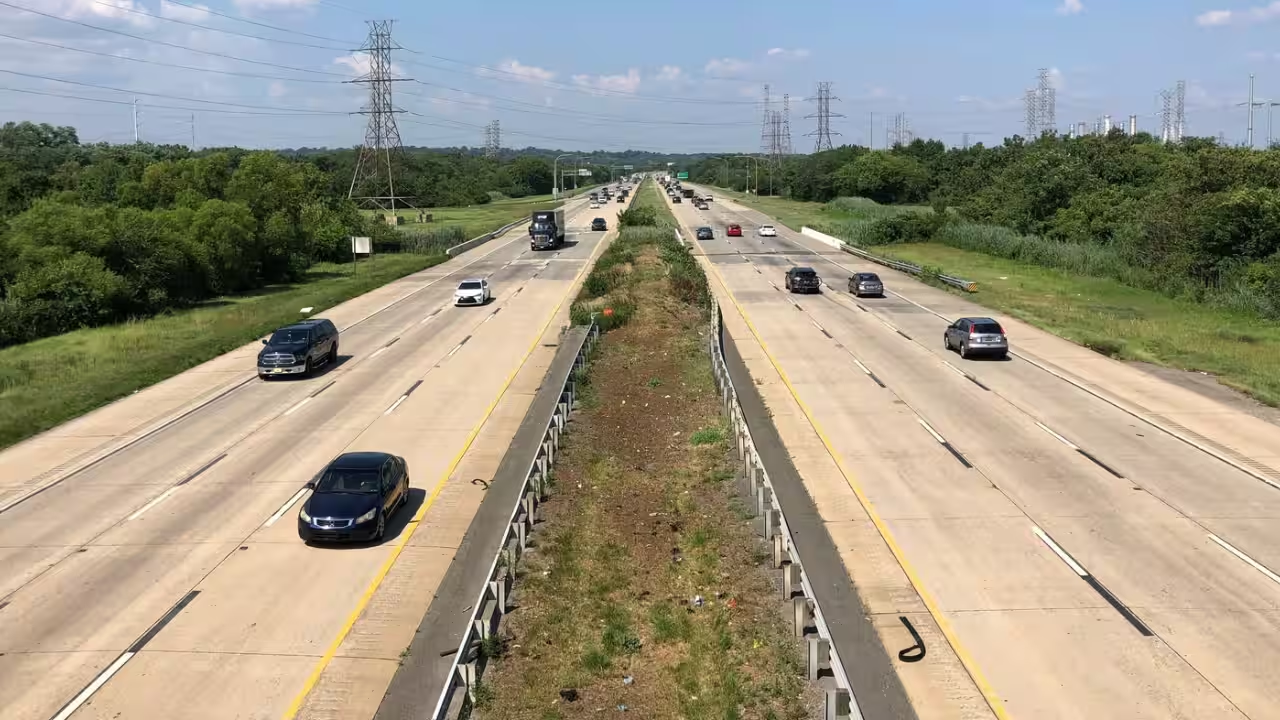
Delaware highway engineers used nearly 10,000 tons of stockpiled fly ash to construct two access ramps for an Interstate 495 interchange near Wilmington in June 1987. The material was supplied by Delmarva Power and Light Company's Edge Moor power plant. Engineers had to monitor the site for two years to measure settlement and check groundwater and other environmental conditions.Coal ash beneath a highway rampThe project used approximately 8,300 cubic yards of landfilled fly ash, which was placed in 12-inch loose layers and compacted with a smooth-drum vibratory roller. The completed embankment ranged from 4 to 16 feet deep along a section about 450 feet long. A Transportation Research Board report that documented the project says that the fly ash met or exceeded Delaware Department of Transportation compaction requirements. The material was used for two interchange ramps that connected I-495 with Edgemoor Road in Wilmington.Fly ash is a fine material that is produced by coal combustion, and for decades, large quantities accumulated at power plants, which created a disposal problem and prompted highway agencies to examine construction uses for the material. The Delaware project was one of several highway applications of fly ash recorded by the Federal Highway Administration, and its database lists the 1987 I-495 project in Wilmington at 6,300 cubic meters, or about 8,300 cubic yards.Engineers monitored the siteThe EPA report says that engineers installed four groundwater monitoring wells and four permeate collection drains, while also collecting and analysing runoff and leachate from the area around the ash fill. Settlement was measured at designated settlement plates during the monitoring period, and the EPA reported less than one-eighth of an inch of settlement at each location. Its assessment also found no significant environmental effects during the two-year monitoring period.The report compared the in-place soil characteristics with those of well-compacted granular soil, and the measurements gave engineers information about how the fly ash behaved after being placed beneath the highway ramps. Engineers also monitored groundwater conditions around the fill and examined whether material from the ash moved into nearby soil or water. The findings provided additional data on the long-term performance of the highway embankment and the conditions that surrounded the construction site.Part of a wider highway experimentFederal highway records now list more than 20 fly ash embankment or structural-backfill projects across the United States, with the projects including highway ramps, road embankments, and other transportation structures. The Federal Highway Administration's records list two Delaware projects, one being the 1987 I-495 work in Wilmington and the second being a 1992 Route 1 project in Dover. The agency estimated the Wilmington project at 6,300 cubic meters of material.Fly ash could be used in large quantities as embankment material because it did not have to become part of the finished road surface, and engineers could place it beneath the roadway while monitoring its physical performance and environmental conditions. The Wilmington project also became part of federal documentation on the use of coal fly ash in highway construction, and the recorded results included limited settlement during monitoring and no significant environmental effects during the period covered by the EPA study. The ramps that were built in 1987 were therefore more than a conventional road construction project. Beneath part of the I-495 interchange near Wilmington was a large quantity of material that had previously been stored as a coal-combustion byproduct.You use AI every day. Now get your AI Quotient. Take the AIQ test.
Topics in this story
Gathered from external sources. Rights to this text belong to whoever originally published it.