Telangana steps up game on food safety, cancels 30 licences in 1 month
Responding to queries from TOI readers, Avinash Mohanty, commissioner, TG SAFE, says the dept inspected 208 establishments since August, flagging
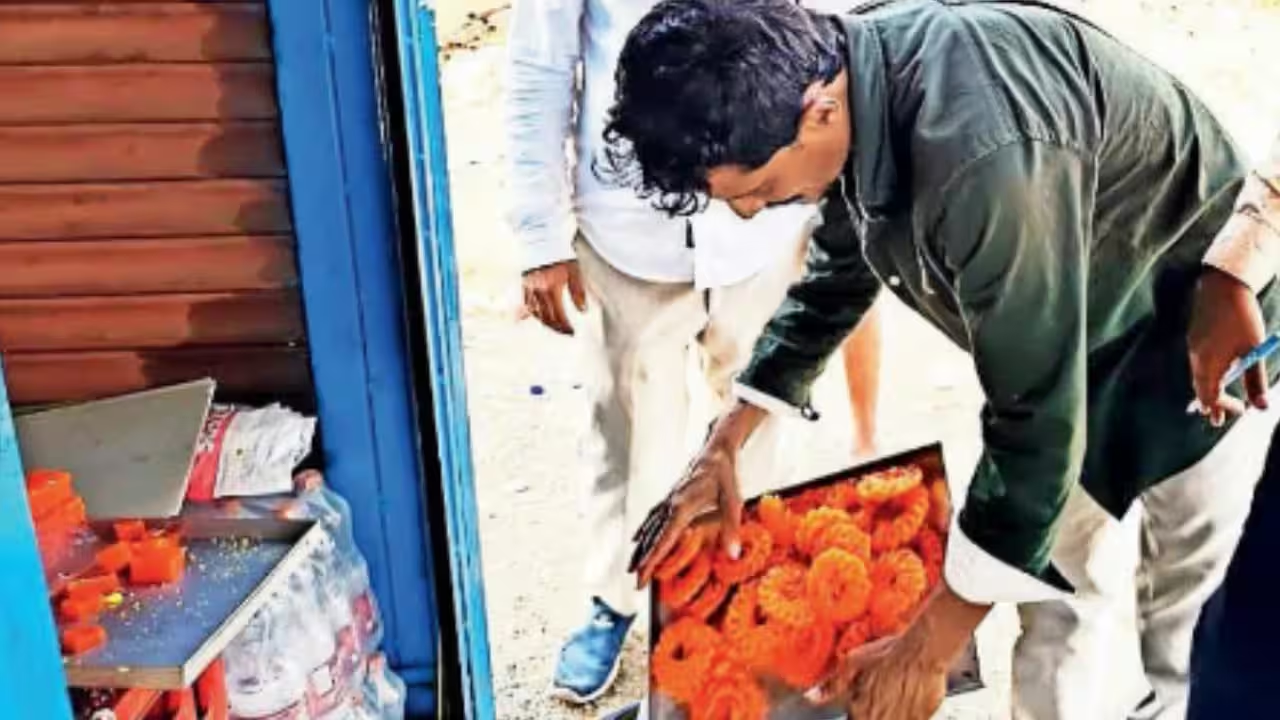
Responding to queries from TOI readers, Avinash Mohanty, commissioner, TG SAFE, says the dept inspected 208 establishments since August, flagging violations ranging from poor hygiene to sale of analogue paneer and substandard medicines.Many edible items are being adulterated. What is being done to ensure such products do not flood the market?— Gura Prasad AchantaWe conduct regular drives to ascertain the quality of food products and check for adulteration. Since the formation of TG SAFE in August, special drives have been conducted on manufacturing and retailers of sweets, khoya, paneer and other dairy products. In the recent drive, 46 establishments were inspected. The licences of four establishments were suspended for serious violations, and more than 19 tonnes of material were seized. Orders have also recently been issued prohibiting the manufacture, storage, transport and sale of analogue paneer in Telangana.How does TG SAFE check whether medicines sold in pharmacies are genuine and meet quality standards?— Shrihari YJust like food outlets, pharmacies and wholesalers are also inspected. Samples are collected and sent to the Drugs Control Laboratory under TG SAFE, for analysis. Since January 2025, 115 medicines have been detected as Not of Standard Quality (NSQ). Various actions, including prosecution and suspension or cancellation of licences, are taken under the Drugs and Cosmetics Act.If a medicine is found to be substandard or unsafe after reaching the market, how is it recalled, and how are consumers alerted?— M UshaMedicines are sampled based on a risk-based approach, manpower and logistical availability, and other relevant factors. If a medicine sample is found to be substandard or unsafe by the laboratory, it is recalled by issuing necessary orders through the licensing authorities of the Drug Control Administraion.Is there a need for more food safety officers in the state? How many samples are tested monthly?— Chada Rekha RaoTG SAFE has recently been formed by merging the Food Safety Wings of GHMC and the Institute of Preventive Medicine. We are currently assessing the manpower requirements across all wings of the dept and will take up the requirements with the govt. At present, nearly 500–600 food samples are sent for laboratory testing every month, and we aim to substantially increase this number.What do officials check during inspections?— Balamukund During inspections, Food Safety Officers check overall food hygiene and safety, including the condition of the premises, personal hygiene of food handlers, storage and temperature control, raw materials, cleanliness, pest control labelling and records. The handling and disposal of food waste and leftovers are also covered as part of hygiene and sanitation requirements, particularly to ensure that waste does not contaminate food or create conditions for pest infestation.If several people fall sick after eating at the same restaurant or consuming the same food product, what should they do?— Nithin ReddyThey should immediately complain to TG SAFE through the channels mentioned in the queries. TG SAFE will have the matter investigated and, if the samples are found to be unsafe, take appropriate action. Punishments are stringent if unsafe food causes people to fall sick.Should palm oil, food colors or other substances be banned? How can reuse of cooking oil be controlled?— Dr AM DayalPalm oil is permitted within India’s food regulatory framework. Certain natural and synthetic colours are permitted for specified foods and within prescribed limits. Unauthorised colours are not permitted and are checked during inspections. With regard to used cooking oil, an important parameter is Total Polar Compounds (TPC), which should be within permissible limits. Cooking oil with TPC above 25% should not be used for frying and must be discarded appropriately.What happened to the Hygiene Rating system? How many eateries have been rated?—Keerthana MThe FSSAI Hygiene Rating Scheme continues to be operational and provides consumers with information on the hygiene standards of participating food establishments. In Telangana, around 609 food business operators (FBOs) have received hygiene ratings so far. We are encouraging more eligible establishments to participate.Even now, many restaurants do not allow customers to check their kitchens. Can this be made mandatory, if a customer requests?—Vilas PenurkarThe power to enter and inspect a food establishment is a statutory power granted to the authorities under the Food Safety and Standards Act. While the Act provides for a customer to get a food sample analysed to check its quality, there is no provision under the Act granting customers the right to check kitchens. However, we will examine with FSSAI whether checking of kitchens by customers in certain situations can be made possible.Can you make risk-based inspections and surprise sampling compulsory? Can mobile laboratories be increased?— CS BansalWe have been conducting risk-based inspections and sampling through special drives targeting specific food categories and establishments based on identified risks. Recent drives have covered meat, spices, sweets and milk products, edible oils, cereals and other food businesses.Surprise inspections and sampling are also undertaken as part of these enforcement activities. Mobile food-testing laboratories will be expanded to support rapid field-level screening, with suspected or non-compliant samples being referred to notified laboratories for detailed analysis. They will be increased as per the requirement.Can CCTV cameras be mandatory in restaurants? Can only branded/high-quality raw materials be mandated?— Madhav Sagar VVAt present, the Food Safety and Standards Act does not specifically mandate CCTV cameras in restaurants. However, the possibility of making CCTV coverage mandatory for certain categories of high-risk or large food establishments may be examined.Similarly, restaurants cannot be required to use only branded raw materials. The requirement is that all ingredients comply with the applicable FSSAI standards.Can TG SAFE address long storage of masalas, gravies and prepared foods?— Rajesh MehataStorage of prepared foods, masalas and gravies is an important food-safety requirement and is checked during inspections. Officials check storage conditions, temperature, shelf life and hygiene. Where there is a suspicion of non-compliance, samples are collected and sent for laboratory analysis.At present, there is no provision for a mandatory monthly food-safety certificate for eateries. FSSAI's existing Hygiene Rating Scheme provides a mechanism for assessing and displaying the hygiene and food-safety compliance of food establishments.You Can Also Check: Gold Rate in Hyderabad | Silver Rate in Hyderabad | Bank Holidays in Hyderabad | Public Holidays in Hyderabad | Hyderabad AQI | Weather in Hyderabad | Petrol Price in Hyderabad | Diesel Price in Hyderabad | CNG Price in Hyderabad | LPG Price in HyderabadStay updated with the latest Hyderabad news. Download the TOI App.
Topics in this story
Gathered from external sources. Rights to this text belong to whoever originally published it.