A 72-year-old man inherited nearly 900 acres from his uncles; after decades restoring the forest, he gave the land to a Native American tribe
US News: Gary Verbrugge, a 72-year-old man in Washington state, inherited nearly 900 acres of woodland linked to his family for almost a century. Rather than t.
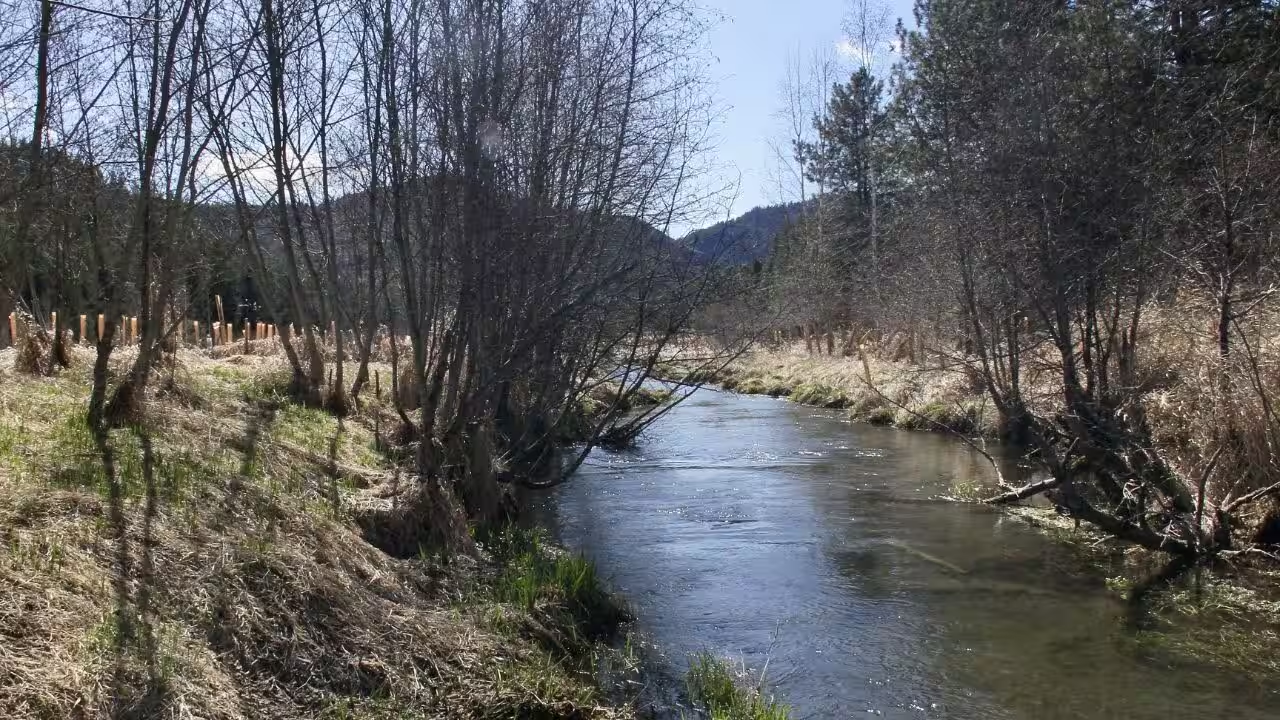
Gary Verbrugge, a 72-year-old man in Washington state, inherited nearly 900 acres of woodland linked to his family for almost a century. Rather than treating the property as an asset to be sold or developed, he spent decades helping restore its forests, waterways and wildlife habitats. His work eventually led to a decision that would shape the land’s future long after him: the transfer of this 885 acres to the ‘Kalispel Tribe of Indians.’ The property, which lies along the Little Spokane River, is home to a remarkable mix of forests, wetlands and open areas used by animals including moose, elk, wolves, bears and cougars. As reported by the Inland Northwest Land Conservancy, the donation brings together private conservation and Indigenous stewardship, giving the Tribe long-term responsibility for a landscape with deep cultural and ecological importance for generations to come.72-year-old man restore nearly 900 acres before giving it to a Native American tribeThe story of the property began long before Gary Verbrugge became responsible for it. According to the Inland Northwest Land Conservancy, his father’s uncles, ‘Will and Harry Storms,’ bought adjoining pieces of land in 1927. When they died, the properties passed to the Verbrugge family. The nearly 900-acre landscape sits along the Little Spokane River north of Spokane and contains several distinct environments. River bottoms, marshes, steep forests and high ridges exist within the same property, creating a varied habitat for wildlife.But the forest did not remain untouched over the decades. Industrial logging affected the land, and Verbrugge later worked to improve its condition. Often assisted by volunteers, he replanted trees by hand, restored vegetation along streams, stabilised riverbanks and helped create more shade and better habitat. Those efforts were not about making the property look greener. They reflected a long-term commitment to allowing the land and the animals that depended on it to recover. The Inland Northwest Land Conservancy reported that the woodland is used by moose, elk, deer, cougars, bobcats, goshawks, bears and wolves.Why did the Kalispel Tribe become the future steward of the landThe Inland Northwest Land Conservancy reported that the Kalispel Tribe was developing its first Tribally owned and managed community forest, with a focus on natural resource education. Its goals closely matched Verbrugge's own hopes for his woodland. Conversations followed about the possibility of the Tribe becoming the long-term owner and steward of the property. Verbrugge said he believed the Tribe would take good care of the land and its wildlife. He was particularly impressed by the detailed forest planning carried out by specialists working with the Tribe.Ray Entz, director of Wildlife and Terrestrial Resources for the Kalispel Natural Resources Department, said Verbrugge's decision was driven by a deep affection for wildlife. He also explained that the tribe was a suitable long-term steward because of its permanent connection to the land. That connection carries particular significance because the Kalispel Tribe's reservation is relatively small compared with its much wider ancestral landscape. According to the Conservancy, that ancestral region extends across parts of north-east Washington, northern Idaho, western Montana and Canada. Owning more land can provide opportunities for Tribal members to hunt, fish, gather and take part in other cultural activities that depend on healthy, functioning landscapes.A conservation commitment by Gary built over many yearsVerbrugge began securing the land's future before deciding to donate it to the Kalispel Tribe. In 2007, he worked with the Inland Northwest Land Conservancy to place a permanent conservation easement on 605 acres. The agreement meant that the property could not later be subdivided or developed. It was an important step, but the conservation area eventually became even larger. According to the Conservancy, Verbrugge later bought an adjoining 280 acres and added that land to the conservation easement as well. The expanded project was completed in late 2025. Verbrugge had to consider who would care for it over the long term. The answer emerged through a growing relationship with the Kalispel Tribe of Indians.Restoring the forest also meant preparing it for a challenging futureThe handover was not the end of work on the property. The Tribe's natural resources team spent several years working with Verbrugge on forest management. According to the Conservancy, the team helped develop a formal plan, secure state funding and guide work including thinning and reducing fuels across roughly 40 acres. The aim was to improve habitat while reducing the risk of catastrophic wildfire. The property's mix of forests and wet areas could also make the landscape more resilient as conditions change. Protecting the forest meant looking ahead instead of preserving it exactly as it was.The benefits may also reach beyond the boundaries of Verbrugge's former property. The Conservancy reported that the surrounding forested landscape contributes cold, clean water to the Little Spokane River. Protected land elsewhere along the river system adds to a wider network of connected habitats and waterways.A gift that placed the future of the land beyond one lifetimeAccording to ‘ImpactfulNinja,’ the donation is an example of how private landowners can make lasting contributions to conservation while supporting Indigenous stewardship. For Verbrugge, however, the decision was rooted in a far more personal relationship with the place. He had inherited land shaped by generations before him, watched it change and spent years helping restore it. Instead of leaving its future to chance, he chose a steward whose connection to the wider landscape stretches far beyond a single lifetime. The Inland Northwest Land Conservancy said the Kalispel Tribe has committed to caring for the land in ways that benefit nature, culture and the community.Catch the latest World News and Live updates. Download the TOI app.
Topics in this story
Gathered from external sources. Rights to this text belong to whoever originally published it.