12 million years ago, tiny dog-like animals crossed Nebraska as volcanic ash buried hundreds of animals; scientists have now found their footprints
US News: At Ashfall Fossil Beds State Historical Park in northern Nebraska, researchers have spent decades excavating a mass graveyard created when volcanic as.
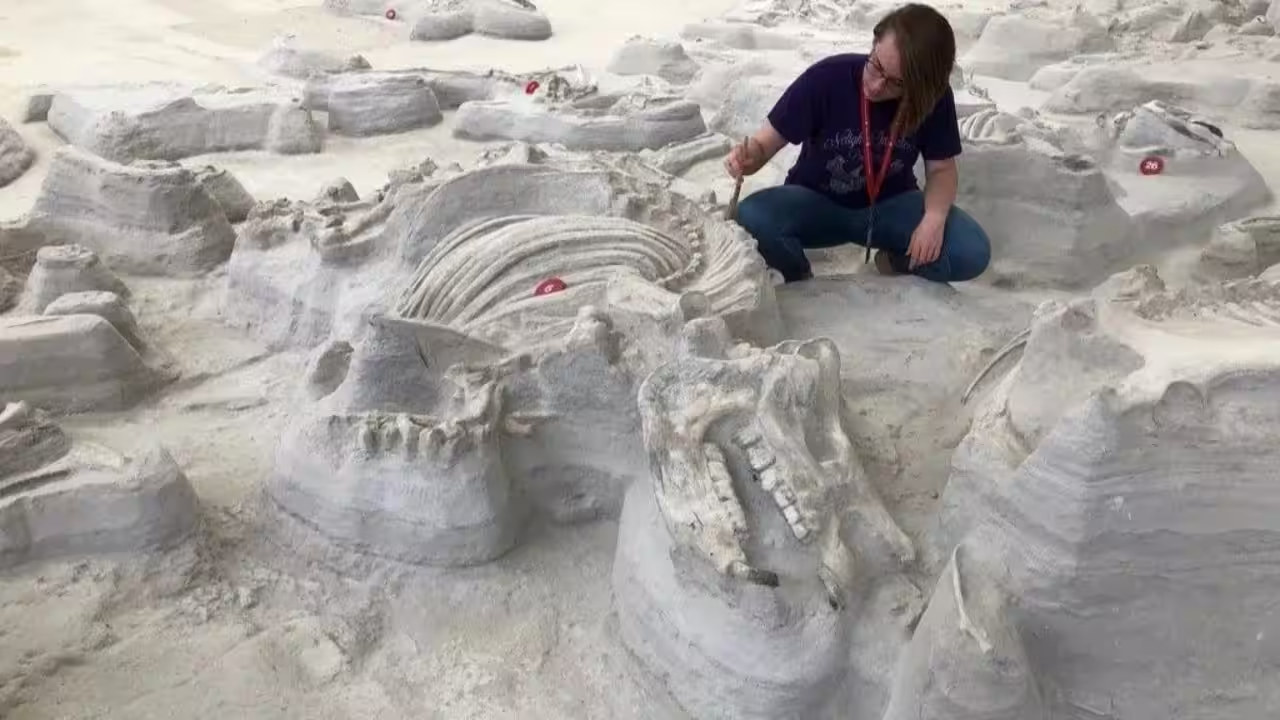
At Ashfall Fossil Beds State Historical Park in northern Nebraska, researchers have spent decades excavating a mass graveyard created when volcanic ash swept across the Great Plains roughly 12 million years ago. The eruption occurred in what is now southwestern Idaho, about 1,000 miles from the Nebraska site, but fine ash traveled across the continent and settled over a shallow watering hole where hundreds of animals had gathered. The site is best known for its remarkably preserved rhinos, horses and camels, many of which were buried where they stood. Now researchers have identified something else moving through the ash before the animals disappeared beneath it: large footprints made by caniform predators, the group that includes the extinct bone-crushing dogs known as borophagines. The tracks provide the first direct evidence that large carnivores were present at Ashfall, even though no skeleton belonging to one has yet been found.How volcanic ash buried a Nebraska watering hole 12 million years agoAccording to the University of Nebraska–Lincoln's Office of Research and Innovation, Ashfall preserves what was once a shallow depression that served as a seasonal watering hole. Fossils of pond turtles, reed-like plant remains and microscopic organisms known as diatoms indicate that water was present when the ash arrived. The site was not a permanent lake or stream-fed pond, however, and the geological layers show no evidence of the kind of channeling expected from continuously flowing water. The ash originated from a major volcanic eruption in what is now southwestern Idaho and traveled roughly 1,000 miles before reaching Nebraska. As the fine particles accumulated, animals around the watering hole were exposed to increasingly thick layers of ash. Many eventually suffocated, leaving their skeletons remarkably intact beneath the deposits.Why researchers know large predators were walking through the ashThe newly identified tracks were discovered in the same deposits that preserve the animals killed by the ashfall. Researchers believe they were made by large caniform predators, a group that includes the extinct bone-crushing dogs known as borophagines. Evidence of these predators had already existed at Ashfall in less direct forms. Researchers have found tooth marks on the bones of animals that died at the site, as well as coprolites containing fragments of bone. Those clues indicated that dog-like carnivores visited the site and fed on animals trapped by the disaster. The footprints add an important piece of evidence because they show the predators themselves moving across the landscape. Yet their skeletons remain missing. Unlike the rhinos, horses and camels that died at the watering hole, the predators apparently did not remain there long enough to become part of the mass burial.What the footprints reveal about the animals that survived the ashfallThe tracks suggest that large carnivores were moving through Ashfall while the catastrophe was unfolding. They may have been attracted by the concentration of vulnerable animals around the watering hole, creating an unusual opportunity for scavengers and predators. That interpretation fits the other evidence preserved at the site. Some herbivore bones carry tooth marks associated with bone-crushing dogs, while coprolites preserve the remains of bones that had passed through the digestive systems of dog-like carnivores. The footprints now provide physical evidence that animals from this group were actually present on the ground. Researchers are careful, however, about assigning the tracks to a particular species. Footprints can reveal an animal's size and movement but do not always provide enough information to identify the exact species responsible.How Ashfall became one of Nebraska's most unusual fossil sitesPalaeontologist Mike Voorhies discovered the first fossil at Ashfall in 1971, when he found the jaw of a young rhinoceros while studying the area's geology. Further investigations eventually revealed an extraordinary concentration of fossilised animals preserved in volcanic ash. A National Geographic-sponsored excavation followed in the late 1970s, helping bring the site to wider public attention. Ashfall officially became a Nebraska State Historical Park in 1991 through a partnership involving the University of Nebraska State Museum and the Nebraska Game and Parks Commission. One of the site's most unusual features is that many fossils are studied and displayed where they were originally found rather than being removed entirely from the deposits. Visitors can therefore see the animals in the same positions in which researchers uncovered them.Why researchers still have years of excavation aheadAshfall has been studied for decades, but large sections of the deposit remain unexplored. Researchers continue excavating during the summer, working carefully through the volcanic ash with small tools to expose additional bones, tracks and other traces of the ecosystem. The newly identified predator footprints are particularly valuable because they preserve something bones cannot: movement. A skeleton can reveal what an animal looked like, but tracks can show that it was walking through the site while the disaster was taking place. And the absence of predator skeletons does not mean the animals were absent. At Ashfall, the combination of footprints, tooth marks and fossilised droppings creates a picture of large carnivores entering a landscape filled with trapped prey, feeding among the dying animals and then disappearing before the ash finally sealed the scene. Twelve million years later, their footprints remain as some of the only direct evidence that they were ever there.Catch the latest World News and Live updates. Download the TOI app.
Topics in this story
Gathered from external sources. Rights to this text belong to whoever originally published it.