In 2019, a Nevada farmer used solar panels to irrigate 500 acres of alfalfa alongside diesel generators, saving 16,385 gallons of diesel and projecting $1 million in lifetime savings
In 2019, a Nevada farmer transformed his 500-acre alfalfa farm by integrating solar-powered irrigation, resulting in significant diesel savings and projected lifetime cost reductions of $1 million. Discover how hybrid systems enable sustainable farming in off-grid locations.
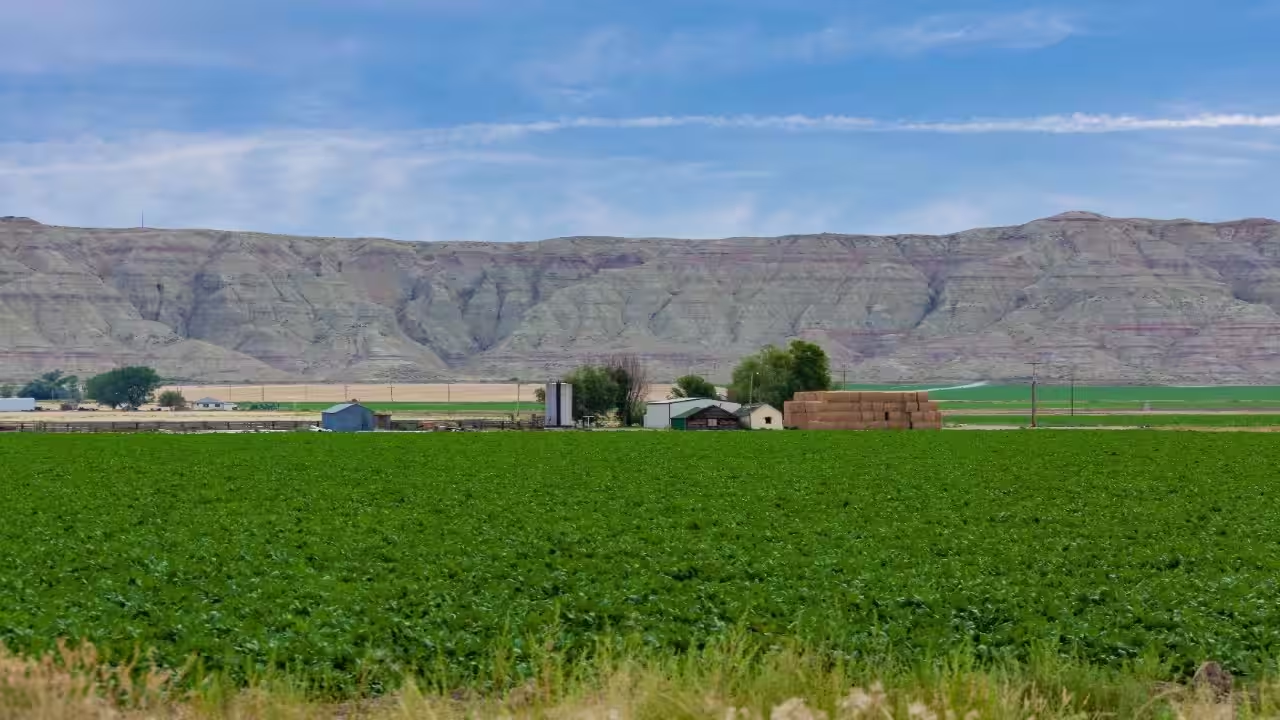
An alfalfa farmer reduced the use of diesel by 16,385 gallons in 2019 after installing solar-powered irrigation at his off-grid farm. The Railroad Valley Farms in Nye County, Nevada, paired solar photovoltaic (PV) arrays with diesel generators for the irrigation of 500 acres of alfalfa, according to the U.S. Department of Agriculture (USDA). Mark Dunn, the farm's operator, believes that this hybrid setup will save about $1 million over its lifetime.The farm sits at roughly 4,900 feet above sea level, where the area only receives five to six inches of annual precipitation. Alfalfa production depends on groundwater and powered irrigation, but no electrical grid was connected to the farm; instead, it relied on diesel to pump water and operate its irrigation systems.Why the farm used both solar and diesel A viable alternative was available through Solar power; however, it couldn't meet the required round-the-clock irrigation since it couldn't function beyond daylight hours. In response, Dunn adopted a hybrid arrangement in which solar provided most of the energy demand and the diesel generators functioned as automatic backup in case the output were to fall short.According to Ag Proud, the first installation used variable-speed drives and solar arrays to track the sun and power four quarter-mile centre pivots that irrigated 500 acres of alfalfa. With calculated spacing between them, the panels were arranged in a way to prevent one from shading the other while two 325-kilowatt direct-current arrays supplied 175-kilowatt alternating-current systems.Dunn used solar modelling to estimate electricity generation and the available hours for pumping before committing to the project. He had also planned to irrigate whenever sunlight and temperatures allowed, while storing water in the soil for crop use. The output of solar energy was contingent on weather and temperature, as higher temperatures reduced panel performance whereas cloud cover lowered solar generation, consequently increasing the need for diesel backup. Dunn reports that from around October to mid-May, the system functioned mainly on solar, with the diesel generators supplementing the system during summer.Fuel savings and the limits of the modelAccording to the USDA, the project received a $253,405 grant through the Rural Energy for America Program. During its first full year of operation, it achieved 223,400 kilowatt-hours in solar mode and saved 16,385 gallons of diesel. Since the solar irrigation system became operational in late April 2019, Dunn told Ag Proud, it had missed the opportunity to use its harnessed power for pre-irrigation during the preceding winter. This delayed start thereby limited the system’s contribution and left the farm dependent on its existing diesel-powered equipment.In its first year, the solar system reduced the requirement for diesel by 60%, and the model’s performance suggested 70% savings could be realised, a figure that Dunn believes could go up to 75% under the right conditions. However, these estimates were only projections, not a verified number.Solar remained financially feasible when compared to diesel, which cost $2.15 per gallon in October 2019 before rising to between $2.30 and $2.40, and Dunn cautioned that the economics may vary from one farm to another. For operations with substantial energy demand throughout the year, it would be more beneficial than for farms at high altitudes with short growing seasons. In the end, the project proved that solar power can reduce diesel dependence where grid electricity is unavailable, but it did not eliminate the need for fuel.You use AI every day. Now get your AI Quotient. Take the AIQ test.
Topics in this story
Gathered from external sources. Rights to this text belong to whoever originally published it.