Durga Puja 2026 start and end date: All you need to know history and Significance of Durga Puja
Every year, as the monsoon clouds clear and a soft chill enters the evening air, it all begins to feel different.
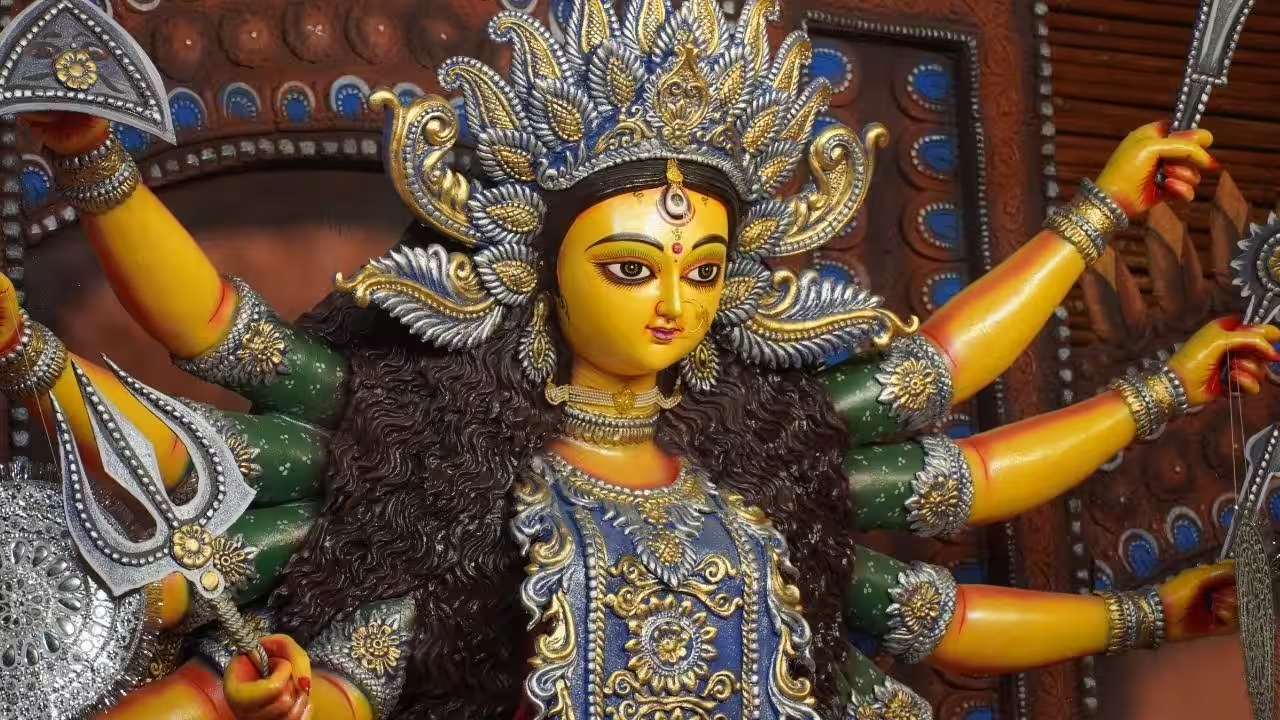
Every year, as the monsoon clouds clear and a soft chill enters the evening air, it all begins to feel different. White kaash flowers sway by the roadside, the sound of the dhak starts echoing in the distance, and all of it seems to hum with one thought that Maa is coming home.For millions of people, Durga Puja is far more than a religious ritual. It is the time when families return to their hometowns, friends walk from one pandal to another late into the night, and even the busiest city slows down to make space for art, music, and food. Streets glow with lights, craftsmen see months of work come to life, and strangers greet each other with a smile.The Pooja season is here and many people are asking the same simple questions.That what arethe exact dates of the pooja, when does it begin? When does it end? What is the right time for the special rituals?Here is everything you need to know.Durga Puja 2026 start and end dateThe festival quietly began on Mahalaya itself which marks the end of Pitri Paksha and the beginning of Devi Paksha, signaling the arrival of Goddess Durga ahead of Durga Puja.According to Drikpanchang, Durga Puja 2026 begins with Maha Shashthi on Friday, October 16, and ends with Bijoya Dashami on Wednesday, October 21. Maha Ashtami, one of the most important days, falls on Monday, October 19.Here is a list to follow:Mahalaya: Saturday, October 10Maha Shashthi: Friday, October 16Maha Saptami: Sunday, October 18Maha Ashtami: Monday, October 19Maha Navami: Tuesday, October 20Vijaya Dashami: Wednesday, October 21Sandhi Puja timingsSandhi Puja will take place on Monday, October 19, from 10:27 AM to 11:15 AM. The ritual marks the meeting point of the last 24 minutes of Ashtami and the first 24 minutes of Navami. In Hindu tradition, this moment is linked to Goddess Chamunda defeating the demons Chanda and Munda. Many puja committees mark it with lamps, offerings, and special dhak performances.How is the festival celebrated from Shashthi to DashamiThe festival season actually starts earlier on Mahalaya, which fell on October 10 this year, marking the end of Pitri Paksha and the start of Devi Paksha. On Shashthi, the goddess is welcomed with rituals such as Kalparambha and Bodhan, and the evening is especially important because it marks her awakening.Saptami brings Nabapatrika Snan, when nine plants are bathed and worshipped. On Ashtami, devotees offer flowers in Pushpanjali, and many pandals also hold Kumari Puja, where a young girl is worshipped as the divine feminine. Navami closes the main worship, with bhog, dhak beats, and Dhunuchi Naach. On Dashami, married women play Sindoor Khela before the idols are immersed.Why is the festival celebrated?Durga Puja celebrates the goddess’s victory over Mahishasura, the buffalo demon. The legend is read as the triumph of good over evil, with Durga as Shakti, the divine feminine power.The festival is seen as a daughter’s homecomingDurga Puja has a deeply emotional side in Bengali culture. Maa Durga is often seen as a daughter returning to her parental home, visiting her mother and family for a few days before going back to her husband’s home on Mount Kailash. That is why the final farewell feels so personal. For many, Dashami is both a celebration and a goodbye, with people exchanging Bijoya greetings, seeking elders’ blessings, and hoping she returns next year.The festival is especially celebrated with immense fervour in BengalDurga Puja is far more than temple worship. Kolkata’s celebrations bring together idol-making, pandal architecture, lighting, music, traditional drumming, food and community participation. In December 2021, UNESCO added “Durga Puja in Kolkata” to its Representative List of the Intangible Cultural Heritage of Humanity.UNESCO describes it as a strong example of religion and art coming together in public, with large installations and Bengali drumming, and says the divides of class, religion and ethnicity fade as crowds walk around to admire the pandals. Artists, craftsmen, designers, and local communities all play a part.Get the latest movie news, reviews, and celebrity updates. Download the TOI App.
Topics in this story
Gathered from external sources. Rights to this text belong to whoever originally published it.