Freedom should be on the agenda when Xi comes to Washington
As President Donald Trump prepares to meet Chinese President Xi Jinping, experts urge him to prioritize the release of political prisoners like Jimmy Lai and Joshua Wong to assert American leadership and defend democratic values.
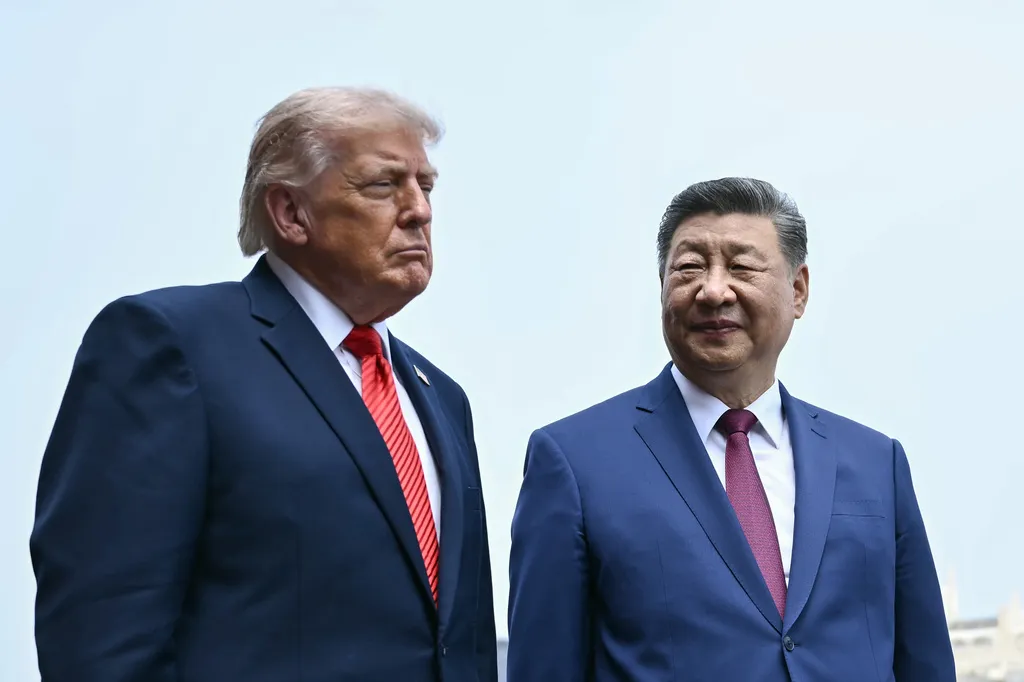
Freedom has been prominent in our national debate and celebrations in this 250th anniversary year, reflecting its centrality to our country. As the White House prepares to host Chinese President Xi Jinping, freedom should once again be on the agenda.
As he did in his May meeting with Xi, President Trump should raise the cases of political prisoners held unfairly by the Chinese Communist Party.
Visible U.S. advocacy for the release of those unjustly imprisoned is not merely a humanitarian gesture; it’s an appeal for justice and a strategic imperative to reassert international norms and American global leadership. Members of the U.S. Congress should also raise these cases in their communication during Xi’s visit.
During the May Trump-Xi summit, the U.S. president highlighted several prominent cases, including Christian Pastor Ezra Jin who was arrested in October 2025 along with nearly 30 fellow clergy and workers. These arrests galvanized widespread condemnation and advocacy among American faith communities, human rights groups, Congress, and the White House. Jin was released and sent to the U.S. on July 3. Trump deserves credit for joining his voice with this large swell of advocacy for Jin.
As Trump meets with Xi this month, there are four important cases that deserve presidential engagement. Each person is sitting in prison for exercising freedoms that we hold dear in the U.S., including freedom of religion, speech and assembly.
Jimmy Lai , a British and Hong Kong citizen and businessman, has been imprisoned since 2020. He received a harsh sentence in late 2025 for peaceful protests, publishing pro-democracy articles and meeting with individuals from democratic nations.
Trump raised his case with Xi in 2025 and 2026. The State Department rightfully called his conviction an “enforcement of Beijing’s laws to silence those who seek to protect freedom of speech and other fundamental rights.”
At age 78, in failing health, and, importantly, innocent of any wrongdoing, Lai should be released immediately.
Joshua Wong , a 29-year-old Hong Kong opponent of Beijing’s crackdowns in the territory, has been imprisoned for peacefully protesting and collaborating with foreign democratic activists and governments, what is considered conspiracy to commit subversion under Hong Kong’s draconian security laws.
He has been in prison since November 2020 and was recently sentenced to an additional six years for a manufactured charge of foreign collusion. He deserves to be set free.
Dr. Gulshan Abbas , a retired physician, has been held unjustly by China for almost eight years. She was forcibly disappeared and sentenced to 20 years in prison by the Chinese government in retribution for the advocacy by her sister, prominent Uyghur activist Rushan Abbas, for their community in Xinjiang province. Abbas has been held in a reeducation camp without contact to her family. She deserves to be released immediately.
Fourteen of Jin’s colleagues were released in November and June, but the remaining eight have committed no crimes and are targeted for their Christian faith. Their names are Pastor Gao Yingjia, Pastor Wang Lin, Pastor Yin Huibin, Pastor Lin Shucheng, Pastor Liu Zhenbin, Pastor Wang Cong, Elder Wang Zhong, and Ms. Wu Qiuyu.
Getting on the agenda for the Trump-Xi visit is likely a competitive process, as is always the case for such strategic visits . But these political prisoner cases deserve to be raised repeatedly with the Chinese government. Defending freedom of religion and speech are both central to American values and core to the strategic competition we find ourselves in with China.
China is actively working to shift the global system to one in which rights are no longer protected but rather doled out at the whim of a dictator. And it is actively working to supplant American global leadership and reshape a new global order built not on democratic values but on their autocratic vision.
For those reasons, China is aligned with Russia, Iran and North Korea, which share a desire to shape a world where their tyranny will go unchecked. China’s continued purchase of Iranian oil and reported sharing of dual-use technology for military purposes will likely be on the Trump-Xi agenda. Silencing courageous individuals is also a shared tactic between Beijing, Moscow, Tehran and Pyongyang, and deserves to be part of the discussion when the two leaders meet.
Autocrats’ shared commitment to silencing opposition is a reflection of their fear of their own people, a weakness that the U.S. and other democracies can leverage. By supporting these opposition leaders, we not only support democratic allies but also undermine our most ardent adversaries in an area of significant vulnerability.
If Trump does not raise political prisoner cases, Xi will know that he can outwait the U.S. on issues of freedom. Rather than risking perceived retreat from the cases the president has raised in previous meetings with Xi, he should show that freedom remains central to America’s foreign policy agenda and leadership in the world.
These political prisoners are democratic allies in pushing back on the China-Russia-Iran-North Korea club of autocrats. It’s now our turn to be their champion for freedom.
Nicole Bibbins Sedaca is a democracy and foreign policy expert and fellow at the George W. Bush Institute.
Topics in this story
Gathered from external sources. Rights to this text belong to whoever originally published it.