A forgotten red chalk drawing of a crouching child surfaced in an Italian collection; experts believe it could be an undiscovered work by Édouard Manet
A small red chalk drawing of a crouching child has emerged from a private collection in northern Italy, and specialists believe it came from the hand of
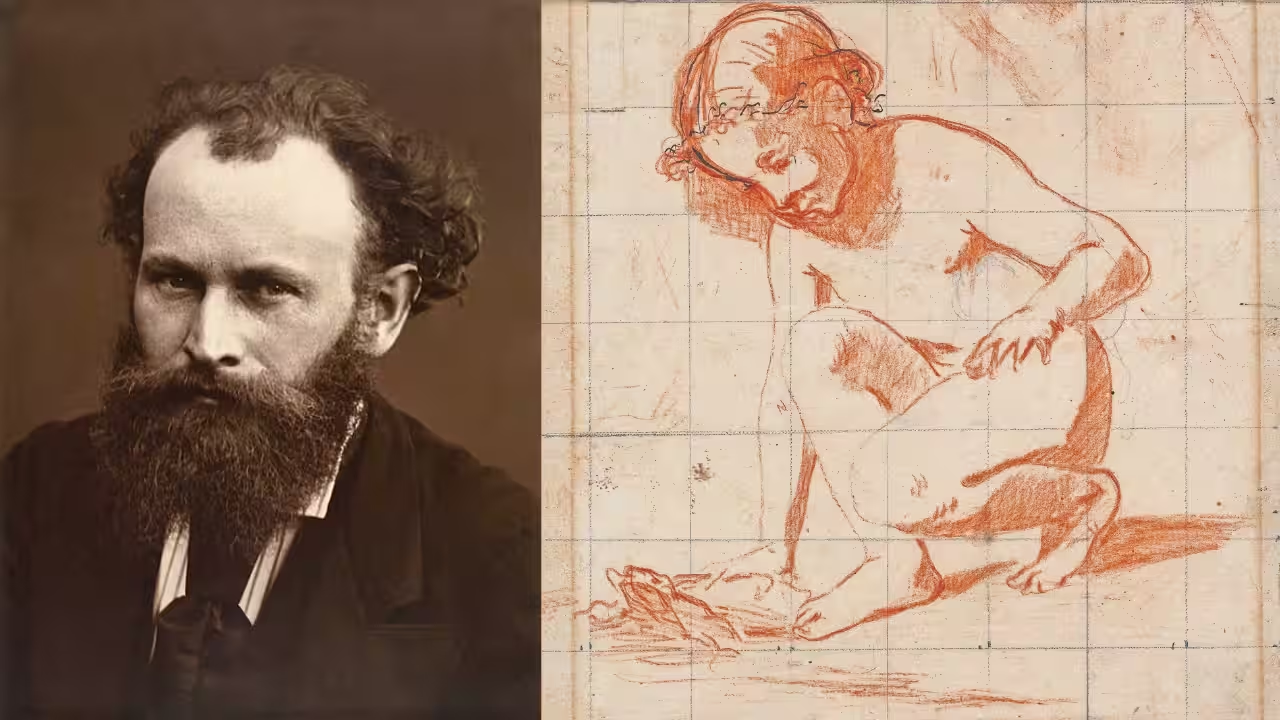
A small red chalk drawing of a crouching child has emerged from a private collection in northern Italy, and specialists believe it came from the hand of Édouard Manet, the nineteenth-century French painter who helped launch modern art. The sheet had sat quietly in obscurity, with no scholar studying it, until a visiting art historian noticed it and recognised something special. The attribution rests on a faded studio stamp, a distinctive drawing style, and a striking resemblance to figures in some of Manet's most celebrated canvases. This is how the discovery unfolded, why experts are excited, and what remains unanswered.How an art historian spotted an unstudied red chalk drawing in a private collection in northern ItalyThe discovery began when Francesco Baccanelli, an art historian who specialises in seventeenth- and eighteenth-century paintings and prints from Lombardy and Veneto, visited a modest and little-known private collection in northern Italy, according to The Guardian. The owner showed him an inscription on the back of the mount naming Manet as the artist, yet no art historian had ever examined the sheet. Baccanelli told The Guardian that he was captivated at once and grew more convinced of the attribution the longer he studied it. He then sent photographs to Emily Beeny, chief curator of the Legion of Honour at the Fine Arts Museums of San Francisco, whom he regards as one of the world's leading Manet experts. Artforum's news desk likewise reported that the drawing had never been studied.Why experts believe the child is by Manet, the studio stamp, ultraviolet analysis and signature styleSeveral strands of evidence support the attribution. Ultraviolet analysis revealed Manet's faded studio stamp in the lower right-hand corner, a detail Artforum also highlights as key proof. Style points the same way. Beeny told the Guardian that the drawing shows abrupt shifts between light and shadow and peculiar plump, tapered fingers, which she called little habits typical of the painter. Artforum adds that the sheet sits comfortably beside the scores of red chalk preparatory sketches Manet produced in the mid-nineteenth century. Beeny said she felt an immediate sense of recognition on first seeing a photograph, something she had not experienced with the many supposed Manet works people send her. The small sheet measures 20.5 centimetres by 17.5 centimetres.How the crouching child connects to Manet's masterpiece ‘The Old Musician’ and ‘Le Déjeuner sur l'herbe’The child resembles a street urchin in The Old Musician, the painting in which Manet sought to show the humanity of homeless and marginalised people. Beeny said it is possible the same sitter posed for the little girl with a very similar hairstyle standing on the left in the finished canvas. Artforum, by contrast, links the figure to a street urchin in Le Déjeuner sur l'herbe from 1863, and the Guardian notes that Manet's red chalk studies relate to that painting too. The sitter's identity remains unknown. Beeny and Baccanelli mention Alexandre, a youth hired in the late 1850s to clean Manet's brushes and palettes who occasionally posed, but they note the figure appears to be a girl of perhaps six.Provenance and publication, the Burlington Magazine article and hopes for the Manet catalogue raisonnéThe drawing was sold twice in the 1930s, first in Germany and then in Switzerland, yet it never appeared in scholarly publications on the artist. Beeny and Baccanelli will publish their findings in the October issue of the Burlington Magazine, where they concede that the drawing's original purpose and early history remain unclear. Although the sheet is squared for transfer to a canvas, no such composition by Manet is known. Beeny told the Guardian that this suggests he took time and effort over it and was pleased with the result. She hopes it will be included in the next edition of the definitive Manet catalogue raisonné, produced by the Wildenstein Plattner Institute, which has not yet studied the drawing.Why a rediscovered Manet study matters for art lovers, collectors and scholars of French modernismFor admirers of French modernism, the find offers a rare window into Manet's working methods. The drawing is typical of the red chalk life studies he made in the 1850s and 1860s, shaped by his close study of Renaissance draughtsmanship in Florence, and similar sketches relate to Le Déjeuner sur l'herbe as well as The Old Musician. Beeny, whose exhibitions include Manet and Modern Beauty, staged by the Getty Museum in Los Angeles and the Art Institute of Chicago, told the Guardian she is unsure when an unpublished Manet drawing last surfaced, but it has certainly been many years. Until the Wildenstein Plattner Institute studies the sheet, the attribution remains a scholarly proposal rather than a settled verdict.You use AI every day. Now get your AI Quotient. Take the AIQ test.
Topics in this story
Gathered from external sources. Rights to this text belong to whoever originally published it.