In 2019, volunteers used 200,000 pounds of discarded oyster shells to build a 400-foot reef protecting a Louisiana tribal shoreline
US News: Along the marshes of southeast Louisiana, the remains of a restaurant meal have found a second life in the water. Oyster shells that might once have b.
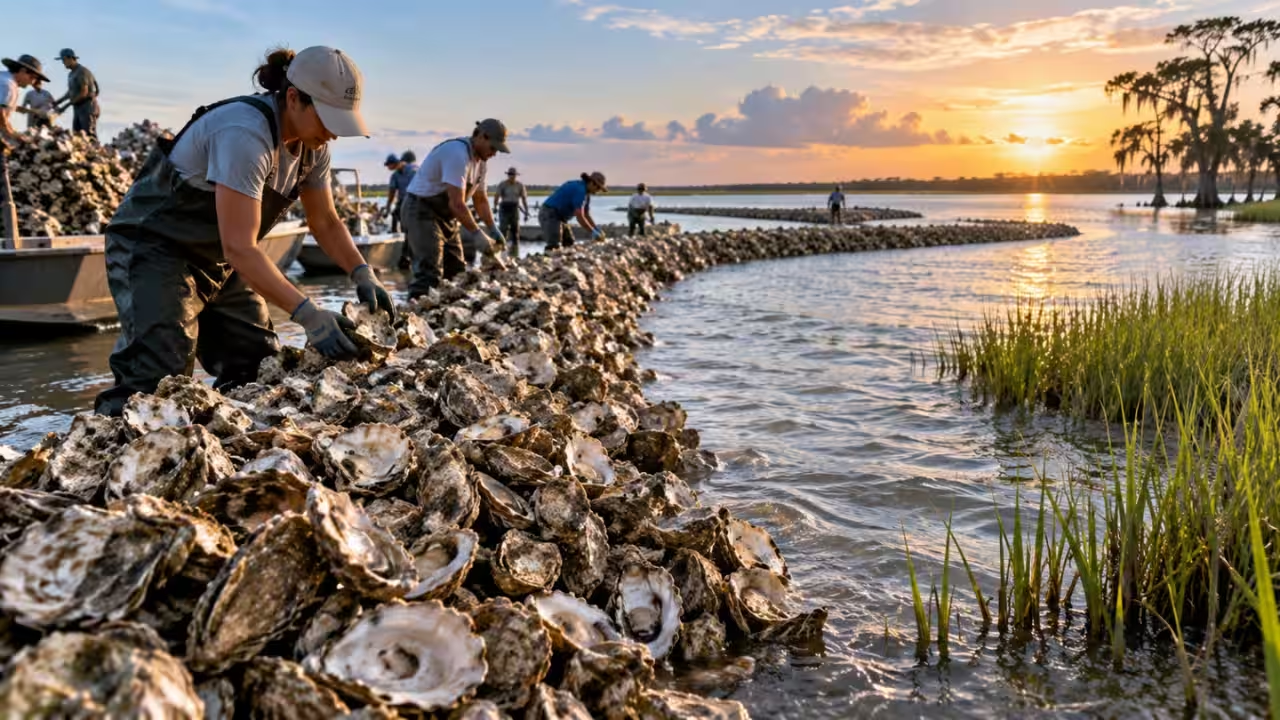
Along the marshes of southeast Louisiana, the remains of a restaurant meal have found a second life in the water. Oyster shells that might once have been sent to landfill are being collected, cured and returned to the coast, where they can form the base of new reefs. For the Pointe-au-Chien Indian Tribe, the idea took on a more urgent purpose. Erosion had been eating into ancestral land and threatening an earthen mound that held deep cultural significance for the community. As reported by Public Broadcasting Service (PBS), in 2019, hundreds of volunteers helped place about 200,000 pounds of recycled oyster shells along the shoreline, creating a reef about 400 feet long. The structure was intended to slow the loss of land rather than replace it.Louisiana’s coastal erosion put a tribal mound at riskFor Theresa and Donald Dardar, who are leaders of the Pointe-au-Chien Indian Tribe, the changes were visible from a boat travelling through Bayou Pointe-aux-Chenes and the surrounding marshes. Water had been steadily taking pieces of the landscape with it. Among the places at risk were tribal mounds, earthen structures built by Native peoples that serve as important cultural and spiritual sites.One particular mound had become especially vulnerable. It stood roughly 9 to 10 feet above the surrounding marsh, but erosion had removed about four feet of land in front of it over a period of around five years. A large tree remained near the edge, its roots exposed as the shoreline retreated.The tribe generally keeps the locations of its mounds private. In this case, the threat had become difficult to ignore. The Pointe-au-Chien community joined with the Coalition to Restore Coastal Louisiana in 2019 to try to hold the shoreline in place.How restaurant shells became part of the solutionThe material chosen for the project had already served its first purpose. Oyster shells from restaurants in the New Orleans area were being collected instead of discarded and prepared for use in coastal restoration.Volunteers built the first reef for the Pointe-au-Chien Tribe using around 200,000 pounds of shells. The finished structure stretched for about 400 feet along the vulnerable shoreline. A second reef was added later as the work continued.The shells are not simply dropped into the water immediately after collection. They are cleaned and cured for roughly six months before being placed into biodegradable mesh bags. Those bags can then be positioned along the coast, creating a physical foundation on which oysters can settle and grow.Discarded oyster shells helped build a living shoreline in LouisianaOyster reefs have a useful property for coastal restoration: discarded shells provide a surface where young oysters can attach themselves. As oysters grow across the old shells, the reef can become larger and more established. The Coalition to Restore Coastal Louisiana describes these formations as living shorelines because they use natural processes alongside the physical structure to help reduce erosion. The reefs also create habitat. Crabs, fish, shrimp and marine birds can use them, while oysters themselves become part of the developing ecosystem.For the Pointe-au-Chien shoreline, that growth offered something a conventional barrier might not. The aim was not to rebuild the land that had already disappeared, but to give the remaining shoreline some protection from further erosion.Louisiana’s reef grows stronger with oystersThe Dardars later said the living shoreline had withstood strong storms, including Hurricane Ida, which struck Louisiana in 2021. The reef was never presented as a way to restore the lost land. Its purpose was more limited: slow the forces removing what remained. By then, oysters had begun growing large enough to harvest on the first reef. The tribe chose not to collect them, allowing the oyster population to continue developing and adding to the reef instead. That process illustrates why the shells are useful beyond simply being a waste material. Once returned to the water, they can become part of a growing habitat.Louisiana has a huge supply of oyster shellsThe recycling effort is closely tied to the state's seafood industry. Louisiana produces a large share of the oysters consumed in the United States, while millions of oysters harvested in the state are eaten across the country.Once the oysters are shucked, however, the shells are often far from the coast where they could be useful. Disposal can be expensive, particularly when shells are transported from restaurants in cities back towards coastal areas.The Coalition to Restore Coastal Louisiana has spent years developing a system to collect them. By the time of the source report in 2023, its programme had recycled 13 million pounds of oyster shells from New Orleans-area restaurants. As reported by PBS, nearly 50 restaurants were participating.Large bins are collected several times a week, with the shells eventually transported to a stockpile where they can be cured and prepared for restoration projects.Five reefs have protected thousands of feet of coastThe Pointe-au-Chien project was part of a wider programme rather than an isolated experiment. The coalition had completed five reef projects since 2016, with the projects collectively protecting about 8,000 feet of shoreline. Some of the larger installations can extend for almost a mile and use hundreds of tons of recycled shells.The organisation also monitors the reefs as they develop, using satellite and drone imagery to track changes. As cited by PBS, the projects had reduced shoreline erosion by as much as 50%.The figures do not mean every section of Louisiana's disappearing coastline can be protected this way. The projects are relatively small compared with the state's much larger coastal restoration plans. But they provide a way to combine waste collection with habitat creation and shoreline protection.The work extends beyond Pointe-au-ChienThe coalition planned to continue the approach in other Indigenous communities. A future project was scheduled for Grand Bayou Indian Village in Plaquemines Parish, home to the Atakapa-Ishak/Chawasha Tribe and accessible only by water.The need is considerable. Louisiana has more than 800 known mound sites, while ancient earthen mounds along the coast have existed for thousands of years. Anthropologist Jayur Mehta, a co-author of a 2018 study, said the state was losing ancient mounds at a rate of about two a year, taking pieces of the archaeological record with them.For Indigenous communities, the loss is not simply a change in shoreline geography. The mounds are connected to ancestry, community and place.Restaurants became part of the coastal chainThe shell collection programme has also changed how participating restaurants deal with what was once ordinary kitchen waste.Instead of putting shells into rubbish bins, restaurants can separate them for collection. The programme charges participating businesses according to the amount they send for recycling, while scheduled collections remove the material from the restaurants.Louisiana lawmakers also approved a tax incentive for restaurants that recycle oyster shells through qualifying programmes. The measure was expected to reduce the financial burden on participating businesses and encourage wider use of shell recycling.The connection between restaurants and coastal restoration has been taken further through the Chefs on Boats programme. It takes people working in the food industry onto the coast so they can see the journey of an oyster from harvest to restaurant and eventually back into the water as a recycled shell. By the time of the 2023 report, the programme had taken 197 chefs, shuckers, cooks and restaurateurs on 40 trips.For the Pointe-au-Chien Tribe, though, the immediate concern remains much closer to home. The reef cannot reverse every change affecting the Louisiana coast, and the community is also dealing with other damage to the marsh, including canals associated with oil and gas exploration.The oyster shells can only do part of the work. But in a landscape where the shoreline has been steadily disappearing, even a 400-foot stretch of protection has significance.Catch the latest World News and Live updates. Download the TOI app.
Topics in this story
Gathered from external sources. Rights to this text belong to whoever originally published it.